- Broschiertes Buch
- Merkliste
- Auf die Merkliste
- Bewerten Bewerten
- Teilen
- Produkt teilen
- Produkterinnerung
- Produkterinnerung
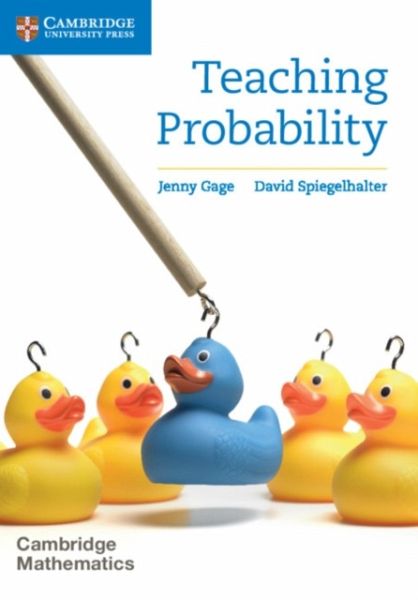
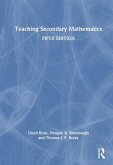
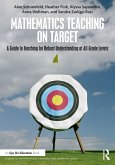
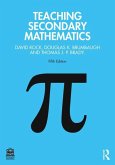
These titles focus on the approaches that can be taken in the classroom to develop skills and a conceptual understanding of specific mathematical concepts.
Andere Kunden interessierten sich auch für
Dean ChalmersCambridge International as & a Level Mathematics: Probability & Statistics 1 Coursebook39,99 €
Paul FannonMathematics Higher Level for the IB Diploma Option Topic 7 Statistics and Probability33,99 €
Dean ChalmersCambridge International as & a Level Mathematics: Probability & Statistics 1 Practice Book26,99 €
Workman PublishingThe Big Fat Middle School Math Workbook11,99 €
Jayne KranatCambridge International as & a Level Mathematics: Probability & Statistics 2 Practice Book26,99 €
Audrey SimpsonCambridge O Level Mathematics Coursebook33,99 €
Emma LowCambridge Primary Mathematics Challenge 514,99 €-
-
-
These titles focus on the approaches that can be taken in the classroom to develop skills and a conceptual understanding of specific mathematical concepts.
Produktdetails
- Produktdetails
- Verlag: Cambridge University Press
- Seitenzahl: 206
- Erscheinungstermin: 4. August 2016
- Englisch
- Abmessung: 244mm x 170mm x 11mm
- Gewicht: 358g
- ISBN-13: 9781316605899
- ISBN-10: 1316605892
- Artikelnr.: 44678198
- Herstellerkennzeichnung
- Libri GmbH
- Europaallee 1
- 36244 Bad Hersfeld
- gpsr@libri.de
- Verlag: Cambridge University Press
- Seitenzahl: 206
- Erscheinungstermin: 4. August 2016
- Englisch
- Abmessung: 244mm x 170mm x 11mm
- Gewicht: 358g
- ISBN-13: 9781316605899
- ISBN-10: 1316605892
- Artikelnr.: 44678198
- Herstellerkennzeichnung
- Libri GmbH
- Europaallee 1
- 36244 Bad Hersfeld
- gpsr@libri.de
Foreword
Introduction
Aims and purpose of the book
Part I. A New Approach to Teaching Probability: 1. Introduction
2. Probability in the classroom
3. The probability curriculum
Part II. Classroom Activities: 4. Fair game
5. Which team will win?
6. The dog ate my homework!
7. Choosing representatives
Part III. Assessment and Sample Examination Questions: 8. The Probability scale
9. Event as 'favourable outcome' within an 'equally likely' sample space
10. Understanding fixed probability
11. Complement
12. Mutually exclusive events adding to 1 (more than two categories)
13. Multiple attributes - union and intersection
14. Expectation
15. Estimating probabilities from experiments
16. Identical independent events
17. Two non-identical independent events
18. Two dependent events (without replacement) - conditional probability
19. Conditional probability - inverse (Bayes' theorem)
Part IV. Risk and Uncertainty in the Real World: 20. What's the best strategy
21. What does 'random' look like?
22. How should we change our beliefs?
23. How probable is probable?
24. Misconceptions
25. Heads or tails, boy or girl?
26. Your risk is increased!
27. It's a lottery
28. Switch or stick?
29. It's not fair!
30. Take a risk?
31. Happy birthday to you, and you, and...
32. How long do I have to wait?
33. Do you know what you don't know?
Index.
Introduction
Aims and purpose of the book
Part I. A New Approach to Teaching Probability: 1. Introduction
2. Probability in the classroom
3. The probability curriculum
Part II. Classroom Activities: 4. Fair game
5. Which team will win?
6. The dog ate my homework!
7. Choosing representatives
Part III. Assessment and Sample Examination Questions: 8. The Probability scale
9. Event as 'favourable outcome' within an 'equally likely' sample space
10. Understanding fixed probability
11. Complement
12. Mutually exclusive events adding to 1 (more than two categories)
13. Multiple attributes - union and intersection
14. Expectation
15. Estimating probabilities from experiments
16. Identical independent events
17. Two non-identical independent events
18. Two dependent events (without replacement) - conditional probability
19. Conditional probability - inverse (Bayes' theorem)
Part IV. Risk and Uncertainty in the Real World: 20. What's the best strategy
21. What does 'random' look like?
22. How should we change our beliefs?
23. How probable is probable?
24. Misconceptions
25. Heads or tails, boy or girl?
26. Your risk is increased!
27. It's a lottery
28. Switch or stick?
29. It's not fair!
30. Take a risk?
31. Happy birthday to you, and you, and...
32. How long do I have to wait?
33. Do you know what you don't know?
Index.
Foreword
Introduction
Aims and purpose of the book
Part I. A New Approach to Teaching Probability: 1. Introduction
2. Probability in the classroom
3. The probability curriculum
Part II. Classroom Activities: 4. Fair game
5. Which team will win?
6. The dog ate my homework!
7. Choosing representatives
Part III. Assessment and Sample Examination Questions: 8. The Probability scale
9. Event as 'favourable outcome' within an 'equally likely' sample space
10. Understanding fixed probability
11. Complement
12. Mutually exclusive events adding to 1 (more than two categories)
13. Multiple attributes - union and intersection
14. Expectation
15. Estimating probabilities from experiments
16. Identical independent events
17. Two non-identical independent events
18. Two dependent events (without replacement) - conditional probability
19. Conditional probability - inverse (Bayes' theorem)
Part IV. Risk and Uncertainty in the Real World: 20. What's the best strategy
21. What does 'random' look like?
22. How should we change our beliefs?
23. How probable is probable?
24. Misconceptions
25. Heads or tails, boy or girl?
26. Your risk is increased!
27. It's a lottery
28. Switch or stick?
29. It's not fair!
30. Take a risk?
31. Happy birthday to you, and you, and...
32. How long do I have to wait?
33. Do you know what you don't know?
Index.
Introduction
Aims and purpose of the book
Part I. A New Approach to Teaching Probability: 1. Introduction
2. Probability in the classroom
3. The probability curriculum
Part II. Classroom Activities: 4. Fair game
5. Which team will win?
6. The dog ate my homework!
7. Choosing representatives
Part III. Assessment and Sample Examination Questions: 8. The Probability scale
9. Event as 'favourable outcome' within an 'equally likely' sample space
10. Understanding fixed probability
11. Complement
12. Mutually exclusive events adding to 1 (more than two categories)
13. Multiple attributes - union and intersection
14. Expectation
15. Estimating probabilities from experiments
16. Identical independent events
17. Two non-identical independent events
18. Two dependent events (without replacement) - conditional probability
19. Conditional probability - inverse (Bayes' theorem)
Part IV. Risk and Uncertainty in the Real World: 20. What's the best strategy
21. What does 'random' look like?
22. How should we change our beliefs?
23. How probable is probable?
24. Misconceptions
25. Heads or tails, boy or girl?
26. Your risk is increased!
27. It's a lottery
28. Switch or stick?
29. It's not fair!
30. Take a risk?
31. Happy birthday to you, and you, and...
32. How long do I have to wait?
33. Do you know what you don't know?
Index.