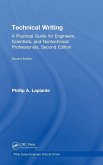
This guide complements traditional technical writing manuals through first-hand examples that help readers understand practical considerations in writing technical content. The new edition includes new exercises and case studies and new content on software/systems documentation, popular writing tools, and technologies like generative AI.
This guide complements traditional technical writing manuals through first-hand examples that help readers understand practical considerations in writing technical content. The new edition includes new exercises and case studies and new content on software/systems documentation, popular writing tools, and technologies like generative AI.
Phil Laplante is a Professor Emeritus of Software and Systems Engineering at Penn State with more than 40 years of experience as a professor, practitioner, academic administrator, and consultant. He has worked in avionics, CAD, and software testing systems and he has published 40+ books and more than 300 scholarly papers. He is a licensed professional engineer in the Commonwealth of Pennsylvania and a Fellow of IEEE, SPIE and the Washington Academy of Sciences. From 2010 to 2017 he led the effort to develop a national licensing exam for software engineers. He received his B.S., M.Eng., and Ph.D. from Stevens Institute of Technology and an MBA from the University of Colorado. Chris Laplante is a software engineer at Agilent Technologies where he works on embedded systems for gas chromatographs and automated liquid samplers. He is the author of many technical documents and reports and has published articles in technical forums, newsletters, and magazines. He is the co-author (with Phil Laplante) of Introduction to Chaos, Fractals and Dynamical Systems, World Scientific Publishing, 2023. He received his B.S. in Computer Science (with a minor in Mathematics) from The Pennsylvania State University. His professional interests include Linux, real-time operating systems (RTOSs), Rust, C++, and digital electronics.
Inhaltsangabe
0. Front Matter. 1. The Nature of Technical Writing. 2. Technical Writing Basics. 3. The Writing Process. 4. Scientific Writing. 5. Business Communications. 6. Technical Reporting. 7. Using Graphical Elements. 8. Publishing Your Work. 9. Writing for the Digital Age. 10. Writing with Collaborators. Appendix A. Writing Checklist, Permissions Request. Appendix B. Templates. Appendix C. Additional Writing Samples. Appendix D. Glossary
1. The Nature of Technical Writing. 2. Technical Writing Basics. 3. The Writing Process. 4. Scientific Writing. 5. Business Communications. 6. Technical Reporting. 7. Using Graphical Elements. 8. Publishing Your Work. 9. Writing For E-Media. 10: Writing with Collaborators. Appendix A: Writing Checklist. Appendix B: Writing Samples.
0. Front Matter. 1. The Nature of Technical Writing. 2. Technical Writing Basics. 3. The Writing Process. 4. Scientific Writing. 5. Business Communications. 6. Technical Reporting. 7. Using Graphical Elements. 8. Publishing Your Work. 9. Writing for the Digital Age. 10. Writing with Collaborators. Appendix A. Writing Checklist, Permissions Request. Appendix B. Templates. Appendix C. Additional Writing Samples. Appendix D. Glossary
1. The Nature of Technical Writing. 2. Technical Writing Basics. 3. The Writing Process. 4. Scientific Writing. 5. Business Communications. 6. Technical Reporting. 7. Using Graphical Elements. 8. Publishing Your Work. 9. Writing For E-Media. 10: Writing with Collaborators. Appendix A: Writing Checklist. Appendix B: Writing Samples.
Rezensionen
"Overall the book provides practical, actionable, information that can be used to improve anyone's writing skills - technical or nontechnical. The author covers a wide variety of media used to convey technical information not only including books and journals, but also magazines, conference proceedings, newsletters, websites, and blogs. Rather than a boring cookbook style of writing, the author uses many stories, personal examples of his own writing, and visuals (graphs, tables, drawings) to convey good writing styles and practical information that will improve your writing. There are references and sample exercises at the end of each chapter for further study. The appendix also contains a list of templates for various types of documents Anyone interested in improving their writing skills and technical communication skills in general will find this book to be an invaluable and practical reference guide." -IEEE Electrical Insulation Magazine June 2019 Issue
Es gelten unsere Allgemeinen Geschäftsbedingungen: www.buecher.de/agb
Impressum
www.buecher.de ist ein Internetauftritt der buecher.de internetstores GmbH
Geschäftsführung: Monica Sawhney | Roland Kölbl | Günter Hilger
Sitz der Gesellschaft: Batheyer Straße 115 - 117, 58099 Hagen
Postanschrift: Bürgermeister-Wegele-Str. 12, 86167 Augsburg
Amtsgericht Hagen HRB 13257
Steuernummer: 321/5800/1497
USt-IdNr: DE450055826