
Andere Kunden interessierten sich auch für
 Le concept de territoires dans le Paléolithique supérieur européen118,99 €
 Recherches sur le Paléolithique supérieur183,99 €
 Method in Microwear Analysis146,99 €
 Upper Paleolithic Burins89,99 €
 Le Paléolithique Supérieur / The Upper Palaeolithic115,99 €
 Upper Palaeolithic Osseous Artifacts from Britain and Belgium155,99 €
 Art du Paléolithique Supérieur et du Mésolithique / Upper Palaeolithic and Mesolithic Art99,99 €


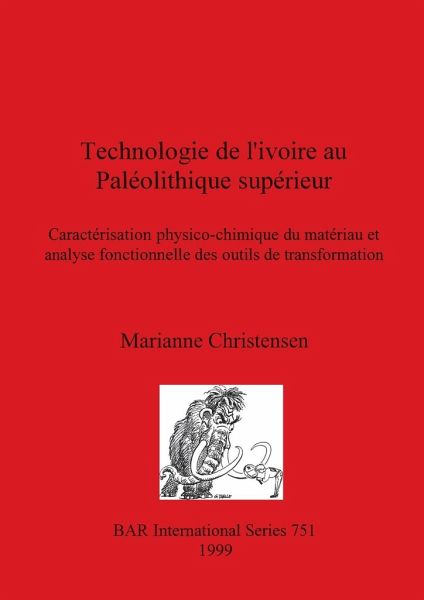
In this volume, Christensen outlines a new method for the identification of worked material through its physio-chemical (or mineral and organic) components. This assumes that, in modifying or making tools, micro-fragments of this material would stay at the edge of the tools. Here, tools which were used to work ivory, as opposed to antler and bone, are considered. The analysis combines experimental and archaeological data and takes tow case studies with ivory assemblages, as examples: Geissenklösterle in Germany and Yudinovo in Russia - spanning the period from the early Upper Palaeolithic c.33-37,000 to c.12,000 years ago. French text.