
Andere Kunden interessierten sich auch für
 Ten Days That Shook the World18,99 €
 Ten Days That Shook the World27,99 €
 The Making and Breaking of the Soviet System44,99 €
 Vladimir Lenin23,99 €
 The Last Days of the Romanovs40,99 €
 The Plough That Broke the Steppes177,99 €
 Ten Years' Exile Memoirs of That Interesting Period of the Life of the Baroness De Stael-Holstein, Written by Herself, during the Years 1810, 1811, 1812, and 1813, and Now First Published from the Original Manuscript, by Her Son.22,99 €
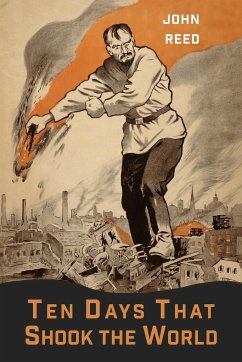


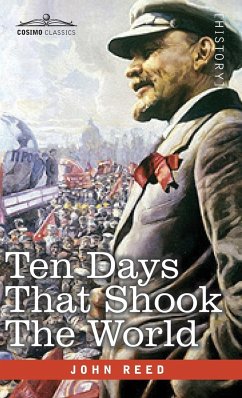
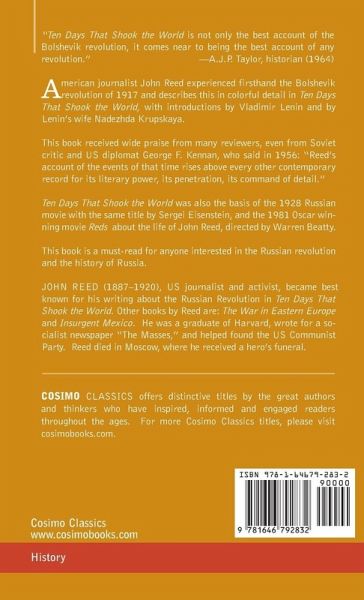
"Ten Days That Shook the World is not only the best account of the Bolshevik revolution, it comes near to being the best account of any revolution." -A.J.P. Taylor, historian (1964) American journalist John Reed experienced firsthand the Bolshevik revolution of 1917 and describes this in colorful detail in Ten Days That Shook the World, with introductions by Vladimir Lenin and by Lenin's wife Nadezhda Krupskaya. This book received wide praise from many reviewers, even from Soviet critic and US diplomat George F. Kennan, who said in 1956: "Reed's account of the events of that time rises above every other contemporary record for its literary power, its penetration, its command of detail." Ten Days That Shook the World was also the basis of the 1928 Russian movie with the same title by Sergei Eisenstein, and the 1981 Oscar winning movie Reds about the life of John Reed, directed by Warren Beatty. This book is a must-read for anyone interested in the Russian revolution and the history of Russia.