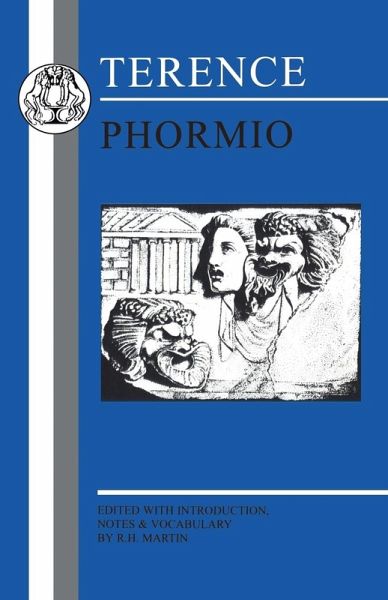
The lively action and well-constructed plot of the "Phormio" make it an ideal introduction to Terence and to the Roman comic genre. It well illustrates Terence's subtle handling of plot and character - two fathers, two wayward sons in love, the latter abetted by the scheming slave and by the parasite who gives his name to the play. This edition, recognising that the simplicity of Terence's Latin can be obscured by initial unfamiliarity with his colloquial (and early) poetic idiom, includes a great deal of linguistic help in the annotation. There is a full vocabulary and the introduction deals with genre and plot, as well as prosody and metre.…mehr
The lively action and well-constructed plot of the "Phormio" make it an ideal introduction to Terence and to the Roman comic genre. It well illustrates Terence's subtle handling of plot and character - two fathers, two wayward sons in love, the latter abetted by the scheming slave and by the parasite who gives his name to the play. This edition, recognising that the simplicity of Terence's Latin can be obscured by initial unfamiliarity with his colloquial (and early) poetic idiom, includes a great deal of linguistic help in the annotation. There is a full vocabulary and the introduction deals with genre and plot, as well as prosody and metre.
Terence (Publius Terentius Afer; c. 190-159 BC) was a Roman playwright. He is believed to have been a Carthaginian slave educated and freed by his Roman master. Six of his plays, all based on works of the Greek new comedy, have survived: Andria (166 BC), Hecyra (165 BC), Heauton Timoroumenos (163 BC), Eunuchus (161 BC), Phormio (161 BC), and Adelphi (160 BC). They show Terence's comedy to be more original and subtle with thoughtful characterization and a graceful style. His plotting and characterization influenced many Renaissance playwrights, amongst them Molière and Shakespeare. In his own day Terence was always overshadowed by Plautus, who produced more topical and less refined comedies. Julius Caesar criticized Terence's plays for lacking the true comic spirit. The playwright's later prologues sharply answer these attacks and also complain of the fickleness of the public, which was developing a preference for circuses and gladiatorial combats.