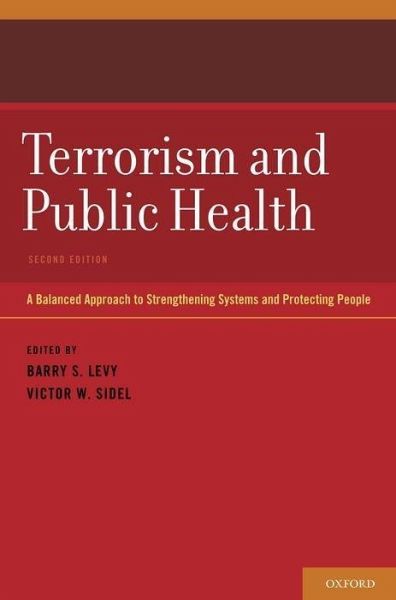
The first edition of this book was published almost a decade ago to provide a comprehensive examination of the relationship between terrorism and public health. It also described what health professionals could do to mitigate the consequences of terrorist attacks and threats, and to address the underlying causes of terrorism. This completely revised second edition provides new information on emergency preparedness and response planning as well as lessons learned from responses to terrorist attacks in the United States and other countries. Expert scholars and practitioners of public health…mehr
The first edition of this book was published almost a decade ago to provide a comprehensive examination of the relationship between terrorism and public health. It also described what health professionals could do to mitigate the consequences of terrorist attacks and threats, and to address the underlying causes of terrorism. This completely revised second edition provides new information on emergency preparedness and response planning as well as lessons learned from responses to terrorist attacks in the United States and other countries. Expert scholars and practitioners of public health explore the historical roots of terrorism and address potential terrorist weapons and their control. They also explore in detail the adverse health consequences of the "war on terror," including the wars in Iraq and Afghanistan, other violations of human rights and civil liberties, diversion of resources, and the adverse impact on civil society organizations. Arguing for a more balanced approach to preparedness, the editors and contributors to this second edition describe challenges and opportunities for strengthening the public health system, protecting disaster rescue and recovery workers, and promoting domestic and international law related to terrorism.
Barry S. Levy, MD, MPH, is an Adjunct Professor of Public Health at Tufts University School of Medicine and a consultant in occupational and environmental health. Trained in internal medicine and preventive medicine, he served as a medical epidemiologist with the Centers for Disease Control and as a professor at the University of Massachusetts Medical School. He worked in Kenya for the Carter Center and the U.S. Agency for International Development. Dr. Levy served as a program director at Management Sciences for Health and as Executive Director of the International Physicians for the Prevention of Nuclear War. Overall, he has worked in more than 20 countries. He served as President of APHA. Victor W. Sidel, MD, is Distinguished University Professor of Social Medicine at Montefiore Medical Center and Albert Einstein College of Medicine, and an Adjunct Professor of Public Health at Weill Cornell Medical College. Trained in internal medicine and public health, he headed the Community Medicine Unit at Massachusetts General Hospital and chaired the Department of Social Medicine at Montefiore and Einstein. Dr. Sidel was a founder of the Physicians for Social Responsibility and the International Physicians for the Prevention of Nuclear War, which was the recipient of the 1985 Nobel Peace Prize. He has served as President of both organizations, and as President of APHA and the Public Health Association of New York City.
Inhaltsangabe
* Part I: Introduction * 1. Challenges That Terrorism Poses to Public Health * Barry S. Levy and Victor W. Sidel * Box 1-1: Guiding Principles for a Public Health Response to Terrorism * Box 1-2: Has the Nation's Response to Terrorism Strengthened the Public Health System? * Susan Allan * 2. The Roots of Terrorism * Cheryl E. Easley and Carol Easley Allen * Box 2-1: Addressing Public Opinion in Muslim Communities * Zohra Rasekh and Gregory Pappas * Part II: Public Health Responses to Terrorist Attacks * * 3. The Public Health Response to the World Trade Center Attack and Its Aftermath by the New York City Department of Health and Mental Hygiene * Isaac B. Weisfuse, Trish Marsik, and Robert M. Brackbill * 4. Investigating the Health Consequences of the World Trade Center Attack * Helen H. Lee, Emily C. Milam, Luz Claudio, Philip J. Landrigan, and Michael A. Crane * * 5. The Anthrax Attack of 2001 * Philip S. Brachman * * 6. The Terrorist Attacks in Madrid, London and Bali * John Middleton, Patrick Saunders, and Shamil Harron * * 7. The Mental Health Consequences of Terrorism * Zebulon Taintor * Box 7-1: The Experiences of Two Mental Health Professionals * Charles B. Strozier and Katie Gentile * Box 7-2: Terrorism, Media, and Hate Crimes * Nimmi Kapoor * Part III: Potential Terrorist Weapons and Their Control * * 8. Small Arms and Light Weapons * Wendy Cukier, Nelson Palacio, and Reefa Mahboob * 9. Nuclear and Radiologic Weapons * Patrice M. Sutton and Robert M. Gould * Box 9-1: International Control of Nuclear Weapons * Robert M. Gould and Merav Datan * 10. Chemical Weapons * Ernest C. Lee, Philipp C. Bleek, and Stefanos N. Kales * * 11. Biological Weapons * Victor W. Sidel and Barry S. Levy * Box 11-1: Research on Biological Weapons * Box 11-2: A Community Salmonellosis Outbreak Caused by Intentional Contamination of Restaurant Salad Bars * Part IV: Emergency Preparedness and Response Planning * * 12. Public Health Preparedness in the Los Angeles County Department of Public Health * Jonathan E. Fielding and Alonzo L. Plough * 13. Predicting and Planning for Public Health Emergencies * Nathaniel Hupert * * Part V: Adverse Effects of the "War on Terror" * 14. Protecting Civil Liberties and Human Rights * H. Jack Geiger and George J. Annas * * 15. Public Health Consequences of the Wars in Afghanistan and Iraq * Barry S. Levy and Victor W. Sidel * Box 15-1: A Soldier's View * Garrett Reppenhagen * Box 15-2: A Perspective from Military Families * Elizabeth Frederick * * 16. Consequences of Torture * Leonard S. Rubenstein * * 17. The Impact of Anti-terrorism Law and Policy on Civil Society Organizations in the United States * Mark Sidel * Part VI: Challenges and Opportunities * 18. Strengthening the Public Health System * C. William Keck and Marguerite A. Erme * 19. Protecting Emergency Response and Recovery Workers * Dori B. Reissman, Renee Funk, John Halpin, John Piacentino, Margaret M. Kitt, and John Howard * Box 19-1: Integrating Psychological and Behavioral Components into Organizational Preparedness * 20. Promoting Domestic and International Law * Peter Weiss * Appendix: A List of Some Organizations That Promote Peace and Address Issues Related to Emergency Preparedness and Response
* Part I: Introduction * 1. Challenges That Terrorism Poses to Public Health * Barry S. Levy and Victor W. Sidel * Box 1-1: Guiding Principles for a Public Health Response to Terrorism * Box 1-2: Has the Nation's Response to Terrorism Strengthened the Public Health System? * Susan Allan * 2. The Roots of Terrorism * Cheryl E. Easley and Carol Easley Allen * Box 2-1: Addressing Public Opinion in Muslim Communities * Zohra Rasekh and Gregory Pappas * Part II: Public Health Responses to Terrorist Attacks * * 3. The Public Health Response to the World Trade Center Attack and Its Aftermath by the New York City Department of Health and Mental Hygiene * Isaac B. Weisfuse, Trish Marsik, and Robert M. Brackbill * 4. Investigating the Health Consequences of the World Trade Center Attack * Helen H. Lee, Emily C. Milam, Luz Claudio, Philip J. Landrigan, and Michael A. Crane * * 5. The Anthrax Attack of 2001 * Philip S. Brachman * * 6. The Terrorist Attacks in Madrid, London and Bali * John Middleton, Patrick Saunders, and Shamil Harron * * 7. The Mental Health Consequences of Terrorism * Zebulon Taintor * Box 7-1: The Experiences of Two Mental Health Professionals * Charles B. Strozier and Katie Gentile * Box 7-2: Terrorism, Media, and Hate Crimes * Nimmi Kapoor * Part III: Potential Terrorist Weapons and Their Control * * 8. Small Arms and Light Weapons * Wendy Cukier, Nelson Palacio, and Reefa Mahboob * 9. Nuclear and Radiologic Weapons * Patrice M. Sutton and Robert M. Gould * Box 9-1: International Control of Nuclear Weapons * Robert M. Gould and Merav Datan * 10. Chemical Weapons * Ernest C. Lee, Philipp C. Bleek, and Stefanos N. Kales * * 11. Biological Weapons * Victor W. Sidel and Barry S. Levy * Box 11-1: Research on Biological Weapons * Box 11-2: A Community Salmonellosis Outbreak Caused by Intentional Contamination of Restaurant Salad Bars * Part IV: Emergency Preparedness and Response Planning * * 12. Public Health Preparedness in the Los Angeles County Department of Public Health * Jonathan E. Fielding and Alonzo L. Plough * 13. Predicting and Planning for Public Health Emergencies * Nathaniel Hupert * * Part V: Adverse Effects of the "War on Terror" * 14. Protecting Civil Liberties and Human Rights * H. Jack Geiger and George J. Annas * * 15. Public Health Consequences of the Wars in Afghanistan and Iraq * Barry S. Levy and Victor W. Sidel * Box 15-1: A Soldier's View * Garrett Reppenhagen * Box 15-2: A Perspective from Military Families * Elizabeth Frederick * * 16. Consequences of Torture * Leonard S. Rubenstein * * 17. The Impact of Anti-terrorism Law and Policy on Civil Society Organizations in the United States * Mark Sidel * Part VI: Challenges and Opportunities * 18. Strengthening the Public Health System * C. William Keck and Marguerite A. Erme * 19. Protecting Emergency Response and Recovery Workers * Dori B. Reissman, Renee Funk, John Halpin, John Piacentino, Margaret M. Kitt, and John Howard * Box 19-1: Integrating Psychological and Behavioral Components into Organizational Preparedness * 20. Promoting Domestic and International Law * Peter Weiss * Appendix: A List of Some Organizations That Promote Peace and Address Issues Related to Emergency Preparedness and Response
Es gelten unsere Allgemeinen Geschäftsbedingungen: www.buecher.de/agb
Impressum
www.buecher.de ist ein Internetauftritt der buecher.de internetstores GmbH
Geschäftsführung: Monica Sawhney | Roland Kölbl | Günter Hilger
Sitz der Gesellschaft: Batheyer Straße 115 - 117, 58099 Hagen
Postanschrift: Bürgermeister-Wegele-Str. 12, 86167 Augsburg
Amtsgericht Hagen HRB 13257
Steuernummer: 321/5800/1497
USt-IdNr: DE450055826