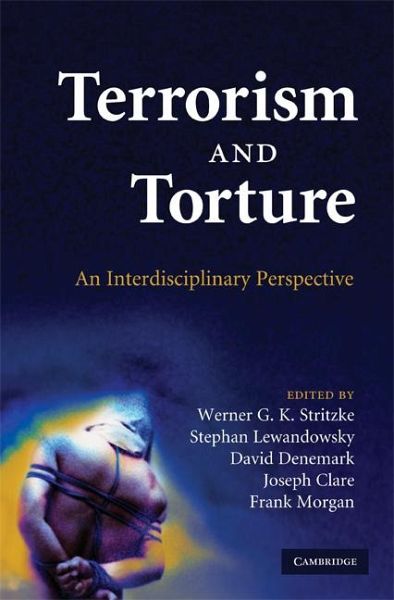
Terrorism and Torture
Herausgeber: Stritzke, Werner G. K.; Denemark, David; Lewandowsky, Stephan
Terrorism and Torture
Herausgeber: Stritzke, Werner G. K.; Denemark, David; Lewandowsky, Stephan
- Gebundenes Buch
- Merkliste
- Auf die Merkliste
- Bewerten Bewerten
- Teilen
- Produkt teilen
- Produkterinnerung
- Produkterinnerung
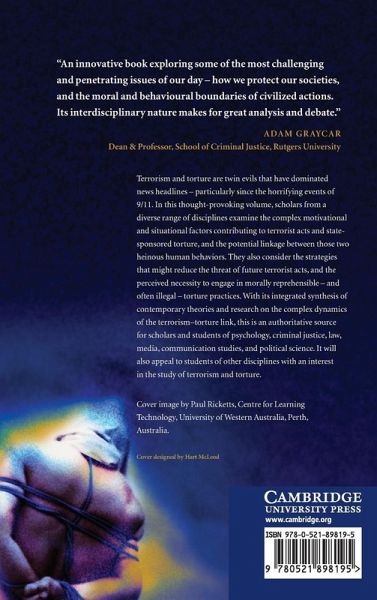
A thought-provoking volume examining the complex factors contributing to terrorism and torture, and the links between those two heinous behaviours.
Andere Kunden interessierten sich auch für
T. LightcapThe Politics of Torture38,99 €
Michelle FarrellThe Prohibition of Torture in Exceptional Circumstances47,99 €
Karen J. Greenberg (ed.)The Torture Debate in America92,99 €
Ergün CakalLaw and Torture120,99 €
Stuart Casey-MaslenThe Prohibition of Torture and Ill-Treatment under International Law138,99 €
Senate Select Committee on IntelligenceThe Senate Intelligence Committee Report on Torture14,99 €
Aaron MurchanIs torture justifiable in the war on terror?15,95 €-
-
-
A thought-provoking volume examining the complex factors contributing to terrorism and torture, and the links between those two heinous behaviours.
Produktdetails
- Produktdetails
- Verlag: Cambridge University Press
- Seitenzahl: 368
- Erscheinungstermin: 18. Juni 2009
- Englisch
- Abmessung: 235mm x 157mm x 24mm
- Gewicht: 683g
- ISBN-13: 9780521898195
- ISBN-10: 0521898196
- Artikelnr.: 26033724
- Herstellerkennzeichnung
- Libri GmbH
- Europaallee 1
- 36244 Bad Hersfeld
- gpsr@libri.de
- Verlag: Cambridge University Press
- Seitenzahl: 368
- Erscheinungstermin: 18. Juni 2009
- Englisch
- Abmessung: 235mm x 157mm x 24mm
- Gewicht: 683g
- ISBN-13: 9780521898195
- ISBN-10: 0521898196
- Artikelnr.: 26033724
- Herstellerkennzeichnung
- Libri GmbH
- Europaallee 1
- 36244 Bad Hersfeld
- gpsr@libri.de
Preface; 1. The terrorism-torture link: when evil begets evil Werner G. K.
Stritzke and Stephan Lewandowsky; 2. Torture, terrorism, and the moral
prohibition on killing non-combatants Alex J. Bellamy; 3. The equivalent
logic of torture and terrorism: the legal regulation of moral monstrosity
Ben Saul; 4. War versus criminal justice in response to terrorism: the
losing logic of torture Clark McCauley; 5. Reducing the opportunities for
terrorism: applying the principles of situational crime prevention Ronald
V. Clarke and Graeme R. Newman; 6. From the terrorists' point of view:
toward a better understanding of the staircase to terrorism Fathali M.
Moghaddam; 7. If they're not crazy, then what? The implications of social
psychological approaches to terrorism for conflict management Winnifred R.
Louis; 8. The cycle of righteous destruction: a Terror Management Theory
perspective on terrorist and counter-terrorist violence Tom Pyszczynski,
Zachary Rothschild, Matt Motyl and Abdolhossein Abdollahi; 9.
Misinformation and the 'War on Terror': when memory turns fiction into fact
Stephan Lewandowsky, Werner G. K. Stritzke, Klaus Oberauer and Michael
Morales; 10. Icons of fear: terrorism, torture, and the media John Tulloch;
11. What explains torture coverage during war-time? A search for realistic
answers Doris Graber and Gregory Holyk; 12. Reversed negatives: how the
news media respond to 'our' atrocities Rodney Tiffen; 13. Terrorism and TV
news coverage of the 2001 Australian election David Denemark; 14.
Terrorism, anxiety, and war Leonie Huddy, Stanley Feldman and Erin Cassese;
15. I'm right, you're dead: speculations about the roots of fanaticism
Carmen Lawrence; 16. Reducing terrorist risk: integrating jurisdictional
and opportunity approaches Joseph Clare and Frank Morgan.
Stritzke and Stephan Lewandowsky; 2. Torture, terrorism, and the moral
prohibition on killing non-combatants Alex J. Bellamy; 3. The equivalent
logic of torture and terrorism: the legal regulation of moral monstrosity
Ben Saul; 4. War versus criminal justice in response to terrorism: the
losing logic of torture Clark McCauley; 5. Reducing the opportunities for
terrorism: applying the principles of situational crime prevention Ronald
V. Clarke and Graeme R. Newman; 6. From the terrorists' point of view:
toward a better understanding of the staircase to terrorism Fathali M.
Moghaddam; 7. If they're not crazy, then what? The implications of social
psychological approaches to terrorism for conflict management Winnifred R.
Louis; 8. The cycle of righteous destruction: a Terror Management Theory
perspective on terrorist and counter-terrorist violence Tom Pyszczynski,
Zachary Rothschild, Matt Motyl and Abdolhossein Abdollahi; 9.
Misinformation and the 'War on Terror': when memory turns fiction into fact
Stephan Lewandowsky, Werner G. K. Stritzke, Klaus Oberauer and Michael
Morales; 10. Icons of fear: terrorism, torture, and the media John Tulloch;
11. What explains torture coverage during war-time? A search for realistic
answers Doris Graber and Gregory Holyk; 12. Reversed negatives: how the
news media respond to 'our' atrocities Rodney Tiffen; 13. Terrorism and TV
news coverage of the 2001 Australian election David Denemark; 14.
Terrorism, anxiety, and war Leonie Huddy, Stanley Feldman and Erin Cassese;
15. I'm right, you're dead: speculations about the roots of fanaticism
Carmen Lawrence; 16. Reducing terrorist risk: integrating jurisdictional
and opportunity approaches Joseph Clare and Frank Morgan.
Preface; 1. The terrorism-torture link: when evil begets evil Werner G. K.
Stritzke and Stephan Lewandowsky; 2. Torture, terrorism, and the moral
prohibition on killing non-combatants Alex J. Bellamy; 3. The equivalent
logic of torture and terrorism: the legal regulation of moral monstrosity
Ben Saul; 4. War versus criminal justice in response to terrorism: the
losing logic of torture Clark McCauley; 5. Reducing the opportunities for
terrorism: applying the principles of situational crime prevention Ronald
V. Clarke and Graeme R. Newman; 6. From the terrorists' point of view:
toward a better understanding of the staircase to terrorism Fathali M.
Moghaddam; 7. If they're not crazy, then what? The implications of social
psychological approaches to terrorism for conflict management Winnifred R.
Louis; 8. The cycle of righteous destruction: a Terror Management Theory
perspective on terrorist and counter-terrorist violence Tom Pyszczynski,
Zachary Rothschild, Matt Motyl and Abdolhossein Abdollahi; 9.
Misinformation and the 'War on Terror': when memory turns fiction into fact
Stephan Lewandowsky, Werner G. K. Stritzke, Klaus Oberauer and Michael
Morales; 10. Icons of fear: terrorism, torture, and the media John Tulloch;
11. What explains torture coverage during war-time? A search for realistic
answers Doris Graber and Gregory Holyk; 12. Reversed negatives: how the
news media respond to 'our' atrocities Rodney Tiffen; 13. Terrorism and TV
news coverage of the 2001 Australian election David Denemark; 14.
Terrorism, anxiety, and war Leonie Huddy, Stanley Feldman and Erin Cassese;
15. I'm right, you're dead: speculations about the roots of fanaticism
Carmen Lawrence; 16. Reducing terrorist risk: integrating jurisdictional
and opportunity approaches Joseph Clare and Frank Morgan.
Stritzke and Stephan Lewandowsky; 2. Torture, terrorism, and the moral
prohibition on killing non-combatants Alex J. Bellamy; 3. The equivalent
logic of torture and terrorism: the legal regulation of moral monstrosity
Ben Saul; 4. War versus criminal justice in response to terrorism: the
losing logic of torture Clark McCauley; 5. Reducing the opportunities for
terrorism: applying the principles of situational crime prevention Ronald
V. Clarke and Graeme R. Newman; 6. From the terrorists' point of view:
toward a better understanding of the staircase to terrorism Fathali M.
Moghaddam; 7. If they're not crazy, then what? The implications of social
psychological approaches to terrorism for conflict management Winnifred R.
Louis; 8. The cycle of righteous destruction: a Terror Management Theory
perspective on terrorist and counter-terrorist violence Tom Pyszczynski,
Zachary Rothschild, Matt Motyl and Abdolhossein Abdollahi; 9.
Misinformation and the 'War on Terror': when memory turns fiction into fact
Stephan Lewandowsky, Werner G. K. Stritzke, Klaus Oberauer and Michael
Morales; 10. Icons of fear: terrorism, torture, and the media John Tulloch;
11. What explains torture coverage during war-time? A search for realistic
answers Doris Graber and Gregory Holyk; 12. Reversed negatives: how the
news media respond to 'our' atrocities Rodney Tiffen; 13. Terrorism and TV
news coverage of the 2001 Australian election David Denemark; 14.
Terrorism, anxiety, and war Leonie Huddy, Stanley Feldman and Erin Cassese;
15. I'm right, you're dead: speculations about the roots of fanaticism
Carmen Lawrence; 16. Reducing terrorist risk: integrating jurisdictional
and opportunity approaches Joseph Clare and Frank Morgan.