Jerome H. Barkow / Leda Cosmides / John Tooby (eds.)Evolutionary Psychology and the Generation of Culture
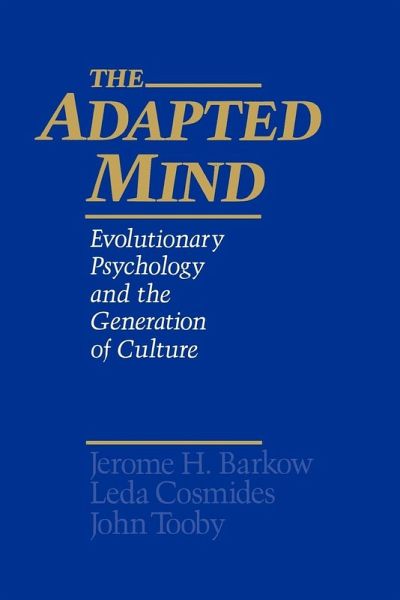
The Adapted Mind
Evolutionary Psychology and the Generation of Culture
Herausgeber: Barkow, Jerome H.; Cosmides, Leda; Tooby, John
Jerome H. Barkow / Leda Cosmides / John Tooby (eds.)Evolutionary Psychology and the Generation of Culture
The Adapted Mind
Evolutionary Psychology and the Generation of Culture
Herausgeber: Barkow, Jerome H.; Cosmides, Leda; Tooby, John
- Broschiertes Buch
- Merkliste
- Auf die Merkliste
- Bewerten Bewerten
- Teilen
- Produkt teilen
- Produkterinnerung
- Produkterinnerung
This collection of research essays is centred on the complex, evolved psychological mechanisms that generate human behaviour and culture. It aims to introduce the field of evolutionary psychology to a wider audience and to show how the field connects evolutionary biology to social behaviour.
Andere Kunden interessierten sich auch für
Prof Shaun Gallagher (Lillian and Morrie Moss Chair of Excellence iThe Self and its Disorders27,99 €
Chris WilliamsOvercoming Depression and Low Mood in Older Adults149,99 €
Chris WilliamsOvercoming Depression and Low Mood in Older Adults29,99 €
Tali SharotThe Influential Mind9,99 €
Mark Turner (Professor of English, Professor of English, UniversityThe Literary Mind25,99 €
Rolf DobelliThe Art of Thinking Clearly9,99 €
Adam Gazzaley (Professor, University of California, San Francisco)The Distracted Mind16,99 €-
-
-
This collection of research essays is centred on the complex, evolved psychological mechanisms that generate human behaviour and culture. It aims to introduce the field of evolutionary psychology to a wider audience and to show how the field connects evolutionary biology to social behaviour.
Produktdetails
- Produktdetails
- Verlag: Oxford University Press Inc
- Seitenzahl: 680
- Erscheinungstermin: 1. Oktober 1995
- Englisch
- Abmessung: 234mm x 156mm x 37mm
- Gewicht: 958g
- ISBN-13: 9780195101072
- ISBN-10: 0195101073
- Artikelnr.: 22435879
- Herstellerkennzeichnung
- Libri GmbH
- Europaallee 1
- 36244 Bad Hersfeld
- gpsr@libri.de
- Verlag: Oxford University Press Inc
- Seitenzahl: 680
- Erscheinungstermin: 1. Oktober 1995
- Englisch
- Abmessung: 234mm x 156mm x 37mm
- Gewicht: 958g
- ISBN-13: 9780195101072
- ISBN-10: 0195101073
- Artikelnr.: 22435879
- Herstellerkennzeichnung
- Libri GmbH
- Europaallee 1
- 36244 Bad Hersfeld
- gpsr@libri.de
J. Tooby & L. Cosmides: Introduction; Part I: Theoretical framework: J.
Tooby & L. Cosmides: The psychological foundations of culture; D. Symons:
On the use and misuse of darwinism in the study of human behavior; Part II:
Cooperation: L. Cosmides & J. Tooby: Cognitive adaptations for social
exchange; W.C. McGrew & A.T.C. Feistner: Two non-human primate models for
the evolution of human food-sharing: chimpanzees and callitrichids; Part
III: The psychology of mating and sex: D. Buss: Mate preference mechanisms:
consequences for partner choice and intrasexual competition; B. Ellis: The
evolution of sexual attraction: evaluative mechanisms in women; M. Wilson &
M. Daly: The man who mistook his wife for a chattel; Part IV: Parental care
and children: M. Profet: Pregnancy sickness as adaptation: a deterrent to
maternal ingestion of teratogens; J. Mann: Nurturance or negligence:
maternal psychology and behavioral preference among preterm twins; A.
Fernald: Human maternal vocalizations to infants as biologically relevant
signals: an evolutionary perspective; M.J. Boulton & P.K. Smith: The social
nature of play fighting and play chasing: mechanisms and strategies
underlying cooperation and compromise; Part V: Perception and language as
adaptations: S. Pinker & P. Bloom: Natural language and natural selection;
R.N. Shepherd: The perceptual organization of colors: an adaptation to
regularities of the terrestrial world?; I. Silverman & M. Eals: Sex
differences in spatial abilities: evolutionary theory and data; Part VI:
Environmental aesthetics: G.H. Orians & J.H. Heerwagen: Evolved responses
to landscapes; S. Kaplan: Environmental preference in a knowledge-seeking,
knowledge-using organism; Part VII: Intrapsychic processes: R.M. Nesse &
A.T. Lloyd: The evolution of psychodynamic mechanisms; Part VIII:
Understanding evolutionary new cultural forms: J.H. Barkow: Beneath new
culture is old psychology: gossip, class, and the environment.
Tooby & L. Cosmides: The psychological foundations of culture; D. Symons:
On the use and misuse of darwinism in the study of human behavior; Part II:
Cooperation: L. Cosmides & J. Tooby: Cognitive adaptations for social
exchange; W.C. McGrew & A.T.C. Feistner: Two non-human primate models for
the evolution of human food-sharing: chimpanzees and callitrichids; Part
III: The psychology of mating and sex: D. Buss: Mate preference mechanisms:
consequences for partner choice and intrasexual competition; B. Ellis: The
evolution of sexual attraction: evaluative mechanisms in women; M. Wilson &
M. Daly: The man who mistook his wife for a chattel; Part IV: Parental care
and children: M. Profet: Pregnancy sickness as adaptation: a deterrent to
maternal ingestion of teratogens; J. Mann: Nurturance or negligence:
maternal psychology and behavioral preference among preterm twins; A.
Fernald: Human maternal vocalizations to infants as biologically relevant
signals: an evolutionary perspective; M.J. Boulton & P.K. Smith: The social
nature of play fighting and play chasing: mechanisms and strategies
underlying cooperation and compromise; Part V: Perception and language as
adaptations: S. Pinker & P. Bloom: Natural language and natural selection;
R.N. Shepherd: The perceptual organization of colors: an adaptation to
regularities of the terrestrial world?; I. Silverman & M. Eals: Sex
differences in spatial abilities: evolutionary theory and data; Part VI:
Environmental aesthetics: G.H. Orians & J.H. Heerwagen: Evolved responses
to landscapes; S. Kaplan: Environmental preference in a knowledge-seeking,
knowledge-using organism; Part VII: Intrapsychic processes: R.M. Nesse &
A.T. Lloyd: The evolution of psychodynamic mechanisms; Part VIII:
Understanding evolutionary new cultural forms: J.H. Barkow: Beneath new
culture is old psychology: gossip, class, and the environment.
J. Tooby & L. Cosmides: Introduction; Part I: Theoretical framework: J.
Tooby & L. Cosmides: The psychological foundations of culture; D. Symons:
On the use and misuse of darwinism in the study of human behavior; Part II:
Cooperation: L. Cosmides & J. Tooby: Cognitive adaptations for social
exchange; W.C. McGrew & A.T.C. Feistner: Two non-human primate models for
the evolution of human food-sharing: chimpanzees and callitrichids; Part
III: The psychology of mating and sex: D. Buss: Mate preference mechanisms:
consequences for partner choice and intrasexual competition; B. Ellis: The
evolution of sexual attraction: evaluative mechanisms in women; M. Wilson &
M. Daly: The man who mistook his wife for a chattel; Part IV: Parental care
and children: M. Profet: Pregnancy sickness as adaptation: a deterrent to
maternal ingestion of teratogens; J. Mann: Nurturance or negligence:
maternal psychology and behavioral preference among preterm twins; A.
Fernald: Human maternal vocalizations to infants as biologically relevant
signals: an evolutionary perspective; M.J. Boulton & P.K. Smith: The social
nature of play fighting and play chasing: mechanisms and strategies
underlying cooperation and compromise; Part V: Perception and language as
adaptations: S. Pinker & P. Bloom: Natural language and natural selection;
R.N. Shepherd: The perceptual organization of colors: an adaptation to
regularities of the terrestrial world?; I. Silverman & M. Eals: Sex
differences in spatial abilities: evolutionary theory and data; Part VI:
Environmental aesthetics: G.H. Orians & J.H. Heerwagen: Evolved responses
to landscapes; S. Kaplan: Environmental preference in a knowledge-seeking,
knowledge-using organism; Part VII: Intrapsychic processes: R.M. Nesse &
A.T. Lloyd: The evolution of psychodynamic mechanisms; Part VIII:
Understanding evolutionary new cultural forms: J.H. Barkow: Beneath new
culture is old psychology: gossip, class, and the environment.
Tooby & L. Cosmides: The psychological foundations of culture; D. Symons:
On the use and misuse of darwinism in the study of human behavior; Part II:
Cooperation: L. Cosmides & J. Tooby: Cognitive adaptations for social
exchange; W.C. McGrew & A.T.C. Feistner: Two non-human primate models for
the evolution of human food-sharing: chimpanzees and callitrichids; Part
III: The psychology of mating and sex: D. Buss: Mate preference mechanisms:
consequences for partner choice and intrasexual competition; B. Ellis: The
evolution of sexual attraction: evaluative mechanisms in women; M. Wilson &
M. Daly: The man who mistook his wife for a chattel; Part IV: Parental care
and children: M. Profet: Pregnancy sickness as adaptation: a deterrent to
maternal ingestion of teratogens; J. Mann: Nurturance or negligence:
maternal psychology and behavioral preference among preterm twins; A.
Fernald: Human maternal vocalizations to infants as biologically relevant
signals: an evolutionary perspective; M.J. Boulton & P.K. Smith: The social
nature of play fighting and play chasing: mechanisms and strategies
underlying cooperation and compromise; Part V: Perception and language as
adaptations: S. Pinker & P. Bloom: Natural language and natural selection;
R.N. Shepherd: The perceptual organization of colors: an adaptation to
regularities of the terrestrial world?; I. Silverman & M. Eals: Sex
differences in spatial abilities: evolutionary theory and data; Part VI:
Environmental aesthetics: G.H. Orians & J.H. Heerwagen: Evolved responses
to landscapes; S. Kaplan: Environmental preference in a knowledge-seeking,
knowledge-using organism; Part VII: Intrapsychic processes: R.M. Nesse &
A.T. Lloyd: The evolution of psychodynamic mechanisms; Part VIII:
Understanding evolutionary new cultural forms: J.H. Barkow: Beneath new
culture is old psychology: gossip, class, and the environment.