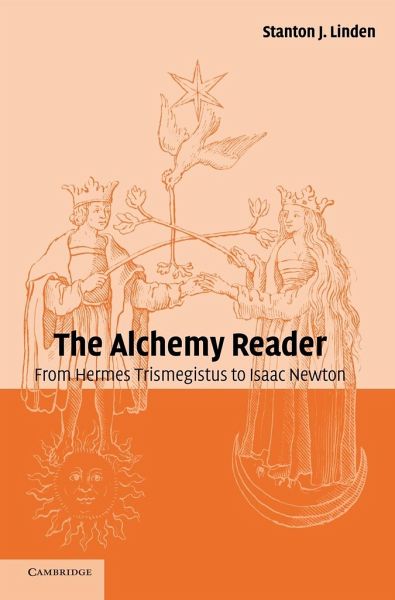
The Alchemy Reader is a collection of primary source readings on alchemy and hermeticism, which offers readers an informed introduction and background to a complex field through the works of important ancient, medieval and early modern alchemical authors. Including selections from the legendary Hermes Trimegistus to Robert Boyle and Isaac Newton, the book illustrates basic definitions, conceptions, and varied interests and emphases; and it also illustrates the highly interdisciplinary character of alchemical thought and its links with science and medicine, philosophical and religious currents,…mehr
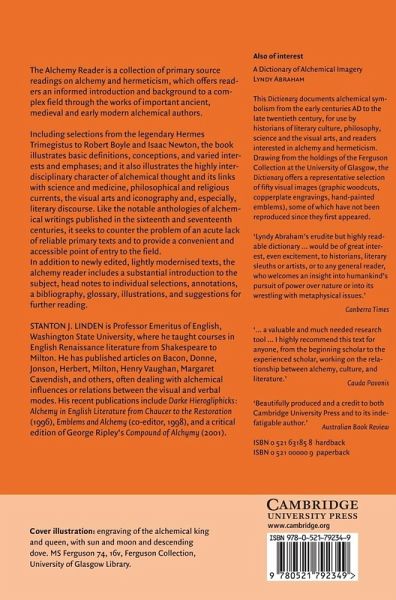
The Alchemy Reader is a collection of primary source readings on alchemy and hermeticism, which offers readers an informed introduction and background to a complex field through the works of important ancient, medieval and early modern alchemical authors. Including selections from the legendary Hermes Trimegistus to Robert Boyle and Isaac Newton, the book illustrates basic definitions, conceptions, and varied interests and emphases; and it also illustrates the highly interdisciplinary character of alchemical thought and its links with science and medicine, philosophical and religious currents, the visual arts and iconography and, especially, literary discourse. Like the notable anthologies of alchemical writings published in the sixteenth and seventeenth centuries, it seeks to counter the problem of an acute lack of reliable primary texts and to provide a convenient and accessible point of entry to the field.
Stanton J. Linden is Professor Emeritus of English, Washington State University. His publications include Darke Hierogliphicks: Alchemy in English Literature from Chaucer to the Restoration (1996), Emblems and Alchemy (co-editor, 1998), and a critical edition of George Ripley's Compound of Alchymy (2001).
Inhaltsangabe
Introduction Part I. Ancient Texts: 1. Hermes Trismegistus: The Emerald Table (Tabula smaragdina) 2. Plato: from the Timaeus 3. Aristotle: from the Meteorology 4. Pseudo-Democritus: from the Treatise of Democritus on Things Natural and Mystical 5. Anonymous: Dialogue of Cleopatra and the Philosophers 6. Anonymous: from Leiden Papyrus X and the Stockholm Papyrus 7. Zosimos of Panopolis: Of Virtue, Lesson 1-3 8. Stephanos of Alexandria: from The Great and Sacred Art of the Making of Gold 9. Anonymous: The Poem of the Philosopher Theophrastos upon the Sacred Art Part II. Islamic and Medieval Texts: 10. Khalid ibn Yazid: from Secreta Alchymiae 11. Pseudo-Geber: from Of the Investigation or Search of Perfection Of the Sum of Perfection and His Book of Furnaces 12. Avicenna: De Congelatione et Conglutinatione Lapidum 13. Albertus Magnus: from the Libellus de Alchimia 14. Roger Bacon: from the Radix Mundi 15. Nicolas Flamel: from His Exposition of the Hieroglyphical Figures 16. Bernard, Earl of Trevisan: A Treatise of the Philosophers Stone 17. George Ripley: The Epistle of George Ripley written to King Edward the 4 Part III. Renaissance and Seventeenth Century Texts: 18. Paracelsus: from Of the Nature of Things and Paracelsus His Aurora 19. Francis Anthony: Aurum-Potabile: or the Receit of Dr. Fr. Antonie 20. Michael Sendivogius: from A New Light of Alchymie and A Dialogue between Mercury, the Alchymist and Nature 21. Robert Fludd: from Mosaicall Philosophy 22. Gabriel Plattes: A Caveat for Alchymists 23. John French: preface to The Divine Pymander of Hermes Mercurius Trimegistus in XVII Books 24. George Starkey/Eirenaeus Philalethes: The Admirable Efficacy, and almost incredible Virtue of true Oyl from An Exposition Upon Sir George Ripley's Epistle to King Edward IV 25. Elias Ashmole: Prolegomena to the Theatrum Chemicum Britannicum 26. Robert Boyle: from An Historical Account of a Degradation of Gold Made by an Anti-Elixir: A Strange Chymical Narrative 27. Isaac Newton: The Key (Keynes MS 18) The Commentary on the Emerald Tablet (Keynes MS 28), King's College, Cambridge Glossary Bibliography Index.
Introduction Part I. Ancient Texts: 1. Hermes Trismegistus: The Emerald Table (Tabula smaragdina) 2. Plato: from the Timaeus 3. Aristotle: from the Meteorology 4. Pseudo-Democritus: from the Treatise of Democritus on Things Natural and Mystical 5. Anonymous: Dialogue of Cleopatra and the Philosophers 6. Anonymous: from Leiden Papyrus X and the Stockholm Papyrus 7. Zosimos of Panopolis: Of Virtue, Lesson 1-3 8. Stephanos of Alexandria: from The Great and Sacred Art of the Making of Gold 9. Anonymous: The Poem of the Philosopher Theophrastos upon the Sacred Art Part II. Islamic and Medieval Texts: 10. Khalid ibn Yazid: from Secreta Alchymiae 11. Pseudo-Geber: from Of the Investigation or Search of Perfection Of the Sum of Perfection and His Book of Furnaces 12. Avicenna: De Congelatione et Conglutinatione Lapidum 13. Albertus Magnus: from the Libellus de Alchimia 14. Roger Bacon: from the Radix Mundi 15. Nicolas Flamel: from His Exposition of the Hieroglyphical Figures 16. Bernard, Earl of Trevisan: A Treatise of the Philosophers Stone 17. George Ripley: The Epistle of George Ripley written to King Edward the 4 Part III. Renaissance and Seventeenth Century Texts: 18. Paracelsus: from Of the Nature of Things and Paracelsus His Aurora 19. Francis Anthony: Aurum-Potabile: or the Receit of Dr. Fr. Antonie 20. Michael Sendivogius: from A New Light of Alchymie and A Dialogue between Mercury, the Alchymist and Nature 21. Robert Fludd: from Mosaicall Philosophy 22. Gabriel Plattes: A Caveat for Alchymists 23. John French: preface to The Divine Pymander of Hermes Mercurius Trimegistus in XVII Books 24. George Starkey/Eirenaeus Philalethes: The Admirable Efficacy, and almost incredible Virtue of true Oyl from An Exposition Upon Sir George Ripley's Epistle to King Edward IV 25. Elias Ashmole: Prolegomena to the Theatrum Chemicum Britannicum 26. Robert Boyle: from An Historical Account of a Degradation of Gold Made by an Anti-Elixir: A Strange Chymical Narrative 27. Isaac Newton: The Key (Keynes MS 18) The Commentary on the Emerald Tablet (Keynes MS 28), King's College, Cambridge Glossary Bibliography Index.
Es gelten unsere Allgemeinen Geschäftsbedingungen: www.buecher.de/agb
Impressum
www.buecher.de ist ein Internetauftritt der buecher.de internetstores GmbH
Geschäftsführung: Monica Sawhney | Roland Kölbl | Günter Hilger
Sitz der Gesellschaft: Batheyer Straße 115 - 117, 58099 Hagen
Postanschrift: Bürgermeister-Wegele-Str. 12, 86167 Augsburg
Amtsgericht Hagen HRB 13257
Steuernummer: 321/5800/1497
USt-IdNr: DE450055826