Andere Kunden interessierten sich auch für
 Thus Spake Zarathustra27,99 €
 Beyond Good and Evil16,99 €
 Utilitarianism12,99 €
 Mill Selected Writings22,99 €
 On Liberty14,99 €
 On the Shortness of Life12,99 €
 Ethics17,99 €


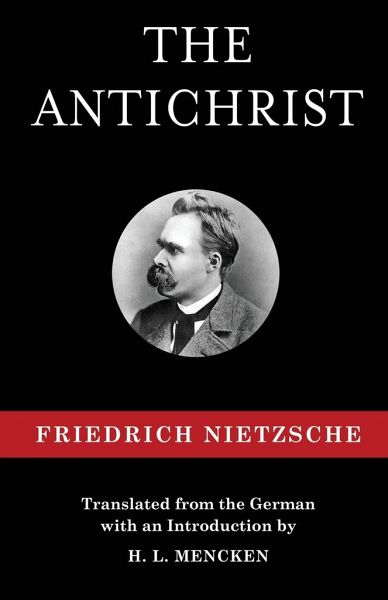
The Antichrist by Friedrich Nietzsche is a philosophical work that considers the moral status of religion, as well as the nature of existence. It is one of Nietzsche's most famous works and stands as a cornerstone of his thought. In The Antichrist, Nietzsche presents a highly controversial view of Christianity as a damaging influence upon western civilization that must come to an end. Regardless of one's religious or philosophical point of view, The Antichrist makes for an engaging philosophical discourse. He argues that Christianity has made humanity weak, and that in order for humanity to reach its true potential, these values must be discarded. Nietzsche's one of the most debated thinkers of the 19th century, Nietzsche and his works have been by turns vilified, lauded, and subjected to numerous contradictory interpretations, and yet he remains a figure of profound import, and his works a necessary component of a well-rounded education. The Antichrist is absolutely vital to any meaningful understanding of Nietzsche the man and Nietzsche the philosopher. An insightful and entertaining indictment of Christianity, it has enraged and inspired generations of readers.
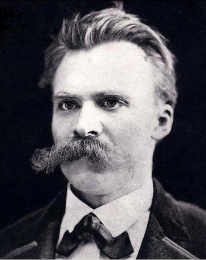
1844-1900. German philologist, philosopher, cultural critic, poet and composer. He wrote several critical texts on religion, morality, contemporary culture, philosophy and science, displaying a fondness for metaphor, irony and aphorism. Nietzsche began his career as a classical philologist - a scholar of Greek and Roman textual criticism - before turning to philosophy. In 1869, at age twenty-four, he was appointed to the Chair of Classical Philology at the University of Basel, the youngest individual to have held this position. He resigned in the summer of 1879 due to health problems that plagued him most of his life. In 1889, at age forty-four, he suffered a collapse and a complete loss of his mental faculties. The breakdown was later ascribed to atypical general paresis due to tertiary syphilis, but this diagnosis has come into question. Nietzsche lived his remaining years in the care of his mother until her death in 1897, after which he fell under the care of his sister Elisabeth Förster-Nietzsche until his death in 1900. The Free Dictionary