
Andere Kunden interessierten sich auch für
 The Apology of the Augsburg Confession20,99 €
 The Augsburg Confession4,99 €
 The Augsburg Confession27,99 €
 A Chronicle of the Augsburg Confession17,99 €
 The Friends' Library: Comprising Journals, Doctrinal Treatises, and Other Writings of Members of the Religious Society of Friends; 425,99 €
 The Friends' Library: Comprising Journals, Doctrinal Treatises, and Other Writings of Members of the Religious Society of Friends; 625,99 €
 Friends' Library: Comprising Journals, Doctrinal Treatises and Other Writings of the Religious Society of Friends; 825,99 €



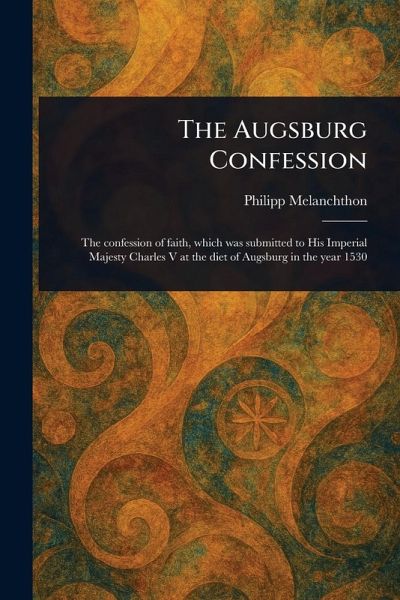
"The Confession of Faith," more commonly known as the Augsburg Confession, stands as a foundational document of Lutheranism and a crucial text in the history of the Reformation. Submitted to Emperor Charles V at the Diet of Augsburg in 1530, this confession, primarily authored by Philip Melanchthon, articulates the core theological tenets of the Lutheran reformers. This meticulously prepared print edition allows readers to engage directly with this landmark statement of faith. Exploring essential points of theology and doctrine, the Augsburg Confession outlines the reformers' beliefs on justification, the sacraments, and the authority of scripture, among other vital subjects. It provides invaluable insight into the theological landscape of the 16th century and the complex religious and political dynamics that shaped early Protestantism. A significant work for anyone studying the Reformation, Lutheran history, or Christian Theology. This work has been selected by scholars as being culturally important, and is part of the knowledge base of civilization as we know it. This work is in the public domain in the United States of America, and possibly other nations. Within the United States, you may freely copy and distribute this work, as no entity (individual or corporate) has a copyright on the body of the work. Scholars believe, and we concur, that this work is important enough to be preserved, reproduced, and made generally available to the public. We appreciate your support of the preservation process, and thank you for being an important part of keeping this knowledge alive and relevant.