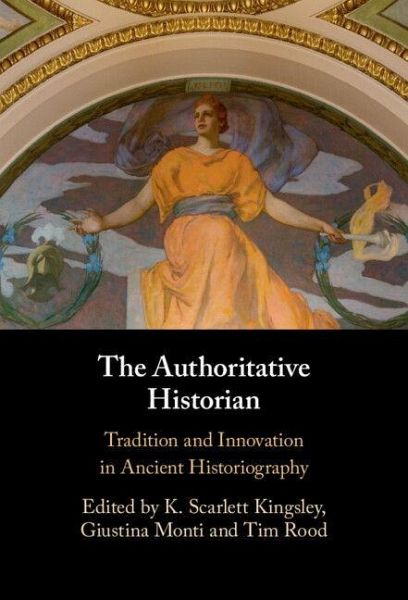
Explores how Greek and Roman historians frame innovations against generic tradition. Combining close readings and broader thematic analyses, the book presents a holistic vision of the development of the genre of historiography in Greece and Rome and the historian's dynamic position within this practice.
Explores how Greek and Roman historians frame innovations against generic tradition. Combining close readings and broader thematic analyses, the book presents a holistic vision of the development of the genre of historiography in Greece and Rome and the historian's dynamic position within this practice.
Introduction: the authoritative historian K. Scarlett Kingsley, Giustina Monti and Tim Rood; Part I. Myth, Fiction, and the Historian's Authority: 1. Seven types of fiction in the Greek historians Michael A. Flower; 2. Folktale and local tradition in Charon of Lampsacus Nino Luraghi; 3. Mythical and historical time in Herodotus: Scaliger, Jacoby, and the chronographic tradition Tim Rood; 4. Myth and history in Livy's preface A. J. Woodman; Part II. Dislocating Authority in Herodotus' Histories: 5. Herodotus as tour guide: the autopsy motif Scott Scullion; 6. Interpretive uncertainty in Herodotus' Histories Carolyn Dewald; 7. 'It is no accident that...': connectivity and coincidence in Herodotus Richard Rutherford; 8. Through barbarian eyes: non-Greeks on Greeks in Herodotus Deborah Boedeker; Part III. Performing Collective and Personal Authority; 9. Singing and dancing Pindar's authority Lucia Athanassaki; 10. Authority, experience, and the vicarious traveller in Herodotus' Histories K. Scarlett Kingsley; 11. Veni, vidi, vici: when did Roman politicians use the first-person singular? Harriet Flower; 12. Self-praise and self-presentation in Plutarch Frances B. Titchener; Part IV. Generic Transformations: 13. Thucydides' Mytilenaean debate: political philosophy or authoritative history? Paul Cartledge; 14. Tradition, innovation, and authority: Caesar's historical ambitions Kurt A. Raaflaub; 15. Tradition and authority in Philostratus' Lives of the Sophists Ewen Bowie; Part V. Innovation within Tradition: 16. 'When one assumes the ethos of writing history': Polybius' historiographical neologisms Giustina Monti; 17. How tradition is formed: from the fall of Caesar to the rise of Octavian Mark Toher; 18. 'Burn baby burn (disco in Furneaux)': Tacitean authority, innovation and the Neronian fire (Annals 15.38-9) Rhiannon Ash; 19. The authority to be untraditional Christopher Pelling.
Introduction: the authoritative historian K. Scarlett Kingsley, Giustina Monti and Tim Rood; Part I. Myth, Fiction, and the Historian's Authority: 1. Seven types of fiction in the Greek historians Michael A. Flower; 2. Folktale and local tradition in Charon of Lampsacus Nino Luraghi; 3. Mythical and historical time in Herodotus: Scaliger, Jacoby, and the chronographic tradition Tim Rood; 4. Myth and history in Livy's preface A. J. Woodman; Part II. Dislocating Authority in Herodotus' Histories: 5. Herodotus as tour guide: the autopsy motif Scott Scullion; 6. Interpretive uncertainty in Herodotus' Histories Carolyn Dewald; 7. 'It is no accident that...': connectivity and coincidence in Herodotus Richard Rutherford; 8. Through barbarian eyes: non-Greeks on Greeks in Herodotus Deborah Boedeker; Part III. Performing Collective and Personal Authority; 9. Singing and dancing Pindar's authority Lucia Athanassaki; 10. Authority, experience, and the vicarious traveller in Herodotus' Histories K. Scarlett Kingsley; 11. Veni, vidi, vici: when did Roman politicians use the first-person singular? Harriet Flower; 12. Self-praise and self-presentation in Plutarch Frances B. Titchener; Part IV. Generic Transformations: 13. Thucydides' Mytilenaean debate: political philosophy or authoritative history? Paul Cartledge; 14. Tradition, innovation, and authority: Caesar's historical ambitions Kurt A. Raaflaub; 15. Tradition and authority in Philostratus' Lives of the Sophists Ewen Bowie; Part V. Innovation within Tradition: 16. 'When one assumes the ethos of writing history': Polybius' historiographical neologisms Giustina Monti; 17. How tradition is formed: from the fall of Caesar to the rise of Octavian Mark Toher; 18. 'Burn baby burn (disco in Furneaux)': Tacitean authority, innovation and the Neronian fire (Annals 15.38-9) Rhiannon Ash; 19. The authority to be untraditional Christopher Pelling.
Es gelten unsere Allgemeinen Geschäftsbedingungen: www.buecher.de/agb
Impressum
www.buecher.de ist ein Internetauftritt der buecher.de internetstores GmbH
Geschäftsführung: Monica Sawhney | Roland Kölbl | Günter Hilger
Sitz der Gesellschaft: Batheyer Straße 115 - 117, 58099 Hagen
Postanschrift: Bürgermeister-Wegele-Str. 12, 86167 Augsburg
Amtsgericht Hagen HRB 13257
Steuernummer: 321/5800/1497
USt-IdNr: DE450055826