

Andere Kunden interessierten sich auch für
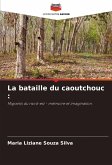
 La bataille du caoutchouc :40,99 €
 Memories of exclusion in the far south of Brazil24,99 €
 Haitian Migration to Southwest Acre27,99 €
 Resistance and challenges in securing land ownership37,99 €
 Demographic Rebuild after the Battle of Sexes23,00 €
 Mountain Memories32,99 €
 The Battle for Britain116,99 €

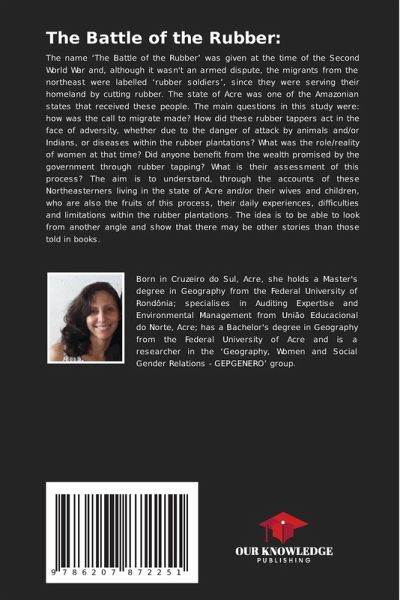
The name 'The Battle of the Rubber' was given at the time of the Second World War and, although it wasn't an armed dispute, the migrants from the northeast were labelled 'rubber soldiers', since they were serving their homeland by cutting rubber. The state of Acre was one of the Amazonian states that received these people. The main questions in this study were: how was the call to migrate made? How did these rubber tappers act in the face of adversity, whether due to the danger of attack by animals and/or Indians, or diseases within the rubber plantations? What was the role/reality of women at that time? Did anyone benefit from the wealth promised by the government through rubber tapping? What is their assessment of this process? The aim is to understand, through the accounts of these Northeasterners living in the state of Acre and/or their wives and children, who are also the fruits of this process, their daily experiences, difficulties and limitations within the rubber plantations. The idea is to be able to look from another angle and show that there may be other stories than those told in books.