With pressure increasing to utilise wastes and residues effectively and sustainably, the production of biogas represents one of the most important routes towards reaching national and international renewable energy targets. The biogas handbook: Science, production and applications provides a comprehensive and systematic guide to the development and deployment of biogas supply chains and technology. Following a concise overview of biogas as an energy option, part one explores biomass resources and fundamental science and engineering of biogas production, including feedstock characterisation,…mehr
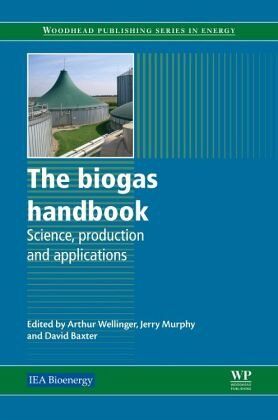
With pressure increasing to utilise wastes and residues effectively and sustainably, the production of biogas represents one of the most important routes towards reaching national and international renewable energy targets. The biogas handbook: Science, production and applications provides a comprehensive and systematic guide to the development and deployment of biogas supply chains and technology.
Following a concise overview of biogas as an energy option, part one explores biomass resources and fundamental science and engineering of biogas production, including feedstock characterisation, storage and pre-treatment, and yield optimisation. Plant design, engineering, process optimisation and digestate utilisation are the focus of part two. Topics considered include the engineering and process control of biogas plants, methane emissions in biogas production, and biogas digestate quality, utilisation and land application. Finally, part three discusses international experience and best practice in biogas utilisation. Biogas cleaning and upgrading to biomethane, biomethane use as transport fuel and the generation of heat and power from biogas for stationery applications are all discussed. The book concludes with a review of market development and biomethane certification schemes.
With its distinguished editors and international team of expert contributors, The biogas handbook: Science, production and applications is a practical reference to biogas technology for process engineers, manufacturers, industrial chemists and biochemists, scientists, researchers and academics working in this field.
Die Herstellerinformationen sind derzeit nicht verfügbar.
Autorenporträt
Arthur Wellinger is Managing Director of Triple E&M, an internationally operating research and consulting company located in Switzerland, and President of the European Biogas Association.
Jerry Murphy is the Lead Investigator in Bioenergy and Biofuels in the Environmental Research Institute at University College Cork, Ireland.
Inhaltsangabe
Contributor contact details
Woodhead Publishing Series in Energy
Foreword
Preface
Organisations supporting IEA Bioenergy Task 37 - Energy from Biogas
Part 1: Biomass resources, feedstock treatment and biogas production
Chapter 1: Biogas as an energy option: an overview
Abstract:
1.1 Introduction
1.2 Biogas technologies and environmental efficiency
1.3 Political drivers and legislation
1.4 Health, safety and risk assessment
1.5 Conclusions and future trends
1.6 Sources of further information and advice
Chapter 2: Biomass resources for biogas production
Abstract:
2.1 Introduction
2.2 Categories of biomass appropriate as feedstocks for biogas production
2.3 Characteristics of biogas feedstock
2.4 Resource availability and supply chain issues
2.5 Conclusion
Chapter 3: Analysis and characterisation of biogas feedstocks
Abstract:
3.1 Introduction
3.2 Preliminary feedstock characterisation
3.3 Essential laboratory analysis of feedstocks
3.4 Additional laboratory analysis of feedstocks
3.5 Detailed feedstock evaluation
3.6 Conclusions
3.7 Sources of further information and advice
Chapter 4: Storage and pre-treatment of substrates for biogas production
Abstract:
4.1 Introduction
4.2 Storage and ensiling of crops for biogas production
4.3 Pre-treatment technologies for biogas production
4.4 Conclusion and future trends
Chapter 5: Fundamental science and engineering of the anaerobic digestion process for biogas production
Abstract:
5.1 Introduction
5.2 Microbiology
5.3 Microbial environment
5.4 Gas production and feedstocks
5.5 Reactor configuration
5.6 Parasitic energy demand of process
5.7 Laboratory analysis and scale up
5.8 Modelling and optimisation of anaerobic digestion
5.9 Conclusions and future trends
Chapter 6: Optimisation of biogas yields from anaerobic digestion by feedstock type
Abstract:
6.1 Introduction
6.2 Defining optimisation
6.3 Basic definitions and concepts
6.4 Overcoming limitation as a result of hydraulic retention time (HRT)
6.5 Increasing the metabolic capacity of a digester
6.6 Matching feedstocks and digester type
6.7 Case studies
6.8 Future trends
Chapter 7: Anaerobic digestion as a key technology for biomass valorization: contribution to the energy balance of biofuel chains
Abstract:
7.1 Introduction
7.2 The role of anaerobic digestion in biomass chains
7.3 A framework for approaching the role of anaerobic digestion within biomass chains
7.4 Contribution of anaerobic digestion to the energy balance of biofuel chains
7.5 Conclusion and future trends
Part 2: Plant design, engineering, process optimisation and digestate utilisation
Chapter 8: Design and engineering of biogas plants
Abstract:
8.1 Introduction
8.2 Digestion unit
8.3 Gas storage
8.4 Pipework, pumps and valves
8.5 Site characteristics and plant layout
8.6 Process control technology
8.7 Social and legal aspects
8.8 Practical challenges and future trends
Chapter 9: Energy flows in biogas plants: analysis and implications for plant design
Abstract:
9.1 Introduction
9.2 Energy demand of biogas plants
9.3 Energy supply for biogas plants
9.4 Balancing energy flows
9.5 Conclusion and future trends
Chapter 10: Process control in biogas plants
Abstract:
10.1 Introduction
10.2 Process analysis and monitoring
10.3 Optimising and implementing on-line process control in biogas plants
10.4 Mathematical process modelling and optimisation in practice
Organisations supporting IEA Bioenergy Task 37 - Energy from Biogas
Part 1: Biomass resources, feedstock treatment and biogas production
Chapter 1: Biogas as an energy option: an overview
Abstract:
1.1 Introduction
1.2 Biogas technologies and environmental efficiency
1.3 Political drivers and legislation
1.4 Health, safety and risk assessment
1.5 Conclusions and future trends
1.6 Sources of further information and advice
Chapter 2: Biomass resources for biogas production
Abstract:
2.1 Introduction
2.2 Categories of biomass appropriate as feedstocks for biogas production
2.3 Characteristics of biogas feedstock
2.4 Resource availability and supply chain issues
2.5 Conclusion
Chapter 3: Analysis and characterisation of biogas feedstocks
Abstract:
3.1 Introduction
3.2 Preliminary feedstock characterisation
3.3 Essential laboratory analysis of feedstocks
3.4 Additional laboratory analysis of feedstocks
3.5 Detailed feedstock evaluation
3.6 Conclusions
3.7 Sources of further information and advice
Chapter 4: Storage and pre-treatment of substrates for biogas production
Abstract:
4.1 Introduction
4.2 Storage and ensiling of crops for biogas production
4.3 Pre-treatment technologies for biogas production
4.4 Conclusion and future trends
Chapter 5: Fundamental science and engineering of the anaerobic digestion process for biogas production
Abstract:
5.1 Introduction
5.2 Microbiology
5.3 Microbial environment
5.4 Gas production and feedstocks
5.5 Reactor configuration
5.6 Parasitic energy demand of process
5.7 Laboratory analysis and scale up
5.8 Modelling and optimisation of anaerobic digestion
5.9 Conclusions and future trends
Chapter 6: Optimisation of biogas yields from anaerobic digestion by feedstock type
Abstract:
6.1 Introduction
6.2 Defining optimisation
6.3 Basic definitions and concepts
6.4 Overcoming limitation as a result of hydraulic retention time (HRT)
6.5 Increasing the metabolic capacity of a digester
6.6 Matching feedstocks and digester type
6.7 Case studies
6.8 Future trends
Chapter 7: Anaerobic digestion as a key technology for biomass valorization: contribution to the energy balance of biofuel chains
Abstract:
7.1 Introduction
7.2 The role of anaerobic digestion in biomass chains
7.3 A framework for approaching the role of anaerobic digestion within biomass chains
7.4 Contribution of anaerobic digestion to the energy balance of biofuel chains
7.5 Conclusion and future trends
Part 2: Plant design, engineering, process optimisation and digestate utilisation
Chapter 8: Design and engineering of biogas plants
Abstract:
8.1 Introduction
8.2 Digestion unit
8.3 Gas storage
8.4 Pipework, pumps and valves
8.5 Site characteristics and plant layout
8.6 Process control technology
8.7 Social and legal aspects
8.8 Practical challenges and future trends
Chapter 9: Energy flows in biogas plants: analysis and implications for plant design
Abstract:
9.1 Introduction
9.2 Energy demand of biogas plants
9.3 Energy supply for biogas plants
9.4 Balancing energy flows
9.5 Conclusion and future trends
Chapter 10: Process control in biogas plants
Abstract:
10.1 Introduction
10.2 Process analysis and monitoring
10.3 Optimising and implementing on-line process control in biogas plants
10.4 Mathematical process modelling and optimisation in practice
10.5 A
Rezensionen
"The extent and depth of knowledge and experience captured in The Biogas Handbook will help the emerging AD and biogas industries construct and operate state-of-the-art (and science) biogas plants., BioCycle. As an Editor, I am impressed with the handbook's ability to convey technical and scientific information in a style that can be understood by individuals with varying levels of knowledge about the topics discussed." --Nora Goldstein, BioCycle
Es gelten unsere Allgemeinen Geschäftsbedingungen: www.buecher.de/agb
Impressum
www.buecher.de ist ein Internetauftritt der buecher.de internetstores GmbH
Geschäftsführung: Monica Sawhney | Roland Kölbl | Günter Hilger
Sitz der Gesellschaft: Batheyer Straße 115 - 117, 58099 Hagen
Postanschrift: Bürgermeister-Wegele-Str. 12, 86167 Augsburg
Amtsgericht Hagen HRB 13257
Steuernummer: 321/5800/1497
USt-IdNr: DE450055826