
Andere Kunden interessierten sich auch für
 Gorham, Clerk, Against the Bishop of Exeter: The Argument of Dr. Bayford30,99 €
 God Against Slavery: And the Freedom and Duty of the Pulpit to Rebuke It, as a Sin Against God31,99 €
 The Nature, Folly, Sin, and Danger of Being Righteous Over-Much27,99 €
 Alexander Campbell, Leader of the Great Reformation of the Nineteenth Century30,99 €
 Missions Their Rise and Development31,99 €
 Constantine the Great and Christianity70,00 €
 The Two Blasphemies23,99 €

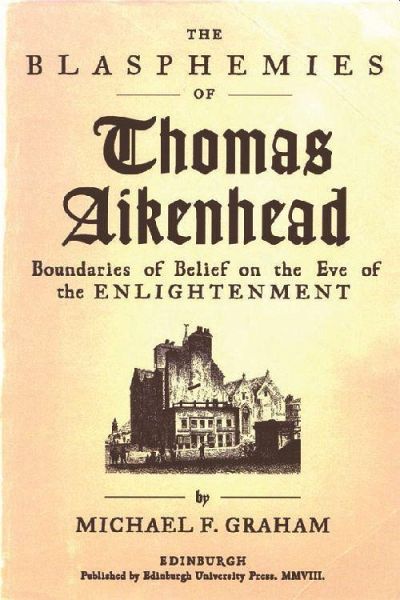
Thomas Aikenhead, a student at the University of Edinburgh, was hanged for blasphemy in 1697. His story brings together many of the critical themes in Scottish and British history in an era of transition from the revolutionary upheavals of the highly confessionalized seventeenth century to the more open civil society which came to characterize the Enlightenment. Aikenhead's views, which questioned the origins of Scripture, the historical aspects of Moses and Jesus, and the assumed superiority of Christianity over other doctrines, would later appear in the mainstream of Enlightenment discourse. But in 1696-7 they were toxic. Michael Graham's biography of Aikenhead, the first of its kind, places his story firmly in the social and political context of Edinburgh and Scotland in the 1690s while at the same time identifying the influences on his thinking, the legal issues raised by his trial and the ways it was viewed by contemporaries in Scotland and England. The Aikenhead case illuminates a number of themes in late-seventeenth-century history: *the influence of books and reading *the growth of higher education *the nature of "public opinion" in Britain more generally, as the case was covered in newspapers published in London *the ways legislation was drafted and used *the fissures in the religious politics of Britain after the 'Glorious Revolution'.
This is the first modern book-length study of the case of Thomas Aikenhead, the sometime University of Edinburgh student who in 1697 earned the unfortunate distinction of being the last person executed for blasphemy in Britain. Taking a micro-historical approach, Michael Graham uses the Aikenhead case to open a window into the world of Edinburgh, Scotland and Britain in its transition from the confessional era of the Reformation and the covenants, which placed high emphasis on the defence of orthodox belief, to the polite, literary world of the Enlightenment, of which Edinburgh would become a major centre.Graham traces the roots of the Aikenhead case in seventeenth-century Scotland and the law of blasphemy which was evolving in response to the new intellectual currents of biblical criticism and deism. He analyzes Aikenhead's trial and the Scottish government's decision to uphold the sentence of hanging. Finally, he details the debate engendered by the execution, carried out in a public sphere of print media encompassing both Scotland and England. Aikenhead's case became a media event which highlighted the intellectual and cultural divisions within Britain at the end of the seventeenth century.
This is the first modern book-length study of the case of Thomas Aikenhead, the sometime University of Edinburgh student who in 1697 earned the unfortunate distinction of being the last person executed for blasphemy in Britain. Taking a micro-historical approach, Michael Graham uses the Aikenhead case to open a window into the world of Edinburgh, Scotland and Britain in its transition from the confessional era of the Reformation and the covenants, which placed high emphasis on the defence of orthodox belief, to the polite, literary world of the Enlightenment, of which Edinburgh would become a major centre.Graham traces the roots of the Aikenhead case in seventeenth-century Scotland and the law of blasphemy which was evolving in response to the new intellectual currents of biblical criticism and deism. He analyzes Aikenhead's trial and the Scottish government's decision to uphold the sentence of hanging. Finally, he details the debate engendered by the execution, carried out in a public sphere of print media encompassing both Scotland and England. Aikenhead's case became a media event which highlighted the intellectual and cultural divisions within Britain at the end of the seventeenth century.