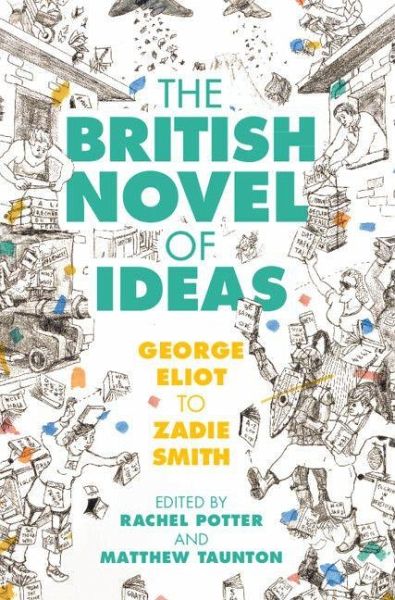

The novel of ideas is an important form that is both under-theorised and largely neglected in accounts of the development of the novel in the twentieth and twenty-first centuries. This book sets out the history of this critical hostility, which took hold as the aesthetic protocols of literary modernism became established among key literary tastemakers in Britain. It then proposes a revaluation and a critical reclamation of the novel of ideas, showcasing a range of perceptive, sympathetic, and sensitive ways of reading novels in which discursive argumentation is foregrounded and where the clash…mehr
The novel of ideas is an important form that is both under-theorised and largely neglected in accounts of the development of the novel in the twentieth and twenty-first centuries. This book sets out the history of this critical hostility, which took hold as the aesthetic protocols of literary modernism became established among key literary tastemakers in Britain. It then proposes a revaluation and a critical reclamation of the novel of ideas, showcasing a range of perceptive, sympathetic, and sensitive ways of reading novels in which discursive argumentation is foregrounded and where the clash of ideas is vital to the novelistic effect. Through thematic chapters as well as new accounts of key novelists in the British tradition-including George Eliot, H. G. Wells, Doris Lessing and Kamila Shamsie-this book repositions the novel of ideas as a major form in modern British literature.
Part I. 1850-1900: Philosophy, Religion and the Victorian Novel of Ideas: 1. Moral ideation in the nineteenth-century British novel: rethinking character-character dialogue Amanda Anderson 2. George Eliot: realism and dialectics Ruth Abbott 3. Samuel Butler: ideas against themselves John Kucich 4. George Gissing: idealism and social reform Benjamin Kohlmann Part II. 1900-1945: The Novel of Ideas, Revolution and Reform: 5. The British novel of ideas in an international context Rachel Potter 6. H. G. Wells: exposition and dialogue Suzanne Hobson 7. G. K. Chesterton: tradition and ideals Christos Hadjiyannis 8. E. M. Forster: liberal propositions and liberal proceduralism Janice Ho 9. Aldous Huxley: mysticism and science Jake Poller 10. Katharine Burdekin: self and not self Glyn Salton-Cox 11. Mulk Raj Anand: anticolonialism and abjection Anindya Raychaudhuri 12. Storm Jameson: fascism and liberalism Katherine Cooper Part III. 1945-1975: the Novel of Ideas and the Cold War: 13. The psycho-political novel of ideas and the Second World War Adam Piette 14. Naomi Mitchison: Nation and history James Purdon 15. George Orwell: politics and power Nathan Waddell 16. Rebecca West: trials and retribution Allan Hepburn 17. George Lamming: colonialism and rumination Douglas Mao 18. Doris Lessing: espionage and speculative fiction Peter Kalliney 19. Iris Murdoch: Philosophy and the Novel David Dwan Part IV. 1975-present: The Contemporary Novel of Ideas 20. Comedy, sincerity and hypocrisy in the novel of ideas Matthew Taunton 21. Malcolm Bradbury: sociology and satire Nicoletta Pireddu 22. Hanif Kureishi: fundamentalism and multiculturalism Michael Perfect 23. Ian McEwan: ideation and realism Dominic Head 24. Kamila Shamsie: citizenship and civil rights Birgit Breidenbach 25. Zadie Smith: Art and Beauty Peter Boxall.
Es gelten unsere Allgemeinen Geschäftsbedingungen: www.buecher.de/agb
Impressum
www.buecher.de ist ein Internetauftritt der buecher.de internetstores GmbH
Geschäftsführung: Monica Sawhney | Roland Kölbl | Günter Hilger
Sitz der Gesellschaft: Batheyer Straße 115 - 117, 58099 Hagen
Postanschrift: Bürgermeister-Wegele-Str. 12, 86167 Augsburg
Amtsgericht Hagen HRB 13257
Steuernummer: 321/5800/1497
USt-IdNr: DE450055826