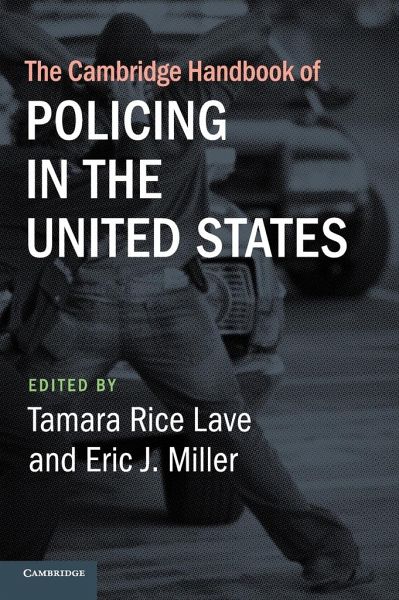
The Cambridge Handbook of Policing in the United States
Herausgeber: Lave, Tamara Rice; Miller, Eric J.
The Cambridge Handbook of Policing in the United States
Herausgeber: Lave, Tamara Rice; Miller, Eric J.
- Gebundenes Buch
- Merkliste
- Auf die Merkliste
- Bewerten Bewerten
- Teilen
- Produkt teilen
- Produkterinnerung
- Produkterinnerung
A comprehensive collection on police and policing, written by experts in political theory, sociology, criminology, economics, law, public health, and critical theory.
Andere Kunden interessierten sich auch für
The Cambridge Handbook of Immunities and International Law205,99 €
The Cambridge Handbook on Climate Litigation131,99 €
The Cambridge Handbook of Investment-Driven Intellectual Property206,99 €
The Cambridge Handbook of Corporate Law, Corporate Governance and Sustainability253,99 €
The Cambridge Handbook of the Law, Policy, and Regulation for Human-Robot Interaction210,99 €
The Cambridge Handbook of Technical Standardization Law236,99 €
The Cambridge Handbook of Law and Policy for NFTs164,99 €-
-
-
A comprehensive collection on police and policing, written by experts in political theory, sociology, criminology, economics, law, public health, and critical theory.
Produktdetails
- Produktdetails
- Verlag: Cambridge University Press
- Seitenzahl: 614
- Erscheinungstermin: 31. Mai 2019
- Englisch
- Abmessung: 260mm x 183mm x 37mm
- Gewicht: 1333g
- ISBN-13: 9781108420556
- ISBN-10: 1108420559
- Artikelnr.: 56855633
- Herstellerkennzeichnung
- Libri GmbH
- Europaallee 1
- 36244 Bad Hersfeld
- gpsr@libri.de
- Verlag: Cambridge University Press
- Seitenzahl: 614
- Erscheinungstermin: 31. Mai 2019
- Englisch
- Abmessung: 260mm x 183mm x 37mm
- Gewicht: 1333g
- ISBN-13: 9781108420556
- ISBN-10: 1108420559
- Artikelnr.: 56855633
- Herstellerkennzeichnung
- Libri GmbH
- Europaallee 1
- 36244 Bad Hersfeld
- gpsr@libri.de
Part I. The View from the Streets: 1. Policing as though the public really
matters: a call for outcome-based policing Cameron McLay; 2. Policing in St
Louis: 'I feel like a runaway slave sometimes' Thomas Harvey and Janae
Staicer; Part II. Do We Need Public Police?: 3. Why we need police Justin
McCrary and Deepak Premkumar; 4. Police abolitionist discourse? Why it's
been missing (and why it matters) Jonathan Simon and Eduardo Bautista
Duron; 5. The police as civic neighbors Eric J. Miller; 6. Pretext and
justification: republicanism, policing, and race Ekow Yankah; 7. The
private policing paradox Elizabeth Joh; Part III. The Law of Policing: 8.
Justifying police practices: the example of arrests Rachel Harmon; 9.
Police interrogation and suspect confessions Richard A. Leo; 10. How fear
shapes policing in the US David A. Harris; 11. The futile Fourth Amendment:
understanding police excessive force doctrine through an empirical
assessment of Graham v. Connor Osagie K. Obasogie and Zachary Newman; 12.
The problematic prosecution of an Asian American police officer: notes from
a participant in People v Peter Liang Gabriel J. Chin; Part IV. Police
Force and Police Violence: 13. Confrontational proactive policing:
benefits, costs, and disparate racial impacts Charles Manski and Daniel S.
Nagin; 14. Race, police, and the production of capital homicides Jeff Fagan
and Amanda Geller; 15. What drives variation in killings by urban police in
the United States - two empirical puzzles Franklin Zimring; Part V.
Discrimination: 16. Race, pedestrian checks, and the Fourth Amendment Devon
W. Carbado; 17. In the shadows: policing immigration in the criminal
justice system and its impact on racial disparities and identity Yolanda
Vázquez; 18. Policing 'radicalization' Amna Akbar; 19. Police and the
criminalization of LGBT people Ilan H. Meyer, Naomi G. Goldberg, Amira
Hasenbush, Christy Mallory and Lara Stemple; 20. Police sexual violence
Tamara Rice Lave; 21. Policing the mentally ill in Los Angeles on the
frontlines of transinstitutionalization Natalie Pifer; Part VI. Technology:
22. The pitfalls of police technology: a minority report Kami Chavis; 23.
Citizenship talk Bennett Capers; 24. Predictive policing theory Andrew
Guthrie Ferguson; 25. Big data surveillance: the case of policing Sarah
Brayne; Part VII. Reform: 26. Unions and police reform Stephen Rushin; 27.
Procedural justice and policing: four new directions Rebecca Hollander
Blumoff; 28. Moving toward an American police-community reconciliation
framework David Kennedy and Jonathan Ben-Menachem.
matters: a call for outcome-based policing Cameron McLay; 2. Policing in St
Louis: 'I feel like a runaway slave sometimes' Thomas Harvey and Janae
Staicer; Part II. Do We Need Public Police?: 3. Why we need police Justin
McCrary and Deepak Premkumar; 4. Police abolitionist discourse? Why it's
been missing (and why it matters) Jonathan Simon and Eduardo Bautista
Duron; 5. The police as civic neighbors Eric J. Miller; 6. Pretext and
justification: republicanism, policing, and race Ekow Yankah; 7. The
private policing paradox Elizabeth Joh; Part III. The Law of Policing: 8.
Justifying police practices: the example of arrests Rachel Harmon; 9.
Police interrogation and suspect confessions Richard A. Leo; 10. How fear
shapes policing in the US David A. Harris; 11. The futile Fourth Amendment:
understanding police excessive force doctrine through an empirical
assessment of Graham v. Connor Osagie K. Obasogie and Zachary Newman; 12.
The problematic prosecution of an Asian American police officer: notes from
a participant in People v Peter Liang Gabriel J. Chin; Part IV. Police
Force and Police Violence: 13. Confrontational proactive policing:
benefits, costs, and disparate racial impacts Charles Manski and Daniel S.
Nagin; 14. Race, police, and the production of capital homicides Jeff Fagan
and Amanda Geller; 15. What drives variation in killings by urban police in
the United States - two empirical puzzles Franklin Zimring; Part V.
Discrimination: 16. Race, pedestrian checks, and the Fourth Amendment Devon
W. Carbado; 17. In the shadows: policing immigration in the criminal
justice system and its impact on racial disparities and identity Yolanda
Vázquez; 18. Policing 'radicalization' Amna Akbar; 19. Police and the
criminalization of LGBT people Ilan H. Meyer, Naomi G. Goldberg, Amira
Hasenbush, Christy Mallory and Lara Stemple; 20. Police sexual violence
Tamara Rice Lave; 21. Policing the mentally ill in Los Angeles on the
frontlines of transinstitutionalization Natalie Pifer; Part VI. Technology:
22. The pitfalls of police technology: a minority report Kami Chavis; 23.
Citizenship talk Bennett Capers; 24. Predictive policing theory Andrew
Guthrie Ferguson; 25. Big data surveillance: the case of policing Sarah
Brayne; Part VII. Reform: 26. Unions and police reform Stephen Rushin; 27.
Procedural justice and policing: four new directions Rebecca Hollander
Blumoff; 28. Moving toward an American police-community reconciliation
framework David Kennedy and Jonathan Ben-Menachem.
Part I. The View from the Streets: 1. Policing as though the public really
matters: a call for outcome-based policing Cameron McLay; 2. Policing in St
Louis: 'I feel like a runaway slave sometimes' Thomas Harvey and Janae
Staicer; Part II. Do We Need Public Police?: 3. Why we need police Justin
McCrary and Deepak Premkumar; 4. Police abolitionist discourse? Why it's
been missing (and why it matters) Jonathan Simon and Eduardo Bautista
Duron; 5. The police as civic neighbors Eric J. Miller; 6. Pretext and
justification: republicanism, policing, and race Ekow Yankah; 7. The
private policing paradox Elizabeth Joh; Part III. The Law of Policing: 8.
Justifying police practices: the example of arrests Rachel Harmon; 9.
Police interrogation and suspect confessions Richard A. Leo; 10. How fear
shapes policing in the US David A. Harris; 11. The futile Fourth Amendment:
understanding police excessive force doctrine through an empirical
assessment of Graham v. Connor Osagie K. Obasogie and Zachary Newman; 12.
The problematic prosecution of an Asian American police officer: notes from
a participant in People v Peter Liang Gabriel J. Chin; Part IV. Police
Force and Police Violence: 13. Confrontational proactive policing:
benefits, costs, and disparate racial impacts Charles Manski and Daniel S.
Nagin; 14. Race, police, and the production of capital homicides Jeff Fagan
and Amanda Geller; 15. What drives variation in killings by urban police in
the United States - two empirical puzzles Franklin Zimring; Part V.
Discrimination: 16. Race, pedestrian checks, and the Fourth Amendment Devon
W. Carbado; 17. In the shadows: policing immigration in the criminal
justice system and its impact on racial disparities and identity Yolanda
Vázquez; 18. Policing 'radicalization' Amna Akbar; 19. Police and the
criminalization of LGBT people Ilan H. Meyer, Naomi G. Goldberg, Amira
Hasenbush, Christy Mallory and Lara Stemple; 20. Police sexual violence
Tamara Rice Lave; 21. Policing the mentally ill in Los Angeles on the
frontlines of transinstitutionalization Natalie Pifer; Part VI. Technology:
22. The pitfalls of police technology: a minority report Kami Chavis; 23.
Citizenship talk Bennett Capers; 24. Predictive policing theory Andrew
Guthrie Ferguson; 25. Big data surveillance: the case of policing Sarah
Brayne; Part VII. Reform: 26. Unions and police reform Stephen Rushin; 27.
Procedural justice and policing: four new directions Rebecca Hollander
Blumoff; 28. Moving toward an American police-community reconciliation
framework David Kennedy and Jonathan Ben-Menachem.
matters: a call for outcome-based policing Cameron McLay; 2. Policing in St
Louis: 'I feel like a runaway slave sometimes' Thomas Harvey and Janae
Staicer; Part II. Do We Need Public Police?: 3. Why we need police Justin
McCrary and Deepak Premkumar; 4. Police abolitionist discourse? Why it's
been missing (and why it matters) Jonathan Simon and Eduardo Bautista
Duron; 5. The police as civic neighbors Eric J. Miller; 6. Pretext and
justification: republicanism, policing, and race Ekow Yankah; 7. The
private policing paradox Elizabeth Joh; Part III. The Law of Policing: 8.
Justifying police practices: the example of arrests Rachel Harmon; 9.
Police interrogation and suspect confessions Richard A. Leo; 10. How fear
shapes policing in the US David A. Harris; 11. The futile Fourth Amendment:
understanding police excessive force doctrine through an empirical
assessment of Graham v. Connor Osagie K. Obasogie and Zachary Newman; 12.
The problematic prosecution of an Asian American police officer: notes from
a participant in People v Peter Liang Gabriel J. Chin; Part IV. Police
Force and Police Violence: 13. Confrontational proactive policing:
benefits, costs, and disparate racial impacts Charles Manski and Daniel S.
Nagin; 14. Race, police, and the production of capital homicides Jeff Fagan
and Amanda Geller; 15. What drives variation in killings by urban police in
the United States - two empirical puzzles Franklin Zimring; Part V.
Discrimination: 16. Race, pedestrian checks, and the Fourth Amendment Devon
W. Carbado; 17. In the shadows: policing immigration in the criminal
justice system and its impact on racial disparities and identity Yolanda
Vázquez; 18. Policing 'radicalization' Amna Akbar; 19. Police and the
criminalization of LGBT people Ilan H. Meyer, Naomi G. Goldberg, Amira
Hasenbush, Christy Mallory and Lara Stemple; 20. Police sexual violence
Tamara Rice Lave; 21. Policing the mentally ill in Los Angeles on the
frontlines of transinstitutionalization Natalie Pifer; Part VI. Technology:
22. The pitfalls of police technology: a minority report Kami Chavis; 23.
Citizenship talk Bennett Capers; 24. Predictive policing theory Andrew
Guthrie Ferguson; 25. Big data surveillance: the case of policing Sarah
Brayne; Part VII. Reform: 26. Unions and police reform Stephen Rushin; 27.
Procedural justice and policing: four new directions Rebecca Hollander
Blumoff; 28. Moving toward an American police-community reconciliation
framework David Kennedy and Jonathan Ben-Menachem.