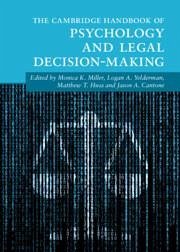
Presenting state-of-the-art research, this Handbook summarises emerging and establishing topics in the area of legal decision-making. Interdisciplinary in its approach, it covers decisions made within the criminal justice system, the trial process, and clinical settings. Chapters, written by accomplished academics and experts in the field, synthesize historical context, identify gaps in existing literature, propose future directions of study, and discuss policy limitations. It also includes 'perspectives from the field' essays written by professionals - a judge, an attorney, a police officer,…mehr
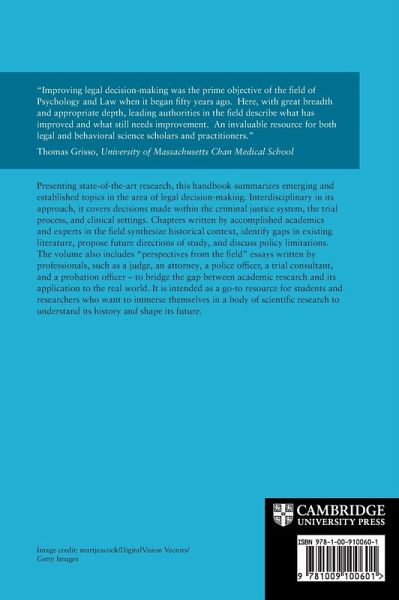
Presenting state-of-the-art research, this Handbook summarises emerging and establishing topics in the area of legal decision-making. Interdisciplinary in its approach, it covers decisions made within the criminal justice system, the trial process, and clinical settings. Chapters, written by accomplished academics and experts in the field, synthesize historical context, identify gaps in existing literature, propose future directions of study, and discuss policy limitations. It also includes 'perspectives from the field' essays written by professionals - a judge, an attorney, a police officer, a trial consultant, and a probation officer - to bridge the gap between academic research and its application to the real world. It is intended as a go-to resource for students and researchers who want to immerse themselves in a body of scientific research to understand its history and shape its future.
Part I. Introductions: 1. A modern approach to the psychology of legal decision making 2. 'I Hope the final judgment's fair': alternative jurisprudences, legal decision-making, and justice 3. Diversity and bias in legal decision making: broadening frameworks and addressing overlooked issues 4: Judicial decision-making Part II. Pre-trial phase decision-making: 5. Victim decision-making 6. Bystanders' crime reporting decisions 7. Pre-Trial publicity's effects on jurors' and judges' decision 8. Police decisions involved in collecting eyewitness identification evidence 9. Decisions related to miranda rights 10. Judges' daubert decisions 11. The psychology of confession decision making during police Interrogation 12. Plea bargaining: understanding the decision-making processes of plea negotiation 13. Forensic science decision-making: expertise lends both skills and vulnerabilities 14. Decision-making by forensic mental health evaluators 15. Interviewing suspects in criminal investigations: decisions and their consequences 16: Prosecutorial decision-making in cases of child sexual abuse: lessons from Australia 17. Decision-Making about restoration of defendants who are incompetent to stand trial 18. Clinical decision-making regarding criminal responsibility 19. Decision-Making regarding child victims and witnesses Part III. Trial phase decision-making: 20. Social cognition of jury decision-making 21. Beliefs about juror decision-making and the jury process 22. Deciphering directives: juror decision-making challenges with understanding judicial instructions 23. Decisions surrounding the use of expert testimony 24. Legal and extra-legal factors that affect jurors' decisions 25. Decisions regarding insanity 26. Decision making in the shadow of evidence law 27. Decision-making in contested divorce child custody cases Part IV. Post-conviction phase decisions: 28. Amenability to treatment evaluations: understanding decision points and new information regarding assessment 29. Choosing between life and death: capital jury penalty phase decision-making 30. The communication of risk to legal decision-makers 31. Psychology of parole decision-making 32. Probation decision-making 33. Decision-making in violence risk assessment Part V. Other legal decision-making: 34. Decision making in immigration court 35. Evaluation decisions by psychologists about causation and damages in personal injury and employment discrimination cases: a pragmatic five-stage model for courts 36. Factors influencing the decision to commit white collar crime: integrating affluenza with established risks 37. Tort law decision-making: psychological and legal perspectives 38. Judicial decision-making in juvenile dependency and juvenile justice cases 39. Legislative decision making 40. Decision-Making in alternative dispute resolution 41. Criminal decision-making 42. Social worker decision-making: a framework for legally literate accountable practice 43. Decision-Making in civil matters: the role of substituted judgment Part VI. Perspectives from the field: 44. Culturally competent perspectives and a legally literate practice promote quality decisions in social work 45. Making probation decisions in the real world 46. Justice for all: reflections as a clinician at the intersections 47. Police officer decisions in interrogations and investigations 48. Restoration: the sequel to incompetency to stand trial 49. To tell or not to tell is that the question?: victim decision-making 50. Diversity in legal decision-making Conclusion: 51. Conclusions from the field of legal decision-making.
Part I. Introductions: 1. A modern approach to the psychology of legal decision making 2. 'I Hope the final judgment's fair': alternative jurisprudences, legal decision-making, and justice 3. Diversity and bias in legal decision making: broadening frameworks and addressing overlooked issues 4: Judicial decision-making Part II. Pre-trial phase decision-making: 5. Victim decision-making 6. Bystanders' crime reporting decisions 7. Pre-Trial publicity's effects on jurors' and judges' decision 8. Police decisions involved in collecting eyewitness identification evidence 9. Decisions related to miranda rights 10. Judges' daubert decisions 11. The psychology of confession decision making during police Interrogation 12. Plea bargaining: understanding the decision-making processes of plea negotiation 13. Forensic science decision-making: expertise lends both skills and vulnerabilities 14. Decision-making by forensic mental health evaluators 15. Interviewing suspects in criminal investigations: decisions and their consequences 16: Prosecutorial decision-making in cases of child sexual abuse: lessons from Australia 17. Decision-Making about restoration of defendants who are incompetent to stand trial 18. Clinical decision-making regarding criminal responsibility 19. Decision-Making regarding child victims and witnesses Part III. Trial phase decision-making: 20. Social cognition of jury decision-making 21. Beliefs about juror decision-making and the jury process 22. Deciphering directives: juror decision-making challenges with understanding judicial instructions 23. Decisions surrounding the use of expert testimony 24. Legal and extra-legal factors that affect jurors' decisions 25. Decisions regarding insanity 26. Decision making in the shadow of evidence law 27. Decision-making in contested divorce child custody cases Part IV. Post-conviction phase decisions: 28. Amenability to treatment evaluations: understanding decision points and new information regarding assessment 29. Choosing between life and death: capital jury penalty phase decision-making 30. The communication of risk to legal decision-makers 31. Psychology of parole decision-making 32. Probation decision-making 33. Decision-making in violence risk assessment Part V. Other legal decision-making: 34. Decision making in immigration court 35. Evaluation decisions by psychologists about causation and damages in personal injury and employment discrimination cases: a pragmatic five-stage model for courts 36. Factors influencing the decision to commit white collar crime: integrating affluenza with established risks 37. Tort law decision-making: psychological and legal perspectives 38. Judicial decision-making in juvenile dependency and juvenile justice cases 39. Legislative decision making 40. Decision-Making in alternative dispute resolution 41. Criminal decision-making 42. Social worker decision-making: a framework for legally literate accountable practice 43. Decision-Making in civil matters: the role of substituted judgment Part VI. Perspectives from the field: 44. Culturally competent perspectives and a legally literate practice promote quality decisions in social work 45. Making probation decisions in the real world 46. Justice for all: reflections as a clinician at the intersections 47. Police officer decisions in interrogations and investigations 48. Restoration: the sequel to incompetency to stand trial 49. To tell or not to tell is that the question?: victim decision-making 50. Diversity in legal decision-making Conclusion: 51. Conclusions from the field of legal decision-making.
Es gelten unsere Allgemeinen Geschäftsbedingungen: www.buecher.de/agb
Impressum
www.buecher.de ist ein Internetauftritt der buecher.de internetstores GmbH
Geschäftsführung: Monica Sawhney | Roland Kölbl | Günter Hilger
Sitz der Gesellschaft: Batheyer Straße 115 - 117, 58099 Hagen
Postanschrift: Bürgermeister-Wegele-Str. 12, 86167 Augsburg
Amtsgericht Hagen HRB 13257
Steuernummer: 321/5800/1497
USt-IdNr: DE450055826