
Andy Blunden
The Capital / Logic Debate
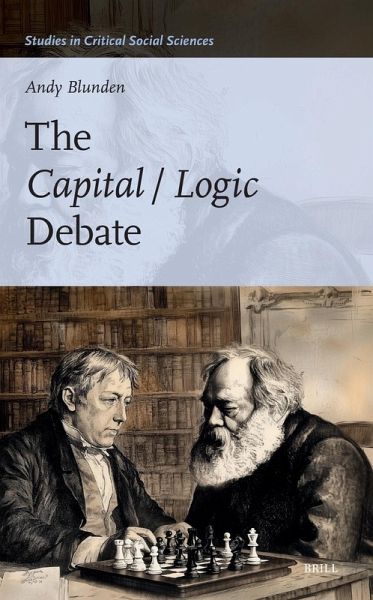
Andy Blunden
The Capital / Logic Debate
- Gebundenes Buch
- Merkliste
- Auf die Merkliste
- Bewerten Bewerten
- Teilen
- Produkt teilen
- Produkterinnerung
- Produkterinnerung
Here, Andy Blunden presents the first of two volumes on how Marx used Hegel's Logic in his Capital. In this first volume, Blunden reviews the current literature on the topic with detailed reviews of the contribution of 10 authors, representing the spectrum of approaches. Finding that present-day writers fail to understand the Logic and misrepresent Capital as a work of Logic, Blunden focuses on the passage in the Logic entitled "The Idea of the True," which is ignored by every writer in the present-day debate.
Andere Kunden interessierten sich auch für
 Marco BriziarelliSupersuming Subsumption: Theory and Politics113,99 €
 Interrogating the Future162,99 €
 Nick NesbittReading Capital's Materialist Dialectic102,99 €
 Andres Saenz de SiciliaSubsumption in Kant, Hegel and Marx116,99 €
 Omid MehrganThe Narrowest Path125,99 €
 F. H. BradleyThe Principles of Logic36,99 €
 Tony SmithBeyond Liberal Egalitarianism145,99 €
-
-
-




Here, Andy Blunden presents the first of two volumes on how Marx used Hegel's Logic in his Capital. In this first volume, Blunden reviews the current literature on the topic with detailed reviews of the contribution of 10 authors, representing the spectrum of approaches. Finding that present-day writers fail to understand the Logic and misrepresent Capital as a work of Logic, Blunden focuses on the passage in the Logic entitled "The Idea of the True," which is ignored by every writer in the present-day debate.
Produktdetails
- Produktdetails
- Verlag: Brill
- Seitenzahl: 216
- Erscheinungstermin: 12. Juni 2025
- Englisch
- Abmessung: 244mm x 161mm x 18mm
- Gewicht: 449g
- ISBN-13: 9789004733558
- ISBN-10: 9004733558
- Artikelnr.: 73193196
- Herstellerkennzeichnung
- Libri GmbH
- Europaallee 1
- 36244 Bad Hersfeld
- gpsr@libri.de
- Verlag: Brill
- Seitenzahl: 216
- Erscheinungstermin: 12. Juni 2025
- Englisch
- Abmessung: 244mm x 161mm x 18mm
- Gewicht: 449g
- ISBN-13: 9789004733558
- ISBN-10: 9004733558
- Artikelnr.: 73193196
- Herstellerkennzeichnung
- Libri GmbH
- Europaallee 1
- 36244 Bad Hersfeld
- gpsr@libri.de
Preface ix
Acknowledgements xv
List of Tables xvi
1 The Grundrisse/Logic Debate 1
1 Lenin’s Annotations on Hegel’s Logic 1
2 Publication of the Grundrisse 3
3 The Multiple Drafts of Capital 6
4 Hegel References in the Grundrisse 7
5 Hiroshi Uchida’s Analysis of Grundrisse and Logic 8
5.1 Introduction 8
5.2 The Chapter on Money 11
5.3 The Chapter on Capital 14
5.4 Introduction to the Grundrisse 15
5.4.1 The Method of Political Economy 16
5.5 Marx’s Critiques of Hegel 19
5.5.1 Generality of Capital 19
5.5.2 Particularity of Capital 20
5.5.3 Individuality of Capital 21
5.6 Conclusion 22
6 Mark Meaney’s Analysis of Grundrisse and Logic 23
7 Terrell Carver on the Grundrisse and the Logic 27
8 Conclusion to Chapter 1 30
2 Geert Reuten’s “Updating” of Capital 31
1 Introduction 31
1.1 Overview of Reuten’s Book 32
2 Issues with Reuten’s “Dialectical Reconstruction” 39
2.1 The Starting Point 39
2.1.1 Marx’s Starting Point 40
2.2 Functionalism 45
2.2.1 Two Phases of Reconstruction 46
2.2.2 Hegel’s Essence Logic 47
2.2.3 Essence, Diagnosis and Remedy 48
2.2.4 A Metaphor 50
2.2.5 The Place of Essence in Systematic Dialectic 51
2.2.6 Theory and Social Practice 52
2.3 The Logical and Historical Sequence of Categories 55
2.4 The State as an Epiphenomenon of the Economy 58
2.5 Households “Create” Rather Than Produce Labour-Capacity? 61
2.5.1 Utility? 64
2.5.2 Embodied Labour, Value and Price 68
2.5.3 Measuring Working Time 70
2.5.4 Abstract Labour 70
2.6 Rejection of “Embodied Labour” as Determinant of Value,
for Price 71
2.6.1 “Socially Necessary” and “Socially Average” 71
2.6.2 Fictitious Capital 72
2.7 Money as Bank Credits or as Commodities 72
3 Outcomes of Reuten’s Book: the Capitalist Crisis 74
3.1 Historical Tendencies towards Large Welfare States 75
3.2 Too-Big-to-Fail Banks 76
3.3 The Impossibility of Regulating Capitalism 77
3.4 The Imponderable Complexity of Financial Institutions 77
3.5 Paralysis of World Trade 78
3.6 The Climate Crisis 78
4 Conclusion to Chapter 2 79
3 Does Capital “Mirror” Sections of Hegel’s Logic? 80
1 Introduction 80
2 Hegel’s Use of the Logic 80
2.1 Capital Mirrors the Essence Logic? 82
3 Abazari’s Reading of Hegel 83
4 Tony Smith on Capital and the Essence Logic 86
4.1 Preamble on the Structure of the Logic 87
4.2 Mixing Up Absolute Idea, Thought, Spirit and Subject 89
4.2.1 The Subject 89
4.2.2 Thought and Geist 92
4.3 Mixing Up Universal, Subject and Being 93
4.4 The Claim That Capital Is an Essence Logic 95
4.4.1 Smith’s Reason for Choosing Essence as the “Model”
for Capital 96
4.5 The Misconception of the Concept Logic 99
4.6 Affirmative or Critical Dialectic 101
4.7 Failure to Understand Dynamics of the Logic 102
4.8 Conclusion 104
5 Chris Arthur: Capital Mirrors the Logics of Being and Essence? 104
5.1 Historical Dialectic and Systematic Dialectic 105
5.2 The Logic of Being and Value 108
5.3 Summary 112
6 Capital Mirrors Various Parts of the Logic? 113
7 Conclusion to Chapter 3 116
4 Fred Moseley’s Analysis of Capital and the Concept Logic 118
1 Introduction 118
2 Volume 1 and the Total Surplus Value 119
3 Value and Price in Volume 1 122
4 Circulation and Turnover Time of Capital 124
5 Equalisation of the Rate of Profit 125
5.1 Long-Term Equilibrium 129
6 The “Universal Individual” in Hegel 130
7 Marx’s Starting Point 137
8 On Marx’s Theory of Money 140
9 Value of Labour Power 141
10 Conclusion to Chapter 4 142
5 Capital and the “Economic Germ Cell” 144
1 Introduction 144
2 Evald Ilyenkov’s “Abstract and Concrete in Marx’s Capital” 145
2.1 The Abstract and the Concrete 146
2.1.1 The Unity of the Abstract and the Concrete 151
2.2 The Method of Investigation and the Method of Presentation 152
2.3 Hegel’s Idealism 153
2.4 Logical Development and Concrete Historicism 154
2.4.1 Ascent from the Abstract to the Concrete in
Marx’s Capital 157
2.5 Contradiction 158
2.6 Summary 159
3 Lev Vygotsky’s Psychology 159
3.1 Origins of the Concept of “Cell” as a Method of Analysis 160
3.2 Hegel’s Formulation of the Idea 161
3.3 Marx’s Appropriation of Hegel 165
4 The Development of Science 167
5 Hegel on Mediation and Immediacy 168
5.1 The Method of Double Stimulation 168
5.2 Word Meaning 170
5.3 Concepts as Units of the Intellect 172
5.4 The Formation of Concepts 173
5.5 Germ Cell and Unit of Analysis 175
5.6 Five Applications by Vygotsky of the Method of Analysis
by Units 177
5.6.1 Perezhivanie 177
5.6.2 Defect-Compensation 178
5.6.3 Social Situation of Development 178
5.6.4 Activities 179
5.7 The Importance of Vygotsky for Social Theory 180
6 Conclusion to Chapter 5 181
6 Conclusion 182
References 193
Index 196
Acknowledgements xv
List of Tables xvi
1 The Grundrisse/Logic Debate 1
1 Lenin’s Annotations on Hegel’s Logic 1
2 Publication of the Grundrisse 3
3 The Multiple Drafts of Capital 6
4 Hegel References in the Grundrisse 7
5 Hiroshi Uchida’s Analysis of Grundrisse and Logic 8
5.1 Introduction 8
5.2 The Chapter on Money 11
5.3 The Chapter on Capital 14
5.4 Introduction to the Grundrisse 15
5.4.1 The Method of Political Economy 16
5.5 Marx’s Critiques of Hegel 19
5.5.1 Generality of Capital 19
5.5.2 Particularity of Capital 20
5.5.3 Individuality of Capital 21
5.6 Conclusion 22
6 Mark Meaney’s Analysis of Grundrisse and Logic 23
7 Terrell Carver on the Grundrisse and the Logic 27
8 Conclusion to Chapter 1 30
2 Geert Reuten’s “Updating” of Capital 31
1 Introduction 31
1.1 Overview of Reuten’s Book 32
2 Issues with Reuten’s “Dialectical Reconstruction” 39
2.1 The Starting Point 39
2.1.1 Marx’s Starting Point 40
2.2 Functionalism 45
2.2.1 Two Phases of Reconstruction 46
2.2.2 Hegel’s Essence Logic 47
2.2.3 Essence, Diagnosis and Remedy 48
2.2.4 A Metaphor 50
2.2.5 The Place of Essence in Systematic Dialectic 51
2.2.6 Theory and Social Practice 52
2.3 The Logical and Historical Sequence of Categories 55
2.4 The State as an Epiphenomenon of the Economy 58
2.5 Households “Create” Rather Than Produce Labour-Capacity? 61
2.5.1 Utility? 64
2.5.2 Embodied Labour, Value and Price 68
2.5.3 Measuring Working Time 70
2.5.4 Abstract Labour 70
2.6 Rejection of “Embodied Labour” as Determinant of Value,
for Price 71
2.6.1 “Socially Necessary” and “Socially Average” 71
2.6.2 Fictitious Capital 72
2.7 Money as Bank Credits or as Commodities 72
3 Outcomes of Reuten’s Book: the Capitalist Crisis 74
3.1 Historical Tendencies towards Large Welfare States 75
3.2 Too-Big-to-Fail Banks 76
3.3 The Impossibility of Regulating Capitalism 77
3.4 The Imponderable Complexity of Financial Institutions 77
3.5 Paralysis of World Trade 78
3.6 The Climate Crisis 78
4 Conclusion to Chapter 2 79
3 Does Capital “Mirror” Sections of Hegel’s Logic? 80
1 Introduction 80
2 Hegel’s Use of the Logic 80
2.1 Capital Mirrors the Essence Logic? 82
3 Abazari’s Reading of Hegel 83
4 Tony Smith on Capital and the Essence Logic 86
4.1 Preamble on the Structure of the Logic 87
4.2 Mixing Up Absolute Idea, Thought, Spirit and Subject 89
4.2.1 The Subject 89
4.2.2 Thought and Geist 92
4.3 Mixing Up Universal, Subject and Being 93
4.4 The Claim That Capital Is an Essence Logic 95
4.4.1 Smith’s Reason for Choosing Essence as the “Model”
for Capital 96
4.5 The Misconception of the Concept Logic 99
4.6 Affirmative or Critical Dialectic 101
4.7 Failure to Understand Dynamics of the Logic 102
4.8 Conclusion 104
5 Chris Arthur: Capital Mirrors the Logics of Being and Essence? 104
5.1 Historical Dialectic and Systematic Dialectic 105
5.2 The Logic of Being and Value 108
5.3 Summary 112
6 Capital Mirrors Various Parts of the Logic? 113
7 Conclusion to Chapter 3 116
4 Fred Moseley’s Analysis of Capital and the Concept Logic 118
1 Introduction 118
2 Volume 1 and the Total Surplus Value 119
3 Value and Price in Volume 1 122
4 Circulation and Turnover Time of Capital 124
5 Equalisation of the Rate of Profit 125
5.1 Long-Term Equilibrium 129
6 The “Universal Individual” in Hegel 130
7 Marx’s Starting Point 137
8 On Marx’s Theory of Money 140
9 Value of Labour Power 141
10 Conclusion to Chapter 4 142
5 Capital and the “Economic Germ Cell” 144
1 Introduction 144
2 Evald Ilyenkov’s “Abstract and Concrete in Marx’s Capital” 145
2.1 The Abstract and the Concrete 146
2.1.1 The Unity of the Abstract and the Concrete 151
2.2 The Method of Investigation and the Method of Presentation 152
2.3 Hegel’s Idealism 153
2.4 Logical Development and Concrete Historicism 154
2.4.1 Ascent from the Abstract to the Concrete in
Marx’s Capital 157
2.5 Contradiction 158
2.6 Summary 159
3 Lev Vygotsky’s Psychology 159
3.1 Origins of the Concept of “Cell” as a Method of Analysis 160
3.2 Hegel’s Formulation of the Idea 161
3.3 Marx’s Appropriation of Hegel 165
4 The Development of Science 167
5 Hegel on Mediation and Immediacy 168
5.1 The Method of Double Stimulation 168
5.2 Word Meaning 170
5.3 Concepts as Units of the Intellect 172
5.4 The Formation of Concepts 173
5.5 Germ Cell and Unit of Analysis 175
5.6 Five Applications by Vygotsky of the Method of Analysis
by Units 177
5.6.1 Perezhivanie 177
5.6.2 Defect-Compensation 178
5.6.3 Social Situation of Development 178
5.6.4 Activities 179
5.7 The Importance of Vygotsky for Social Theory 180
6 Conclusion to Chapter 5 181
6 Conclusion 182
References 193
Index 196
Preface ix
Acknowledgements xv
List of Tables xvi
1 The Grundrisse/Logic Debate 1
1 Lenin’s Annotations on Hegel’s Logic 1
2 Publication of the Grundrisse 3
3 The Multiple Drafts of Capital 6
4 Hegel References in the Grundrisse 7
5 Hiroshi Uchida’s Analysis of Grundrisse and Logic 8
5.1 Introduction 8
5.2 The Chapter on Money 11
5.3 The Chapter on Capital 14
5.4 Introduction to the Grundrisse 15
5.4.1 The Method of Political Economy 16
5.5 Marx’s Critiques of Hegel 19
5.5.1 Generality of Capital 19
5.5.2 Particularity of Capital 20
5.5.3 Individuality of Capital 21
5.6 Conclusion 22
6 Mark Meaney’s Analysis of Grundrisse and Logic 23
7 Terrell Carver on the Grundrisse and the Logic 27
8 Conclusion to Chapter 1 30
2 Geert Reuten’s “Updating” of Capital 31
1 Introduction 31
1.1 Overview of Reuten’s Book 32
2 Issues with Reuten’s “Dialectical Reconstruction” 39
2.1 The Starting Point 39
2.1.1 Marx’s Starting Point 40
2.2 Functionalism 45
2.2.1 Two Phases of Reconstruction 46
2.2.2 Hegel’s Essence Logic 47
2.2.3 Essence, Diagnosis and Remedy 48
2.2.4 A Metaphor 50
2.2.5 The Place of Essence in Systematic Dialectic 51
2.2.6 Theory and Social Practice 52
2.3 The Logical and Historical Sequence of Categories 55
2.4 The State as an Epiphenomenon of the Economy 58
2.5 Households “Create” Rather Than Produce Labour-Capacity? 61
2.5.1 Utility? 64
2.5.2 Embodied Labour, Value and Price 68
2.5.3 Measuring Working Time 70
2.5.4 Abstract Labour 70
2.6 Rejection of “Embodied Labour” as Determinant of Value,
for Price 71
2.6.1 “Socially Necessary” and “Socially Average” 71
2.6.2 Fictitious Capital 72
2.7 Money as Bank Credits or as Commodities 72
3 Outcomes of Reuten’s Book: the Capitalist Crisis 74
3.1 Historical Tendencies towards Large Welfare States 75
3.2 Too-Big-to-Fail Banks 76
3.3 The Impossibility of Regulating Capitalism 77
3.4 The Imponderable Complexity of Financial Institutions 77
3.5 Paralysis of World Trade 78
3.6 The Climate Crisis 78
4 Conclusion to Chapter 2 79
3 Does Capital “Mirror” Sections of Hegel’s Logic? 80
1 Introduction 80
2 Hegel’s Use of the Logic 80
2.1 Capital Mirrors the Essence Logic? 82
3 Abazari’s Reading of Hegel 83
4 Tony Smith on Capital and the Essence Logic 86
4.1 Preamble on the Structure of the Logic 87
4.2 Mixing Up Absolute Idea, Thought, Spirit and Subject 89
4.2.1 The Subject 89
4.2.2 Thought and Geist 92
4.3 Mixing Up Universal, Subject and Being 93
4.4 The Claim That Capital Is an Essence Logic 95
4.4.1 Smith’s Reason for Choosing Essence as the “Model”
for Capital 96
4.5 The Misconception of the Concept Logic 99
4.6 Affirmative or Critical Dialectic 101
4.7 Failure to Understand Dynamics of the Logic 102
4.8 Conclusion 104
5 Chris Arthur: Capital Mirrors the Logics of Being and Essence? 104
5.1 Historical Dialectic and Systematic Dialectic 105
5.2 The Logic of Being and Value 108
5.3 Summary 112
6 Capital Mirrors Various Parts of the Logic? 113
7 Conclusion to Chapter 3 116
4 Fred Moseley’s Analysis of Capital and the Concept Logic 118
1 Introduction 118
2 Volume 1 and the Total Surplus Value 119
3 Value and Price in Volume 1 122
4 Circulation and Turnover Time of Capital 124
5 Equalisation of the Rate of Profit 125
5.1 Long-Term Equilibrium 129
6 The “Universal Individual” in Hegel 130
7 Marx’s Starting Point 137
8 On Marx’s Theory of Money 140
9 Value of Labour Power 141
10 Conclusion to Chapter 4 142
5 Capital and the “Economic Germ Cell” 144
1 Introduction 144
2 Evald Ilyenkov’s “Abstract and Concrete in Marx’s Capital” 145
2.1 The Abstract and the Concrete 146
2.1.1 The Unity of the Abstract and the Concrete 151
2.2 The Method of Investigation and the Method of Presentation 152
2.3 Hegel’s Idealism 153
2.4 Logical Development and Concrete Historicism 154
2.4.1 Ascent from the Abstract to the Concrete in
Marx’s Capital 157
2.5 Contradiction 158
2.6 Summary 159
3 Lev Vygotsky’s Psychology 159
3.1 Origins of the Concept of “Cell” as a Method of Analysis 160
3.2 Hegel’s Formulation of the Idea 161
3.3 Marx’s Appropriation of Hegel 165
4 The Development of Science 167
5 Hegel on Mediation and Immediacy 168
5.1 The Method of Double Stimulation 168
5.2 Word Meaning 170
5.3 Concepts as Units of the Intellect 172
5.4 The Formation of Concepts 173
5.5 Germ Cell and Unit of Analysis 175
5.6 Five Applications by Vygotsky of the Method of Analysis
by Units 177
5.6.1 Perezhivanie 177
5.6.2 Defect-Compensation 178
5.6.3 Social Situation of Development 178
5.6.4 Activities 179
5.7 The Importance of Vygotsky for Social Theory 180
6 Conclusion to Chapter 5 181
6 Conclusion 182
References 193
Index 196
Acknowledgements xv
List of Tables xvi
1 The Grundrisse/Logic Debate 1
1 Lenin’s Annotations on Hegel’s Logic 1
2 Publication of the Grundrisse 3
3 The Multiple Drafts of Capital 6
4 Hegel References in the Grundrisse 7
5 Hiroshi Uchida’s Analysis of Grundrisse and Logic 8
5.1 Introduction 8
5.2 The Chapter on Money 11
5.3 The Chapter on Capital 14
5.4 Introduction to the Grundrisse 15
5.4.1 The Method of Political Economy 16
5.5 Marx’s Critiques of Hegel 19
5.5.1 Generality of Capital 19
5.5.2 Particularity of Capital 20
5.5.3 Individuality of Capital 21
5.6 Conclusion 22
6 Mark Meaney’s Analysis of Grundrisse and Logic 23
7 Terrell Carver on the Grundrisse and the Logic 27
8 Conclusion to Chapter 1 30
2 Geert Reuten’s “Updating” of Capital 31
1 Introduction 31
1.1 Overview of Reuten’s Book 32
2 Issues with Reuten’s “Dialectical Reconstruction” 39
2.1 The Starting Point 39
2.1.1 Marx’s Starting Point 40
2.2 Functionalism 45
2.2.1 Two Phases of Reconstruction 46
2.2.2 Hegel’s Essence Logic 47
2.2.3 Essence, Diagnosis and Remedy 48
2.2.4 A Metaphor 50
2.2.5 The Place of Essence in Systematic Dialectic 51
2.2.6 Theory and Social Practice 52
2.3 The Logical and Historical Sequence of Categories 55
2.4 The State as an Epiphenomenon of the Economy 58
2.5 Households “Create” Rather Than Produce Labour-Capacity? 61
2.5.1 Utility? 64
2.5.2 Embodied Labour, Value and Price 68
2.5.3 Measuring Working Time 70
2.5.4 Abstract Labour 70
2.6 Rejection of “Embodied Labour” as Determinant of Value,
for Price 71
2.6.1 “Socially Necessary” and “Socially Average” 71
2.6.2 Fictitious Capital 72
2.7 Money as Bank Credits or as Commodities 72
3 Outcomes of Reuten’s Book: the Capitalist Crisis 74
3.1 Historical Tendencies towards Large Welfare States 75
3.2 Too-Big-to-Fail Banks 76
3.3 The Impossibility of Regulating Capitalism 77
3.4 The Imponderable Complexity of Financial Institutions 77
3.5 Paralysis of World Trade 78
3.6 The Climate Crisis 78
4 Conclusion to Chapter 2 79
3 Does Capital “Mirror” Sections of Hegel’s Logic? 80
1 Introduction 80
2 Hegel’s Use of the Logic 80
2.1 Capital Mirrors the Essence Logic? 82
3 Abazari’s Reading of Hegel 83
4 Tony Smith on Capital and the Essence Logic 86
4.1 Preamble on the Structure of the Logic 87
4.2 Mixing Up Absolute Idea, Thought, Spirit and Subject 89
4.2.1 The Subject 89
4.2.2 Thought and Geist 92
4.3 Mixing Up Universal, Subject and Being 93
4.4 The Claim That Capital Is an Essence Logic 95
4.4.1 Smith’s Reason for Choosing Essence as the “Model”
for Capital 96
4.5 The Misconception of the Concept Logic 99
4.6 Affirmative or Critical Dialectic 101
4.7 Failure to Understand Dynamics of the Logic 102
4.8 Conclusion 104
5 Chris Arthur: Capital Mirrors the Logics of Being and Essence? 104
5.1 Historical Dialectic and Systematic Dialectic 105
5.2 The Logic of Being and Value 108
5.3 Summary 112
6 Capital Mirrors Various Parts of the Logic? 113
7 Conclusion to Chapter 3 116
4 Fred Moseley’s Analysis of Capital and the Concept Logic 118
1 Introduction 118
2 Volume 1 and the Total Surplus Value 119
3 Value and Price in Volume 1 122
4 Circulation and Turnover Time of Capital 124
5 Equalisation of the Rate of Profit 125
5.1 Long-Term Equilibrium 129
6 The “Universal Individual” in Hegel 130
7 Marx’s Starting Point 137
8 On Marx’s Theory of Money 140
9 Value of Labour Power 141
10 Conclusion to Chapter 4 142
5 Capital and the “Economic Germ Cell” 144
1 Introduction 144
2 Evald Ilyenkov’s “Abstract and Concrete in Marx’s Capital” 145
2.1 The Abstract and the Concrete 146
2.1.1 The Unity of the Abstract and the Concrete 151
2.2 The Method of Investigation and the Method of Presentation 152
2.3 Hegel’s Idealism 153
2.4 Logical Development and Concrete Historicism 154
2.4.1 Ascent from the Abstract to the Concrete in
Marx’s Capital 157
2.5 Contradiction 158
2.6 Summary 159
3 Lev Vygotsky’s Psychology 159
3.1 Origins of the Concept of “Cell” as a Method of Analysis 160
3.2 Hegel’s Formulation of the Idea 161
3.3 Marx’s Appropriation of Hegel 165
4 The Development of Science 167
5 Hegel on Mediation and Immediacy 168
5.1 The Method of Double Stimulation 168
5.2 Word Meaning 170
5.3 Concepts as Units of the Intellect 172
5.4 The Formation of Concepts 173
5.5 Germ Cell and Unit of Analysis 175
5.6 Five Applications by Vygotsky of the Method of Analysis
by Units 177
5.6.1 Perezhivanie 177
5.6.2 Defect-Compensation 178
5.6.3 Social Situation of Development 178
5.6.4 Activities 179
5.7 The Importance of Vygotsky for Social Theory 180
6 Conclusion to Chapter 5 181
6 Conclusion 182
References 193
Index 196