
Andere Kunden interessierten sich auch für
 History of the LAX VOX® - tube exercise14,99 €
 Dexamethasone in the transdifferentiation of pancreatic buds24,99 €
 Fixed point methods for the study of semilinear evolution equations39,99 €
 The Indian Cashew Ethos46,99 €
 The Role of Institutions to Reduce the Degradation of Mental health29,99 €
 Essential words for the IELTS and TOEFL27,99 €
 Hotel Room Division Management32,99 €



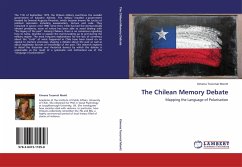
The 11th of September 1973, the Chilean military overthrew the socialist government of Salvador Allende. The military installed a government headed by General Augusto Pinochet, which became known for tactics of political repression including assassination, torture and exile. They remained in power until 1990. Since then, Chile has had five democratically elected presidents, none of whom has been able to avoid dealing with the legacy of the past . Among Chileans, there is no consensus regarding how to name, describe or explain the events leading up to and during the military regime. The most frequent explanations for the lack of consensus about the truth of what happened in Chile have been based on an appeal to memory processes, shaping a debate about the past as well as about legitimate sources of knowledge of the past. This research explores in detail the discursive and rhetorical devices by which the debate is explainable as the result of a systematic and methodical use of the language of polarisation .