
Andere Kunden interessierten sich auch für
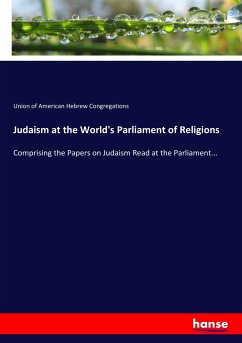
 Judaism at the World's Parliament of Religions30,90 €
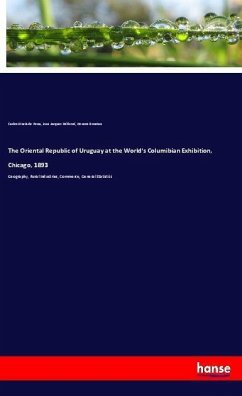
 The Oriental Republic of Uruguay at the World's Columibian Exhibition, Chicago, 189312,90 €
 Loss and Wonder at the World's End40,99 €
 Peter Marvey23,99 €
 The World's Greatest Military Spies and Secret Service Agents22,90 €
 Loss and Wonder at the World's End104,99 €
 The World's Trouble Makers20,99 €



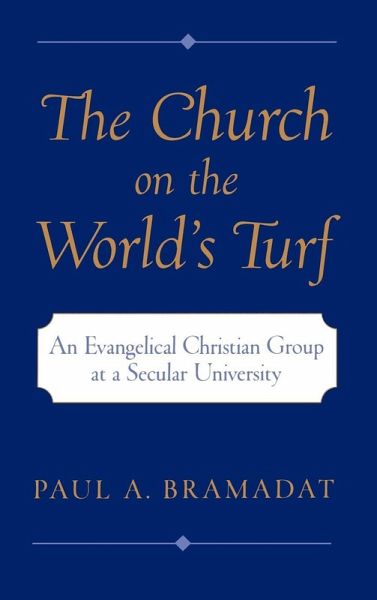
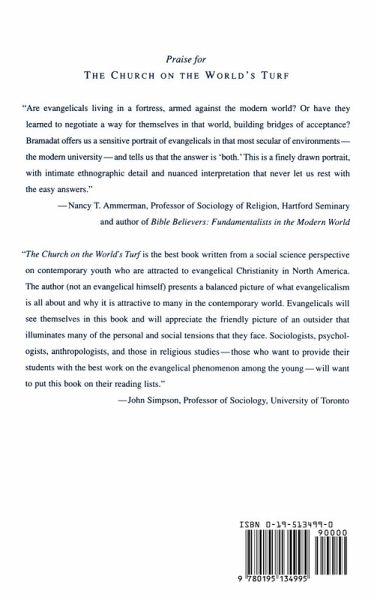
Is it possible for conservative Protestant groups to survive in secular institutional settings? Here, Bramadat offers an ethnographic study of the Inter-Varsity Christian Fellowship (IVCF) at McMaster University, a group that espouses fundamentalist interpretations of the Bible, women's roles, the age of the earth, alcohol consumption, and sexual ethics. In examining this group, Bramadat demonstrates how this tiny minority thrives within the overwhelmingly secular context of the University.
Academics and non-academics alike have been intrigued by conservative Protestant groups that thrive in secular social and institutional contexts. This book offers an ethnographic study of one such group, the Inter-Varsity Christian Fellowship (IVCF) at McMaster University. These conservative Protestants espouse fundamental interpretations of the Bible, women's roles, the age of the earth, alcohol consumption, sexual ethics, and the necessity of a personal relationship with Jesus Christ. How does this tiny minority function withing the overwhelmingly secular context of the university? The strategies of the ICVF seem both to strengthen and to mitigate evangelicals' sense of difference from their non-Christian teachers and peers. Bramadat suggests that this model can also be useful for understanding the construction of individual and group identity among other minority groups, both religious and non-religious models.
Academics and non-academics alike have been intrigued by conservative Protestant groups that thrive in secular social and institutional contexts. This book offers an ethnographic study of one such group, the Inter-Varsity Christian Fellowship (IVCF) at McMaster University. These conservative Protestants espouse fundamental interpretations of the Bible, women's roles, the age of the earth, alcohol consumption, sexual ethics, and the necessity of a personal relationship with Jesus Christ. How does this tiny minority function withing the overwhelmingly secular context of the university? The strategies of the ICVF seem both to strengthen and to mitigate evangelicals' sense of difference from their non-Christian teachers and peers. Bramadat suggests that this model can also be useful for understanding the construction of individual and group identity among other minority groups, both religious and non-religious models.