
Andere Kunden interessierten sich auch für
 Fifth Generation Warfare41,99 €
 The Army in India and the Development of Frontier Warfare, 1849-194776,99 €
 Electronic Combat and Modern Warfare157,99 €
 Warfare and the Third World38,99 €
 Routledge Handbook of the Future of Warfare46,99 €
 The Role of Amphibious Warfare in British Defense Policy76,99 €
 The Legitimacy of Drone Warfare21,99 €




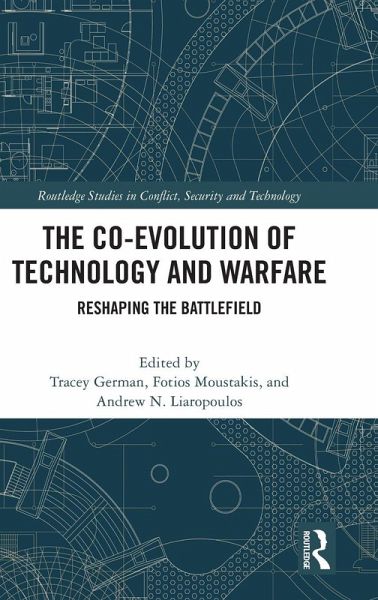
This book explores the relationship between technology and warfare, by examining how recent technological advancements have revolutionized the conduct of war.
The work analyses contemporary conflicts, including the Syrian civil war, the Taliban takeover in Afghanistan, and the ongoing war in Ukraine, but also by exploring future war scenarios and assessing the military capabilities of major powers. In doing so, the book highlights the dynamic and evolving nature of modern warfare. It goes beyond a simple examination of technological advancements, addressing the complexities of modern warfare, scrutinizing the strategies employed by states to adopt and develop military technologies, while emphasizing the importance of technology in shaping military planning, training, research, and innovation. The book provides a collection of timely contributions by leading scholars and practitioners in the military and security field. Furthermore, the contributors identify potential challenges and risks associated with the widespread adoption of technologies in warfare and propose recommendations for policymakers to address issues that relate to military planning and training, research and development, and resilience building.
This book will be of much interest to students of security studies, technology studies, defence studies and International Relations.
The Open Access version of this book, available at http://www.taylorfrancis.com, has been made available under a Creative Commons Attribution-Non Commercial-No Derivatives (CC-BY-NC-ND) 4.0 license.
The work analyses contemporary conflicts, including the Syrian civil war, the Taliban takeover in Afghanistan, and the ongoing war in Ukraine, but also by exploring future war scenarios and assessing the military capabilities of major powers. In doing so, the book highlights the dynamic and evolving nature of modern warfare. It goes beyond a simple examination of technological advancements, addressing the complexities of modern warfare, scrutinizing the strategies employed by states to adopt and develop military technologies, while emphasizing the importance of technology in shaping military planning, training, research, and innovation. The book provides a collection of timely contributions by leading scholars and practitioners in the military and security field. Furthermore, the contributors identify potential challenges and risks associated with the widespread adoption of technologies in warfare and propose recommendations for policymakers to address issues that relate to military planning and training, research and development, and resilience building.
This book will be of much interest to students of security studies, technology studies, defence studies and International Relations.
The Open Access version of this book, available at http://www.taylorfrancis.com, has been made available under a Creative Commons Attribution-Non Commercial-No Derivatives (CC-BY-NC-ND) 4.0 license.
'This is an excellent and timely book. It brings together a diverse range of distinguished contributors, who draw on their varied experience in academia, the military, industry, and government. The authors analyse the issues technologically advanced states face as they seek to utilise contemporary military technologies and techniques to maximise military effectiveness in a multi-dimensional battlefield characterised by rapidly advancing technologies and an information-rich environment.'
Michael Sheehan, Emeritus Professor of International Relations, University of Swansea, UK
'In this book, the editors have gathered an outstanding set of contributors ranging from scholars to policy professionals to address some of the most pressing technologies (e.g., AI and hypersonics) influencing the rapidly evolving nature of modern war.'
Peter J. Dombrowski, Professor, U.S. Naval War College
Michael Sheehan, Emeritus Professor of International Relations, University of Swansea, UK
'In this book, the editors have gathered an outstanding set of contributors ranging from scholars to policy professionals to address some of the most pressing technologies (e.g., AI and hypersonics) influencing the rapidly evolving nature of modern war.'
Peter J. Dombrowski, Professor, U.S. Naval War College