This book is the first systematic, interdisciplinary examination of the peace agreement signed between the Colombian Government and the Revolutionary Armed Forces of Colombia to end one of the largest and most violent conflicts in the Western Hemisphere. It discusses the achievements, failures, and challenges of this innovative peace agreement and its implications for Colombia's future. Contributors include negotiators of the Agreement, judges of the Special Jurisdiction for Peace, representatives of the civil society, and leading academic experts in peace studies, human rights, international…mehr
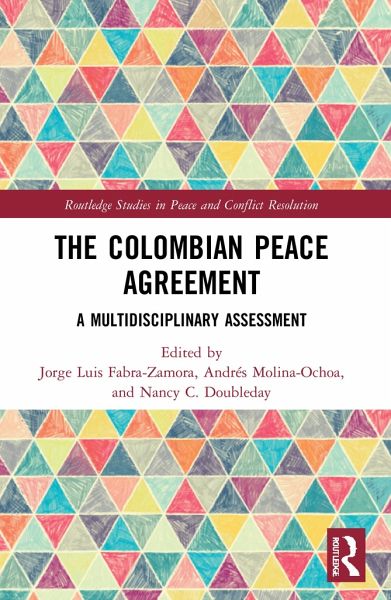
This book is the first systematic, interdisciplinary examination of the peace agreement signed between the Colombian Government and the Revolutionary Armed Forces of Colombia to end one of the largest and most violent conflicts in the Western Hemisphere. It discusses the achievements, failures, and challenges of this innovative peace agreement and its implications for Colombia's future. Contributors include negotiators of the Agreement, judges of the Special Jurisdiction for Peace, representatives of the civil society, and leading academic experts in peace studies, human rights, international law, criminal law, transitional justice, political science, and philosophy. Based on the premise that peace is a form of transferable social knowledge, and therefore necessitates transformative social learning, the volume also discusses what other countries can learn from the Colombian experience.
This book will be of much interest to students of peace and conflict studies, transitional justice, Latin American politics, human rights, civil wars and International Relations.
Produktdetails
Produktdetails
Routledge Studies in Peace and Conflict Resolution
Jorge Luis Fabra-Zamora is a Provost's postdoctoral fellow at the Faculty of Law, University of Toronto, Canada. Andrés Molina-Ochoa is an assistant professor of philosophy at South Texas College, USA. Nancy C. Doubleday is an associate professor in philosophy and the inaugural holder of the HOPE Chair in Peace and Health at McMaster University, Canada. She is the Director of the Water Without Borders Joint Graduate Diploma Program of McMaster University and UNU INWEH.
Inhaltsangabe
1. Introduction Jorge Luis Fabra-Zamora, Andrés Molina-Ochoa, and Nancy C. Doubleday Part I: Genesis 2. The Possibility of Peace Sergio Jaramillo Caro 3. Notes on the Colombian Peace Process: A View from 2014 Jon Elster Part II: Overall Assessments 4. Essential Elements and Implementation Challenges of the Final Agreement Gustavo Gallón Giraldo and Juan Carlos Ospina 5. The Colombian Peace Agreement: A Lost Opportunity for Social Transformation? Maria Paula Saffon-Sanín Part III: Transitional Justice in Theory and Practice 6. Transforming Transitional Justice from Below: Colombia's Pioneering Peace Proposal Jennifer L. McCoy, Jelena Subotic, and Ryan E. Carlin 7. Compatibility Between Transitional Justice Tools in Colombian and International Law Juanita Goebertus Estrada 8. Transitional Justice in Colombia: The Amnesty Law 1820 of 2016 and the International Legal Framework Kai Ambos 9. Judging the Justice of the Colombian Final Agreement Colleen Murphy Part IV: Key Components of the Final Agreement 10. The Special Jurisdiction for Peace: Main Features and Legal Challenges Danilo Rojas Betancourt 11. The Right to the Truth in the Colombian Conflict: Realities and Fiction Alfredo Duplat and Andrés Molina-Ochoa 12. Land Reform and Transition in Contemporary Colombia Nelson Camilo Sánchez 13. The Gender Component in the Colombian Peace Process: Obstacles to its Inclusion and Implementation Patricia Pabón and Javier Aguirre 14. The Rights of Afro-Colombian Communities in the Final Agreement and its Mechanisms of Implementation Xiomara Cecilia Balanta-Moreno and Yuri Alexander Romaña-Rivas 15. The Politics of Education Reforms in Post-Conflict Societies: A Cautionary Tale for the Colombian Case Claudia Milena Díaz-Ríos Part V: Legitimacy and Democracy 16. Legitimizing and Enshrining Peace Commitments: Inclusivity and Constitution-building in the Colombian Peace Process Diana Isabel Güiza-Gómez and Rodrigo Uprimny-Yepes 17. The Courts' Possible Contribution to a Dialogic Democracy: The Case of the Peace Agreements in Colombia Roberto Gargarella 18. The Long Road and the Promise: Colombia's Peace Process as an Instance of Aesthetic Justice Óscar Guardiola Rivera Part VI: Concluding Remarks 19. Outsider Reflections: Future Peace? Nancy C. Doubleday
1. Introduction Jorge Luis Fabra-Zamora, Andrés Molina-Ochoa, and Nancy C. Doubleday Part I: Genesis 2. The Possibility of Peace Sergio Jaramillo Caro 3. Notes on the Colombian Peace Process: A View from 2014 Jon Elster Part II: Overall Assessments 4. Essential Elements and Implementation Challenges of the Final Agreement Gustavo Gallón Giraldo and Juan Carlos Ospina 5. The Colombian Peace Agreement: A Lost Opportunity for Social Transformation? Maria Paula Saffon-Sanín Part III: Transitional Justice in Theory and Practice 6. Transforming Transitional Justice from Below: Colombia's Pioneering Peace Proposal Jennifer L. McCoy, Jelena Subotic, and Ryan E. Carlin 7. Compatibility Between Transitional Justice Tools in Colombian and International Law Juanita Goebertus Estrada 8. Transitional Justice in Colombia: The Amnesty Law 1820 of 2016 and the International Legal Framework Kai Ambos 9. Judging the Justice of the Colombian Final Agreement Colleen Murphy Part IV: Key Components of the Final Agreement 10. The Special Jurisdiction for Peace: Main Features and Legal Challenges Danilo Rojas Betancourt 11. The Right to the Truth in the Colombian Conflict: Realities and Fiction Alfredo Duplat and Andrés Molina-Ochoa 12. Land Reform and Transition in Contemporary Colombia Nelson Camilo Sánchez 13. The Gender Component in the Colombian Peace Process: Obstacles to its Inclusion and Implementation Patricia Pabón and Javier Aguirre 14. The Rights of Afro-Colombian Communities in the Final Agreement and its Mechanisms of Implementation Xiomara Cecilia Balanta-Moreno and Yuri Alexander Romaña-Rivas 15. The Politics of Education Reforms in Post-Conflict Societies: A Cautionary Tale for the Colombian Case Claudia Milena Díaz-Ríos Part V: Legitimacy and Democracy 16. Legitimizing and Enshrining Peace Commitments: Inclusivity and Constitution-building in the Colombian Peace Process Diana Isabel Güiza-Gómez and Rodrigo Uprimny-Yepes 17. The Courts' Possible Contribution to a Dialogic Democracy: The Case of the Peace Agreements in Colombia Roberto Gargarella 18. The Long Road and the Promise: Colombia's Peace Process as an Instance of Aesthetic Justice Óscar Guardiola Rivera Part VI: Concluding Remarks 19. Outsider Reflections: Future Peace? Nancy C. Doubleday
Es gelten unsere Allgemeinen Geschäftsbedingungen: www.buecher.de/agb
Impressum
www.buecher.de ist ein Internetauftritt der buecher.de internetstores GmbH
Geschäftsführung: Monica Sawhney | Roland Kölbl | Günter Hilger
Sitz der Gesellschaft: Batheyer Straße 115 - 117, 58099 Hagen
Postanschrift: Bürgermeister-Wegele-Str. 12, 86167 Augsburg
Amtsgericht Hagen HRB 13257
Steuernummer: 321/5800/1497
USt-IdNr: DE450055826