
Andere Kunden interessierten sich auch für
 Scottish Record Society; The Commissariot Record Of Stirling Register Of Testaments 1907-180020,99 €
 Scottish Record Society; The Commissariot Record of Glasgow Register of Testaments, 1547-180028,99 €
 Scottish Record Society; The Commissariot Record of Lauder Register of Testaments, 1561-180029,99 €
 Scottish Record Society; The Commissariot Record of St. Andrews Register of Testaments, 1549-180026,99 €
 The Commissariot Record of Wigton, Testaments, 1700-180014,99 €
 The Commissariot Record of Brechin. Register of Testaments. 1576-1800; 1318,99 €
 The Commissariot Record of Edinburgh: Register of Testaments; pt.118,99 €
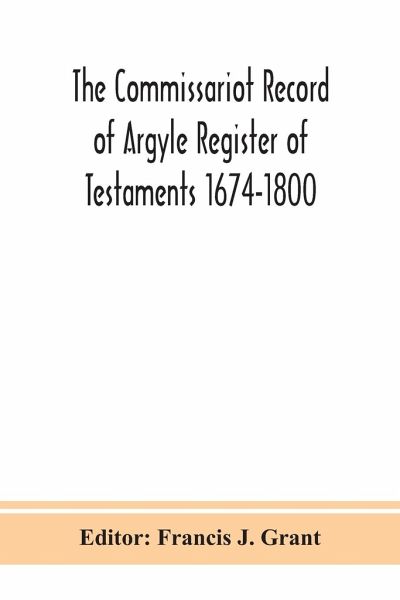
Unlock the silent voices of 17th and 18th century Scotland. The Commissariot Record of Argyle: Register of Testaments 1674-1800, compiled by Francis J. Grant, stands as an indispensable gateway into the lives, legacies, and legal histories of early modern Argyle. For historians and genealogists, this meticulous collection of historical legal records offers a rare chance to trace family lines, interpret social change, and understand the customs that shaped Scottish society. Every entry in this Scottish testaments collection-probate and wills archive-reveals the personal stories and legal frameworks that governed generations. This archival research tool is more than a catalogue; it is a living document for anyone passionate about Scottish history, legal history documents, or genealogy research. Experience the texture of daily life in 17th century Scotland as revealed through the Argyle historical records-where inheritance, duty, and kinship intertwine. Whether you are a dedicated scholar or a Scottish history enthusiast, Grant's work opens a window onto the past, illuminating the subtle threads of community and continuity. Republished by Alpha Editions in a careful modern edition, this volume preserves the spirit of the original while making it effortless to enjoy today-a heritage title prepared for readers and collectors alike. For those who cherish Scottish legal history or seek a cornerstone for genealogical investigation, this is more than a book; it is a cultural treasure restored for new generations.