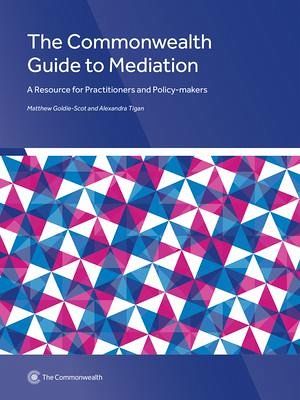
By examining the position of mediation in a tradition of ‘adversarial’ court-adjudicated disputes, this book chronicles the evolution of mediation as a case management tool. Furthermore, it explores the various models that have been adopted, identifying emerging areas of innovation and highlighting exemplars of good practice.
By examining the position of mediation in a tradition of ‘adversarial’ court-adjudicated disputes, this book chronicles the evolution of mediation as a case management tool. Furthermore, it explores the various models that have been adopted, identifying emerging areas of innovation and highlighting exemplars of good practice.
1. Introduction Commonwealth Civil Procedure Law Working Group Purpose of the consultancy 2. 1 The History and Development of Mediation as an Alternative Dispute Resolution (ADR) Practice 3. 1.1 The position of mediation in a tradition of adversarial, adjudicated disputes 4. 1.2 The evolution of mediation as a case management tool 5. 1.3 The relationship of mediation to arbitration and other ADR practices 6. 1.4 The relationship of mediation to other justice traditions, including restorative justice 7. 1.5 The potential impact of mediation on the development of the law 8. 2 Selected Uses and Applications of Mediation, Including Examples from the Commonwealth 9. 2.1 What are the current uses of court-annexed or court-mandated mediation? 10. 2.2 How is mediation used in commercial disputes? 11. 2.3 How is mediation used in family disputes? 12. 2.4 How is mediation used in other civil disputes? 13. 2.5 How is mediation used in criminal disputes? 14. 2.6 How is mediation used in international disputes, and what is the Singapore Convention? 15. 2.7 How is mediation used in other instances? 16. 3 Benefits, Potential Challenges and Limitations of Mediation 17. 3.1 What are the potential effects of mediation on access to justice? 18. 3.2 What ethical considerations arise in mediation cases? 19. 3.3 What effects does mediation have on the operation of the court system? 20. 3.4 How is technology used in mediation? 21. 3.5 Can the introduction of compulsory mediation or the grant of power to judges to encourage the use of mediation assist with effective case management? 22. 4 Attitudes towards Mediation 23. 4.1 Judiciary 24. 4.2 Mediators 25. 4.3 Legal profession 26. 4.4 Users of mediation (individuals and businesses) 27. 5 Mediators and Modes of Mediation 28. 5.1 Modes of mediation 29. 5.2 Quality of mediators 30. 5.3 Registration and training of mediators 31. 5.4 Diversity among mediators 32. 5.5 Regulation of mediation 33. 6 Recommendations 34. 6.1 Recommendations for governments 35. 6.2 Recommendations for the legal profession 36. 6.3 Recommendations for the Commonwealth Secretariat 37. 6.4 Recommendations for mediation bodies 38. 6.5 Recommendations for mediators Bibliography
1. Introduction Commonwealth Civil Procedure Law Working Group Purpose of the consultancy 2. 1 The History and Development of Mediation as an Alternative Dispute Resolution (ADR) Practice 3. 1.1 The position of mediation in a tradition of adversarial, adjudicated disputes 4. 1.2 The evolution of mediation as a case management tool 5. 1.3 The relationship of mediation to arbitration and other ADR practices 6. 1.4 The relationship of mediation to other justice traditions, including restorative justice 7. 1.5 The potential impact of mediation on the development of the law 8. 2 Selected Uses and Applications of Mediation, Including Examples from the Commonwealth 9. 2.1 What are the current uses of court-annexed or court-mandated mediation? 10. 2.2 How is mediation used in commercial disputes? 11. 2.3 How is mediation used in family disputes? 12. 2.4 How is mediation used in other civil disputes? 13. 2.5 How is mediation used in criminal disputes? 14. 2.6 How is mediation used in international disputes, and what is the Singapore Convention? 15. 2.7 How is mediation used in other instances? 16. 3 Benefits, Potential Challenges and Limitations of Mediation 17. 3.1 What are the potential effects of mediation on access to justice? 18. 3.2 What ethical considerations arise in mediation cases? 19. 3.3 What effects does mediation have on the operation of the court system? 20. 3.4 How is technology used in mediation? 21. 3.5 Can the introduction of compulsory mediation or the grant of power to judges to encourage the use of mediation assist with effective case management? 22. 4 Attitudes towards Mediation 23. 4.1 Judiciary 24. 4.2 Mediators 25. 4.3 Legal profession 26. 4.4 Users of mediation (individuals and businesses) 27. 5 Mediators and Modes of Mediation 28. 5.1 Modes of mediation 29. 5.2 Quality of mediators 30. 5.3 Registration and training of mediators 31. 5.4 Diversity among mediators 32. 5.5 Regulation of mediation 33. 6 Recommendations 34. 6.1 Recommendations for governments 35. 6.2 Recommendations for the legal profession 36. 6.3 Recommendations for the Commonwealth Secretariat 37. 6.4 Recommendations for mediation bodies 38. 6.5 Recommendations for mediators Bibliography
Es gelten unsere Allgemeinen Geschäftsbedingungen: www.buecher.de/agb
Impressum
www.buecher.de ist ein Internetauftritt der buecher.de internetstores GmbH
Geschäftsführung: Monica Sawhney | Roland Kölbl | Günter Hilger
Sitz der Gesellschaft: Batheyer Straße 115 - 117, 58099 Hagen
Postanschrift: Bürgermeister-Wegele-Str. 12, 86167 Augsburg
Amtsgericht Hagen HRB 13257
Steuernummer: 321/5800/1497
USt-IdNr: DE450055826