
Andere Kunden interessierten sich auch für
 The Competition of Word-Formation Processes in the Derivational Paradigm of Verbs54,00 €
 Anglicisms and Corpus Linguistics64,85 €
 Autonomes E-Learning54,45 €
 English Vocabulary Today38,99 €
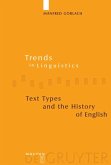
 Text Types and the History of English102,99 €
 Grammar Competition in Second Language Acquisition15,99 €
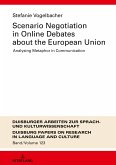
 Scenario Negotiation in Online Debates about the European Union70,15 €


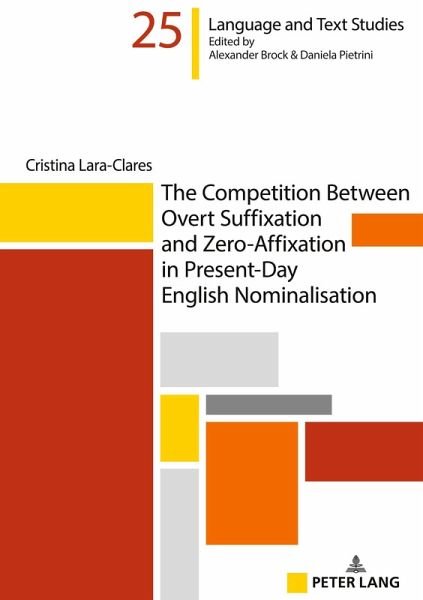
In linguistic morphology, competition is expected to be resolved, on the grounds that it is not economical for a system to keep two or more processes for one purpose. This volume researches overt suffixation and zero affixation for the nominalisation of the semantic categories action, agentive, instrument and state aiming at hints of resolution, diachronically and in present day English, using both lexicographic and corpus sources. Specifically, the book explores resolution in terms of specialisation regarding mode, register, and meaning. To this aim, (i) the frequency of use of each semantic category is computed for every competitor, (ii) statistical analysis is performed to test association between mode or register and word formation process and (iii) semantic specialisation is explored in individual groups of competition.
The results enlarge on the claim that competition may take place to varying degrees and prove that it needs to be researched at the level of the semantic category.
The results enlarge on the claim that competition may take place to varying degrees and prove that it needs to be researched at the level of the semantic category.