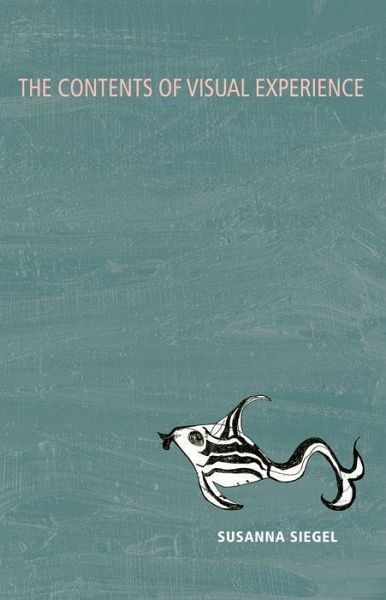
What do we see? We are visually conscious of colors and shapes, but are we also visually conscious of complex properties such as being John Malkovich? In this book, Susanna Siegel develops a framework for understanding the contents of visual experience, and argues that these contents involve all sorts of complex properties.
What do we see? We are visually conscious of colors and shapes, but are we also visually conscious of complex properties such as being John Malkovich? In this book, Susanna Siegel develops a framework for understanding the contents of visual experience, and argues that these contents involve all sorts of complex properties.
Susanna Siegel is Edgar Pierce Professor of Philosophy at Harvard University.
Inhaltsangabe
Introduction: Seeing John Malkovich The Content View Why does it matter whether the Rich Content View is true? How can we decide whether the Rich Content View is true? Part I: Contents Chapter 1: Experiences 1.1 States of seeing and phenomenal states 1.2 Visual perceptual experiences Chapter 2: The Content View 2.1 Contents as accuracy conditions 2.2 The Argument from Accuracy 2.3 A flaw in the Argument from Accuracy 2.4 The Argument from Appearing 2.5 Two objections from 'looks', 'appears' and their cognates 2.6 The significance of the Content View Chapter 3: How Can We Discover the Contents of Experience? 3.1 Introspection 3.2 Naturalistic theories of content 3.3 The method of phenomenal contrast Part II: Properties Chapter 4: Kinds 4.1 The examples 4.2 The premises 4.3 Content externalism Chapter 5: Causation 5.1 The Causal Thesis 5.2 Michotte's results 5.3 Unity in experience 5.4 Non-causal contents 5.5 Raw feels 5.6 Non-sensory experiences Part III: Objects Chapter 6: The Role of Objects in the Contents of Experience 6.1 Strong and Weak Veridicality 6.2 The contents of states of seeing 6.3 The contents of phenomenal states 6.4 Phenomenal states: Internalism vs. Pure Disjunctivism 6.5 Why Internalism? Chapter 7: Subject and Object in the Contents of Experience 7.1 Subject-independence and Perspectival Connectedness 7.2 The Good and the Odd 7.3 Complex contents 7.4 Objections and replies Chapter 8: The Strong Content View revisited
Introduction: Seeing John Malkovich The Content View Why does it matter whether the Rich Content View is true? How can we decide whether the Rich Content View is true? Part I: Contents Chapter 1: Experiences 1.1 States of seeing and phenomenal states 1.2 Visual perceptual experiences Chapter 2: The Content View 2.1 Contents as accuracy conditions 2.2 The Argument from Accuracy 2.3 A flaw in the Argument from Accuracy 2.4 The Argument from Appearing 2.5 Two objections from 'looks', 'appears' and their cognates 2.6 The significance of the Content View Chapter 3: How Can We Discover the Contents of Experience? 3.1 Introspection 3.2 Naturalistic theories of content 3.3 The method of phenomenal contrast Part II: Properties Chapter 4: Kinds 4.1 The examples 4.2 The premises 4.3 Content externalism Chapter 5: Causation 5.1 The Causal Thesis 5.2 Michotte's results 5.3 Unity in experience 5.4 Non-causal contents 5.5 Raw feels 5.6 Non-sensory experiences Part III: Objects Chapter 6: The Role of Objects in the Contents of Experience 6.1 Strong and Weak Veridicality 6.2 The contents of states of seeing 6.3 The contents of phenomenal states 6.4 Phenomenal states: Internalism vs. Pure Disjunctivism 6.5 Why Internalism? Chapter 7: Subject and Object in the Contents of Experience 7.1 Subject-independence and Perspectival Connectedness 7.2 The Good and the Odd 7.3 Complex contents 7.4 Objections and replies Chapter 8: The Strong Content View revisited
Es gelten unsere Allgemeinen Geschäftsbedingungen: www.buecher.de/agb
Impressum
www.buecher.de ist ein Internetauftritt der buecher.de internetstores GmbH
Geschäftsführung: Monica Sawhney | Roland Kölbl | Günter Hilger
Sitz der Gesellschaft: Batheyer Straße 115 - 117, 58099 Hagen
Postanschrift: Bürgermeister-Wegele-Str. 12, 86167 Augsburg
Amtsgericht Hagen HRB 13257
Steuernummer: 321/5800/1497
USt-IdNr: DE450055826