
Andere Kunden interessierten sich auch für
 The Ways and Means of Payment30,99 €
 The Global Findex Database 202134,99 €
 The Theory of Capital203,99 €
 Finance and Economics Discussion Series15,99 €
 The Rothschilds25,99 €
 The United States Reserve Bank15,99 €
 The Bank Act Of 184414,99 €


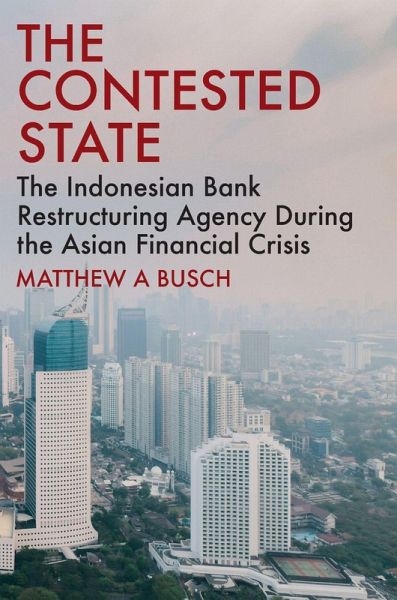
In 1998, during the cataclysmic Asian Financial Crisis, the hastily established Indonesian Bank Restructuring Agency (IBRA) was tasked to implement what became the largest banking sector intervention in history. A misunderstood and often forgotten agency, during its brief existence the IBRA became responsible for assets estimated to be worth more than half of Indonesia’s GDP. Twenty years after its 2004 abolishment, the stories and works of IBRA remain significant to contemporary Indonesian politics, law and anti-corruption. Drawing on unpublished state audits, Matthew A Busch examines the nationalisations of two of Indonesia’s largest private banks amid indications of fraud and billions of dollars in losses. Busch shows how the restructuring and economic recovery from the Asian Financial Crisis was achieved within the highly contested political economy of the time, and unpacks the policy decisions and legal frameworks and decisions that led the Indonesian government to become the temporary owner of an eclectic and extensive span of assets, ranging from the world’s biggest shrimp farm to the country’s largest private bank. The story of the IBRA offers lessons for international development practitioners and financiers seeking to address future financial crises, while providing close watchers of Indonesia with an in-depth look at the challenges and realities of a critical – and still controversial – example of economic policy in action.