
Andere Kunden interessierten sich auch für
 The Social Contract from Hobbes to Rawls54,99 €
 Readings in the Economics of Contract Law42,99 €
 The Hidden Order of Corruption49,99 €
, The Leviathan (1651), The Two Treatises of Government (1689), The Social Contract (1762), The Constitution of Pennsylvania (1776)") The Prince (1532), The Leviathan (1651), The Two Treatises of Government (1689), The Social Contract (1762), The Constitution of Pennsylvania (1776)34,99 €
The Prince (1532), The Leviathan (1651), The Two Treatises of Government (1689), The Social Contract (1762), The Constitution of Pennsylvania (1776)34,99 € The Social Contract in the Boardroom, Bridging Politics, Society, and Profit25,99 €
 THE NEW SOCIAL CONTRACT31,99 €
 The Social Contract & Discourses14,99 €



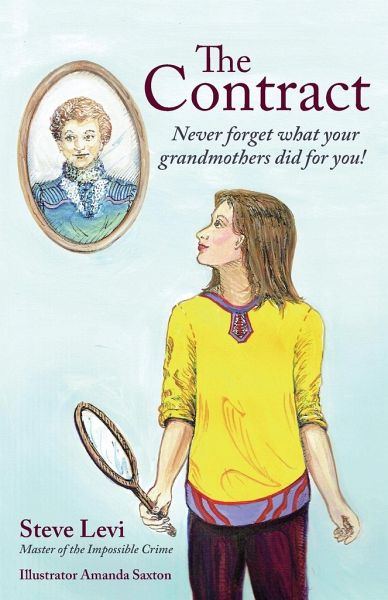
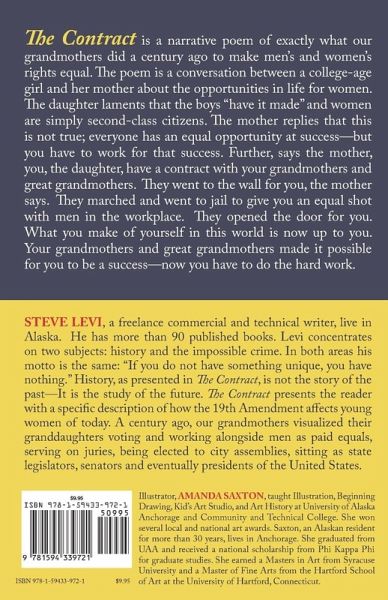
The Contract is a narrative poem of exactly what our grandmothers did a century ago to make men's and women's rights equal. The poem is a conversation between a college-age girl and her mother about the opportunities in life for women. The daughter laments that the boys "have it made" and women are simply second-class citizens. The mother replies that this is not true; everyone has an equal opportunity at success-but you have to work for that success. Further, says the mother, you, the daughter, have a contract with your grandmothers and great grandmothers. They went to the wall for you, the mother says. They marched and went to jail to give you an equal shot with men in the workplace. They opened the door for you. What you make of yourself in this world is now up to you. Your grandmothers and great grandmothers made it possible for you to be a success-now you have to do the hard work.