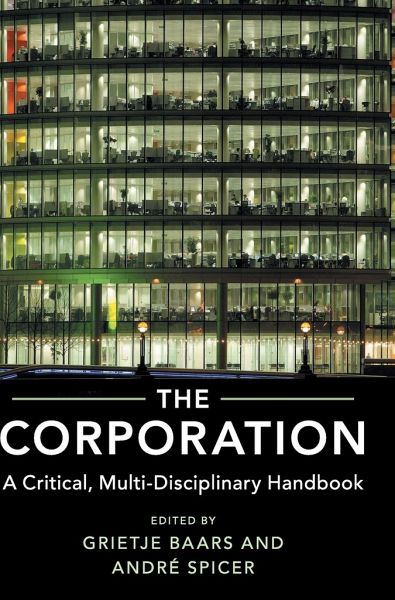
The corporation has become an increasingly dominant force in contemporary society. However, comprehensive, in-depth analysis of the concept of the corporation is often restricted, or limited to one disciplinary approach. This handbook brings together the cutting-edge scholarship, expertise and insight of leading scholars in a wide range of disciplines, notably management studies, law, history, political science, anthropology, sociology and criminology, using a critical approach to dissect and understand the corporation. Ten chapters provide overviews of the state of play of critical…mehr
The corporation has become an increasingly dominant force in contemporary society. However, comprehensive, in-depth analysis of the concept of the corporation is often restricted, or limited to one disciplinary approach. This handbook brings together the cutting-edge scholarship, expertise and insight of leading scholars in a wide range of disciplines, notably management studies, law, history, political science, anthropology, sociology and criminology, using a critical approach to dissect and understand the corporation. Ten chapters provide overviews of the state of play of critical scholarship on the corporation in each of these disciplines. Further contributors tackle current hot topics, such as corporate social responsibility, corporate crime, global value chains, financialization, and the interaction between corporations and communities. Finally, they consider resistance and alternatives to the corporation. With its interdisciplinary approach, this book is an invaluable resource for all readers studying the past, present and future of the corporation.
Introduction Part I. Disciplinary Overviews: 1. The corporation in history 2. The corporation in legal studies 3. The corporation in economics 4. The corporation in sociology 5. The corporation in anthropology 6. The corporation in political science 7. The corporation in geography 8. The corporation in accounting 9. The corporation in management Part II. Interdisciplinary Thematic Chapters: 10. The evolution of the corporate form 10a. Between company and state: the Dutch East and West India Companies as brokers between war and profit 10b. Early modern business projects and a forgotten history of corporate social responsibility 10c. Finance and the origins of modern company law 11. The multinational corporate group 11a. The multinational as a corporate form: a critical contribution from organization studies 11b. Embedding the multinational corporation in transnational sustainability governance 11c. Banks as global corporations: from entities to 'ecological habitats' 12. The financialization of the corporation 11a. The structure and agency of financialization 11b. Financialized business models and the corporation 11c. Transnational corporations and the international tax haven and offshore finance system 13. Corporate value chains 13a. The nature of the firm in global value chains 13b. The corporation and the global value chain 13c. Global production networks and the changing corporation 14. Corporate citizenship 14a. The functions and dysfunctions of corporate social responsibility 14b. Reconsidering the critical corporate social responsibility perspective through French pragmatic sociology: subverting corporate do-gooding for the common good? 14c. Certification schemes and labelling as corporate governance: the value of silence 15. The corporation and crime 15a. The criminal corporate person 15b. The FBI on corporate crime: examining the influence of corporate culture 15c. Mental blockades in the recognition of mens rea in corporations 16. The corporation and ideology 16a. Bad parresia: CSR and corporate mystification today 16b. Capital, corporate citizenship and legitimacy: the ideological force of 'corporate crime' 16c. Corporate foundations and ideology 17. Corporation and communities 17a. Articulating and disarticulating corporation and community 17b. Communities within and without of the corporation: control, power and interests 17c. Coercion and corporate power: notes on class struggle in an Indian city 18. Corporations and resistance 18a. Organizing in the nervous system: global trade unions and global production networks 18b. Rethinking workplace resistance: between revolt and co-optation 18c. Anarchist versus corporate ethics 19. Alternatives to the corporation 19a. Resisting and regulating corporations through ecologies of alternative enterprise: insurance and electricity in the US case 19b. The psychological crisis of the corporation: employee-owned alternatives and futures 19c. Organization is politics made durable: principles and alternatives.
Introduction Part I. Disciplinary Overviews: 1. The corporation in history 2. The corporation in legal studies 3. The corporation in economics 4. The corporation in sociology 5. The corporation in anthropology 6. The corporation in political science 7. The corporation in geography 8. The corporation in accounting 9. The corporation in management Part II. Interdisciplinary Thematic Chapters: 10. The evolution of the corporate form 10a. Between company and state: the Dutch East and West India Companies as brokers between war and profit 10b. Early modern business projects and a forgotten history of corporate social responsibility 10c. Finance and the origins of modern company law 11. The multinational corporate group 11a. The multinational as a corporate form: a critical contribution from organization studies 11b. Embedding the multinational corporation in transnational sustainability governance 11c. Banks as global corporations: from entities to 'ecological habitats' 12. The financialization of the corporation 11a. The structure and agency of financialization 11b. Financialized business models and the corporation 11c. Transnational corporations and the international tax haven and offshore finance system 13. Corporate value chains 13a. The nature of the firm in global value chains 13b. The corporation and the global value chain 13c. Global production networks and the changing corporation 14. Corporate citizenship 14a. The functions and dysfunctions of corporate social responsibility 14b. Reconsidering the critical corporate social responsibility perspective through French pragmatic sociology: subverting corporate do-gooding for the common good? 14c. Certification schemes and labelling as corporate governance: the value of silence 15. The corporation and crime 15a. The criminal corporate person 15b. The FBI on corporate crime: examining the influence of corporate culture 15c. Mental blockades in the recognition of mens rea in corporations 16. The corporation and ideology 16a. Bad parresia: CSR and corporate mystification today 16b. Capital, corporate citizenship and legitimacy: the ideological force of 'corporate crime' 16c. Corporate foundations and ideology 17. Corporation and communities 17a. Articulating and disarticulating corporation and community 17b. Communities within and without of the corporation: control, power and interests 17c. Coercion and corporate power: notes on class struggle in an Indian city 18. Corporations and resistance 18a. Organizing in the nervous system: global trade unions and global production networks 18b. Rethinking workplace resistance: between revolt and co-optation 18c. Anarchist versus corporate ethics 19. Alternatives to the corporation 19a. Resisting and regulating corporations through ecologies of alternative enterprise: insurance and electricity in the US case 19b. The psychological crisis of the corporation: employee-owned alternatives and futures 19c. Organization is politics made durable: principles and alternatives.
Es gelten unsere Allgemeinen Geschäftsbedingungen: www.buecher.de/agb
Impressum
www.buecher.de ist ein Internetauftritt der buecher.de internetstores GmbH
Geschäftsführung: Monica Sawhney | Roland Kölbl | Günter Hilger
Sitz der Gesellschaft: Batheyer Straße 115 - 117, 58099 Hagen
Postanschrift: Bürgermeister-Wegele-Str. 12, 86167 Augsburg
Amtsgericht Hagen HRB 13257
Steuernummer: 321/5800/1497
USt-IdNr: DE450055826