
Andere Kunden interessierten sich auch für
 College Students in the United States50,99 €
 Anti-Racist Educational Leadership and Policy61,99 €
 Transnational Filipina/o/x Youth, Intersectional Identities, and School-Community Partnerships65,99 €
 Researching Social Inequalities in Higher Education50,99 €
 Developing High-Impact Course Design Institutes48,99 €
 American Higher Education53,99 €
 Debunking the Grit Narrative in Higher Education54,99 €

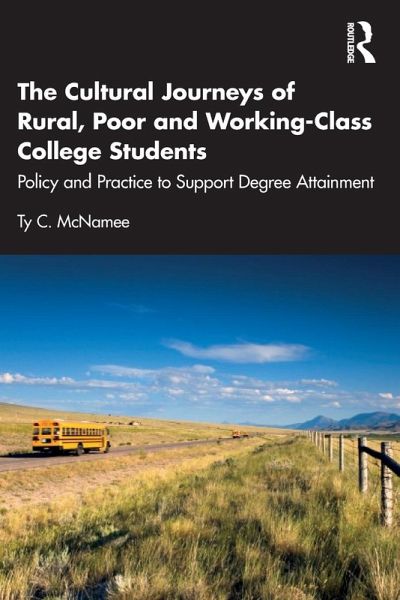
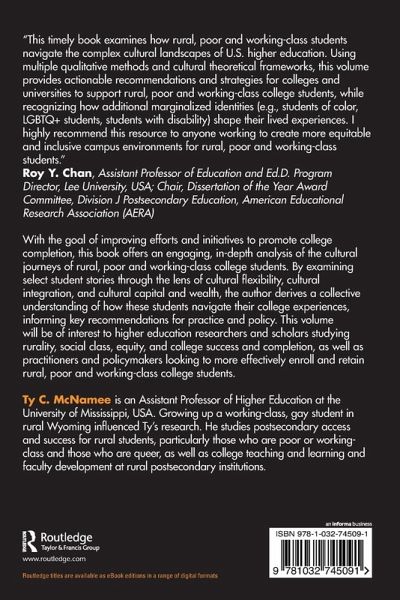
With the goal of improving efforts and initiatives to promote college completion, this book offers an engaging, in-depth analysis of the cultural journeys of rural, poor and working-class college students. By examining select student stories through the lens of cultural flexibility, cultural integration, and cultural capital and wealth, the author derives a collective understanding of how these students navigate their college experiences, informing key recommendations for practice and policy. This volume will be of interest to higher education researchers and scholars studying rurality, social class, equity, and college success and completion, as well as practitioners and policymakers looking to more effectively enroll and retain rural, poor and working-class college students.
"This timely book examines how rural, poor and working-class students navigate the complex cultural landscapes of U.S. higher education. Using multiple qualitative methods and cultural theoretical frameworks, this volume provides actionable recommendations and strategies for colleges and universities to support rural, poor and working-class college students, while recognizing how additional marginalized identities (e.g., students of color, LGBTQ+ students, students with disability) shape their lived experiences. I highly recommend this resource to anyone working to create more equitable and inclusive campus environments for rural, poor and working-class students."
Roy Y. Chan, Assistant Professor of Education and Ed.D. Program Director, Lee University, USA; Chair, Dissertation of the Year Award Committee, Division J Postsecondary Education, American Educational Research Association (AERA)
Roy Y. Chan, Assistant Professor of Education and Ed.D. Program Director, Lee University, USA; Chair, Dissertation of the Year Award Committee, Division J Postsecondary Education, American Educational Research Association (AERA)