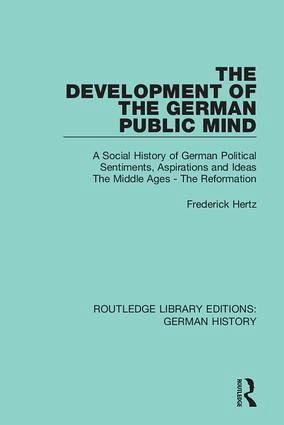
Originally published in 1957, this study shows what the various sections of the Germans of every rank and class were thinking of the ruling men, how far they supported or opposed them, what were their wishes, hopes and fears, prejudices, ideals and standards of right and wrong. The influence of foreign thought, and parallels with the development of other nations is also discussed. The diverse sources used for research for this volume include religious and legal writings, literature, broadsheets, verses of minstrels, folk-songs and later, newspapers.
Originally published in 1957, this study shows what the various sections of the Germans of every rank and class were thinking of the ruling men, how far they supported or opposed them, what were their wishes, hopes and fears, prejudices, ideals and standards of right and wrong. The influence of foreign thought, and parallels with the development of other nations is also discussed. The diverse sources used for research for this volume include religious and legal writings, literature, broadsheets, verses of minstrels, folk-songs and later, newspapers.
Part 1: The Middle Ages 1. The Early Influence of Nature on the Public Mind 2. The Influence of Germanic Traditions 3. The Influence of Christianity 4. Charlemagne's Political System 5. The Fall of the Frankish Empire 6. Political Thought and Sentiment in the Time of the Late Carolingians 7. Religious Revival, Cluny and Lorraine 8. Germany Under the Saxon House 9. The Ideology of the Emperorship 10. The First Great Conflict with the Papacy 11. The Spirit of the High Middle Ages 12. The Rise and the Fall of the Hohenstaufens 13. Political Thought and Social Criticism in the Age of the Hohenstaufens 14. Opinions on the Decline of the Empire 15. Social Development and Colonisation 16. Rudolph of Habsburg and the Next-Following Kings 17. New Political and Spiritual Struggles with the Papacy 18. The Closing Middle Ages 19. Political Thought in the 15th Century 20. Social Criticism in the Late Middle Ages 21. The Development of Particularism and of the Constitutional Structure 22. The Effect of Particularism on the Law and Social Relations 23. The Jews in the Middle Ages 24. The Rise of National Power Politics in Europe. Maximilian I 25. Humanism and the Rise of the Modern Spirit Part 2: The Reformation and Counter-Reformation 1. Emperor Charles V 2. The Causes of the Reformation. Luther's Personality 3. Luther's Attack on the Papacy and its Immediate Consequences 4. Church Government and Social Reform in Luther's Thought 5. The Spreading of Luther's Teachings 6. Eberlin's Plan for a Democratic Welfare State 8. Revolutionary Agitation Amongst the Knights, Hutten's End 9. The Great Peasant War 10. Luther on War and Revolution 11. The Break with Humanism 12. The Rise of State Churches and a New Orthodoxy 13. The Anabaptists and Other Sects 14. The Freethinkers 15. Luther, the Turkish Menace and the Question of War 16. The Emperor, the Reichstag and the Protestants 17. The Civil War, the Religious Peace and its Effect 18. Calvin and the Reformed Church 19. The Regeneration of the Catholic Church and the Jesuits 20. Religious Strife Among the Protestants 21. The Counter-Reformation in Germany and Austria 22. Economic, Social and Cultural Developments 23. The Territorial States 24. The Thirty Years War 25. The Peace of Westphalia and the Aftermath of the War
1. The Empire, its Frontiers and Structure and the Spirit of Particularism 2. The Emperor and the Estates 3. Religion and Enlightenment 4. Germany's Social Structure and Economic Conditions 5. Political Thought in the 187th Century 6. G. W. Leibniz 7. The Epoch of Louis XIV and the Rise of Monarchical Absolutism 8. The Conquest of Hungary by the Turkish Empire and its Consequences 9. Emperor Leopold I and his Policy 10. Hungary's Liberation and Austro-Hungarian Relations 11. The War of the Spanish Succession and its Consequences 12. Emperor Charles VI 13. The Principal German States Until about 1740 14. Christian Wolff and Enlightenment 15. Prussia Becomes a Great Power 16. Frederick II, his Personality, Thought and Work 17. Maria Theresa and Joseph II. Their Personality, Thought and Work 18. The Smaller German States in the Age of Enlightenment 19. Political Ideas in the Age of Frederick II and Joseph II 20. The French Revolution and German Public Opinion 21. The End of the Empire
Part 1: The Middle Ages 1. The Early Influence of Nature on the Public Mind 2. The Influence of Germanic Traditions 3. The Influence of Christianity 4. Charlemagne's Political System 5. The Fall of the Frankish Empire 6. Political Thought and Sentiment in the Time of the Late Carolingians 7. Religious Revival, Cluny and Lorraine 8. Germany Under the Saxon House 9. The Ideology of the Emperorship 10. The First Great Conflict with the Papacy 11. The Spirit of the High Middle Ages 12. The Rise and the Fall of the Hohenstaufens 13. Political Thought and Social Criticism in the Age of the Hohenstaufens 14. Opinions on the Decline of the Empire 15. Social Development and Colonisation 16. Rudolph of Habsburg and the Next-Following Kings 17. New Political and Spiritual Struggles with the Papacy 18. The Closing Middle Ages 19. Political Thought in the 15th Century 20. Social Criticism in the Late Middle Ages 21. The Development of Particularism and of the Constitutional Structure 22. The Effect of Particularism on the Law and Social Relations 23. The Jews in the Middle Ages 24. The Rise of National Power Politics in Europe. Maximilian I 25. Humanism and the Rise of the Modern Spirit Part 2: The Reformation and Counter-Reformation 1. Emperor Charles V 2. The Causes of the Reformation. Luther's Personality 3. Luther's Attack on the Papacy and its Immediate Consequences 4. Church Government and Social Reform in Luther's Thought 5. The Spreading of Luther's Teachings 6. Eberlin's Plan for a Democratic Welfare State 8. Revolutionary Agitation Amongst the Knights, Hutten's End 9. The Great Peasant War 10. Luther on War and Revolution 11. The Break with Humanism 12. The Rise of State Churches and a New Orthodoxy 13. The Anabaptists and Other Sects 14. The Freethinkers 15. Luther, the Turkish Menace and the Question of War 16. The Emperor, the Reichstag and the Protestants 17. The Civil War, the Religious Peace and its Effect 18. Calvin and the Reformed Church 19. The Regeneration of the Catholic Church and the Jesuits 20. Religious Strife Among the Protestants 21. The Counter-Reformation in Germany and Austria 22. Economic, Social and Cultural Developments 23. The Territorial States 24. The Thirty Years War 25. The Peace of Westphalia and the Aftermath of the War
1. The Empire, its Frontiers and Structure and the Spirit of Particularism 2. The Emperor and the Estates 3. Religion and Enlightenment 4. Germany's Social Structure and Economic Conditions 5. Political Thought in the 187th Century 6. G. W. Leibniz 7. The Epoch of Louis XIV and the Rise of Monarchical Absolutism 8. The Conquest of Hungary by the Turkish Empire and its Consequences 9. Emperor Leopold I and his Policy 10. Hungary's Liberation and Austro-Hungarian Relations 11. The War of the Spanish Succession and its Consequences 12. Emperor Charles VI 13. The Principal German States Until about 1740 14. Christian Wolff and Enlightenment 15. Prussia Becomes a Great Power 16. Frederick II, his Personality, Thought and Work 17. Maria Theresa and Joseph II. Their Personality, Thought and Work 18. The Smaller German States in the Age of Enlightenment 19. Political Ideas in the Age of Frederick II and Joseph II 20. The French Revolution and German Public Opinion 21. The End of the Empire
Es gelten unsere Allgemeinen Geschäftsbedingungen: www.buecher.de/agb
Impressum
www.buecher.de ist ein Internetauftritt der buecher.de internetstores GmbH
Geschäftsführung: Monica Sawhney | Roland Kölbl | Günter Hilger
Sitz der Gesellschaft: Batheyer Straße 115 - 117, 58099 Hagen
Postanschrift: Bürgermeister-Wegele-Str. 12, 86167 Augsburg
Amtsgericht Hagen HRB 13257
Steuernummer: 321/5800/1497
USt-IdNr: DE450055826