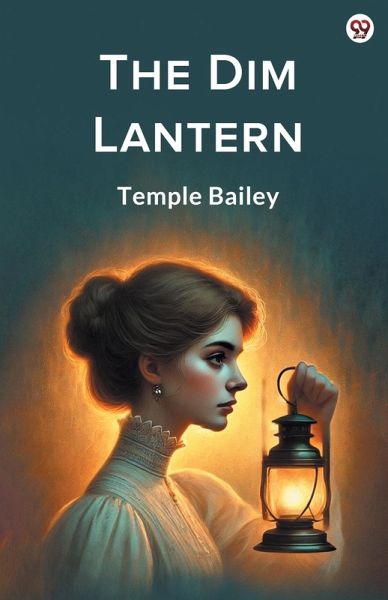
The Dim Lantern offers a rich exploration of family dynamics, personal aspirations, and the complexities of social expectations. The story contrasts the bright optimism of a young woman with the melancholic struggle of her brother, an artist burdened by his own expectations. Their sibling relationship serves as a canvas for examining how different personalities respond to the pressures of love, ambition, and the desire for a sense of belonging in a changing society. The narrative introduces the allure of societal status and the emotional turbulence that accompanies the pursuit of personal…mehr
The Dim Lantern offers a rich exploration of family dynamics, personal aspirations, and the complexities of social expectations. The story contrasts the bright optimism of a young woman with the melancholic struggle of her brother, an artist burdened by his own expectations. Their sibling relationship serves as a canvas for examining how different personalities respond to the pressures of love, ambition, and the desire for a sense of belonging in a changing society. The narrative introduces the allure of societal status and the emotional turbulence that accompanies the pursuit of personal fulfillment. The arrival of a mysterious figure, who disrupts the quiet life of the family, further intensifies the characters' emotional growth and reflections on life s challenges. The book enhances the exploration of self-discovery, the pursuit of art, and the internal conflict between personal desires and the constraints of societal norms. Through the unfolding events, the characters seek connection, confronting not only external influences but also their own inner struggles. This highlights the powerful tension between individual dreams and the societal frameworks that shape them.
Irene Temple Bailey, born on February 24, 1869, in Petersburg, Virginia, was a highly successful American novelist and short story writer. She began her career around 1902, contributing stories to renowned national magazines such as The Saturday Evening Post, Cavalier Magazine, Cosmopolitan, The American Magazine, Good Housekeeping, and McCall's. In 1914, she wrote the screenplay for the Vitagraph Studios film Auntie, and two of her novels were adapted into films. Bailey's literary success extended beyond magazine contributions; three of her books were on the list of bestselling novels in the United States in 1918, 1922, and 1926. Despite her success, Bailey never married. She passed away on July 6, 1953, at her apartment in Washington, D.C. Her obituary in The New York Post estimated that her novels had sold over three million copies, solidifying her status as one of the best-paid writers of her time. Cosmopolitan magazine had once paid her $325,000 for three serial novels and short stories, underscoring her immense success in the literary world.
Es gelten unsere Allgemeinen Geschäftsbedingungen: www.buecher.de/agb
Impressum
www.buecher.de ist ein Internetauftritt der buecher.de internetstores GmbH
Geschäftsführung: Monica Sawhney | Roland Kölbl | Günter Hilger
Sitz der Gesellschaft: Batheyer Straße 115 - 117, 58099 Hagen
Postanschrift: Bürgermeister-Wegele-Str. 12, 86167 Augsburg
Amtsgericht Hagen HRB 13257
Steuernummer: 321/5800/1497
USt-IdNr: DE450055826