
Andere Kunden interessierten sich auch für
") The Dramatic Works Of John Webster V4 (LARGE PRINT EDITION)45,99 €
The Dramatic Works Of John Webster V4 (LARGE PRINT EDITION)45,99 €") The Dramatic Works Of John Webster V3 (LARGE PRINT EDITION)41,99 €
The Dramatic Works Of John Webster V3 (LARGE PRINT EDITION)41,99 €") The Dramatic Works Of John Webster V2 (LARGE PRINT EDITION)43,99 €
The Dramatic Works Of John Webster V2 (LARGE PRINT EDITION)43,99 €") Lyrics, Idyls And Romances From The Poetic And Dramatic Works Of Robert Browning (LARGE PRINT EDITION)48,99 €
Lyrics, Idyls And Romances From The Poetic And Dramatic Works Of Robert Browning (LARGE PRINT EDITION)48,99 €") The Poetical Works Of John Skelton V2 (LARGE PRINT EDITION)49,99 €
The Poetical Works Of John Skelton V2 (LARGE PRINT EDITION)49,99 €") The Miscellaneous Works Of William Paley V2 (LARGE PRINT EDITION)54,99 €
The Miscellaneous Works Of William Paley V2 (LARGE PRINT EDITION)54,99 €") The Letters And Works Of Lady Mary Wortley Montagu V1 (LARGE PRINT EDITION)49,99 €
The Letters And Works Of Lady Mary Wortley Montagu V1 (LARGE PRINT EDITION)49,99 €
(LARGE PRINT EDITION) 1850. Goethe is widely recognized as the greatest writer of the German tradition. The Romantic period in Germany is known as the age of Goethe, and Goethe embodies the concerns of the generation defined by the legacies of Rousseau, Kant, and the French Revolution. His eminence is derived not only from his literary achievements as a lyric poet, novelist, and dramatist but also from his often significant contributions as a scientist (geologist, botanist, anatomist, physicist, historian of science) and as a critic and theorist of literature and of art. This volume contains some of his most noted works including: Faust; Iphigenia in Taurus; Torquato Tasso; Egmont; and Goetz von Berlichingen, Sir Walter Scott's Introduction. See other titles by this author available from Kessinger Publishing.
Johann Wolfgang von Goethe was a German writer, poet, playwright, and philosopher, widely regarded as one of the most influential figures in Western literature. Born on August 28, 1749, in Frankfurt, Germany, he is best known for his works such as Faust, The Sorcerer's Apprentice, and Erlkönig. Goethe's works span a wide range of genres, including drama, poetry, and philosophy, and he was a central figure in the Sturm und Drang literary movement. His writing not only revolutionized German literature but also had a profound impact on political and philosophical thought. Throughout his career, Goethe was influenced by figures such as Friedrich Schiller and William Shakespeare, and his ideas on individuality and the human condition helped shape European intellectual history. Goethe was married to Christiane Vulpius from 1806 until her death in 1816. He spent much of his life in Weimar, Germany, where he died on March 22, 1832, at the age of 82. His legacy continues to influence writers, artists, and thinkers across the globe. His exploration of human nature and existential questions remains relevant in modern cultural and intellectual discussions.
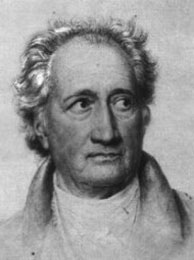
Bild: Wikipedia