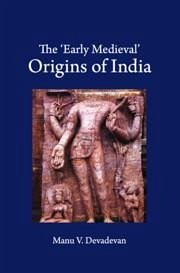
Manu V. Devadevan is Assistant Professor of History at the School of Humanities and Social Sciences at the Indian Institute of Technology, Mandi. He specializes in religion and literary practices in South Asia, politics and economic processes of South Asia, and South Asian epigraphy. His most recent publication is an edited volume titled, Clio and Her Descendants: Essays for Kesavan Veluthat (2018).
Inhaltsangabe
List of tables; List of maps and figures; Acknowledgements; Introduction; Part I. Institutions: 1. State formation and its structural foundations; 2. From the cult of chivalry to the cult of personality: the seventh-century transformation in Pallava statecraft; 3. Changes in land relations and the changing fortunes of the Ce ra state; 4. Temple and territory in the Puri Jagannätha imaginaire; Part II. Ideas: 5. Svayamòbuddha's predilections: the epistemologies of time and knowledge; 6. Bhäravi and the creation of a literary paradigm; 7. Knowing and being: the semantic universe of the Ku dòiyätòtòamò theatre; 8. The invention of zero and its intellectual legacy; Part III. Identities: 9. The evolution of vernacular languages: a case study of Kannada; 10. Religious identities in times of Indumaulòi's grief; 11. Caste, gender and the landed patriarchy; 12. The making of territorial self consciousness (with particular reference to Kalin ga); Bibliography; Index.
List of tables; List of maps and figures; Acknowledgements; Introduction; Part I. Institutions: 1. State formation and its structural foundations; 2. From the cult of chivalry to the cult of personality: the seventh-century transformation in Pallava statecraft; 3. Changes in land relations and the changing fortunes of the Ce ra state; 4. Temple and territory in the Puri Jagannätha imaginaire; Part II. Ideas: 5. Svayamòbuddha's predilections: the epistemologies of time and knowledge; 6. Bhäravi and the creation of a literary paradigm; 7. Knowing and being: the semantic universe of the Ku dòiyätòtòamò theatre; 8. The invention of zero and its intellectual legacy; Part III. Identities: 9. The evolution of vernacular languages: a case study of Kannada; 10. Religious identities in times of Indumaulòi's grief; 11. Caste, gender and the landed patriarchy; 12. The making of territorial self consciousness (with particular reference to Kalin ga); Bibliography; Index.
Es gelten unsere Allgemeinen Geschäftsbedingungen: www.buecher.de/agb
Impressum
www.buecher.de ist ein Internetauftritt der buecher.de internetstores GmbH
Geschäftsführung: Monica Sawhney | Roland Kölbl | Günter Hilger
Sitz der Gesellschaft: Batheyer Straße 115 - 117, 58099 Hagen
Postanschrift: Bürgermeister-Wegele-Str. 12, 86167 Augsburg
Amtsgericht Hagen HRB 13257
Steuernummer: 321/5800/1497
USt-IdNr: DE450055826