
Andere Kunden interessierten sich auch für
 War, Violence and the Modern Condition109,99 €
 The Peabody Sisters30,99 €
 Berlin - The Symphony Continues102,99 €
 Regarding the Popular159,95 €
 Cultural Mobility in the Interwar Avant-Garde Art Network41,99 €
 An Introduction to the Most Useful European Languages31,90 €
 The Mussulman, the Maratha and the European13,90 €



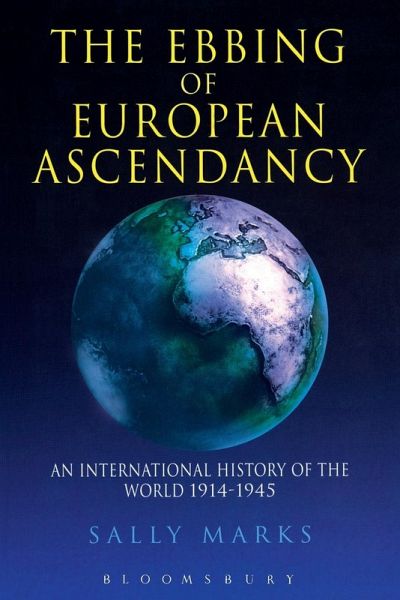
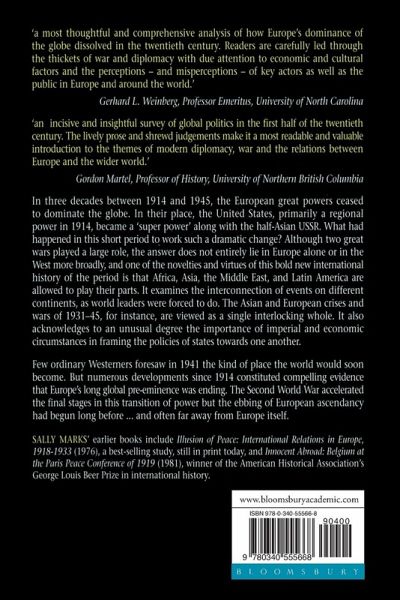
In three decades, from 1914 to 1945, the European great powers ceased to dominate the globe. In their place, the United States, primarily a regional power in 1914, became a "super power" along with the half-Asian USSR. What had happened in this short period to work such a dramatic change? This work examines the interconnection of events on different continents, just as world leaders were forced to do. The book also acknowledges the importance of imperial and economic circumstances in framing the policies of states towards one another. In 1941, few Westerners could have forseen how the world would be when World War II ended. The war accelerated the final stages in the transition, but the ebbing of European ascendancy had begun long before, and often far away from Europe itself.
In a space of little over 30 years, the world was transformed. The European great powers were no longer ascendant, even if that was not yet fully revealed to them, and the US, a regional power as of 1914, now belonged to the wholly new category of "superpower." What happened in this short period to work such a dramatic change? The answer lies neither in Europe alone nor in the West more broadly, and one of the virtues of this bold new international history of the period that Africa, Asia, the Middle East, and Latin America are allowed to play their parts. It treats the Asian and European crises and wars of 1931-45, for example, as a single interlocking whole, as world leaders at the time were forced to do. It also acknowledges to an unusual degree the importance of imperial and economic circumstances in framing the policies of states towards one another.
In a space of little over 30 years, the world was transformed. The European great powers were no longer ascendant, even if that was not yet fully revealed to them, and the US, a regional power as of 1914, now belonged to the wholly new category of "superpower." What happened in this short period to work such a dramatic change? The answer lies neither in Europe alone nor in the West more broadly, and one of the virtues of this bold new international history of the period that Africa, Asia, the Middle East, and Latin America are allowed to play their parts. It treats the Asian and European crises and wars of 1931-45, for example, as a single interlocking whole, as world leaders at the time were forced to do. It also acknowledges to an unusual degree the importance of imperial and economic circumstances in framing the policies of states towards one another.