

Andere Kunden interessierten sich auch für
 Concern for the Church in the World22,99 €
 The Bible Book19,99 €
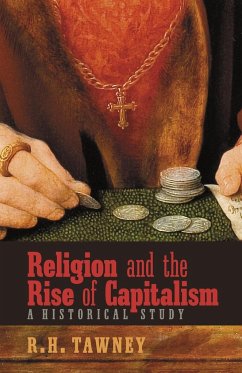
 Religion and the Rise of Capitalism22,99 €
 The Realities of Money and Missions22,99 €
 Economics and Empire in the Roman World41,99 €
 Concern for the Church in the World34,99 €
 The Management of the Ecclesiastical Goods of Institutes of Consecrated Life and Societies of Apostolic Life. At the Service of Humanum and the Mission in the Church22,99 €






In "The Economics Of Jesus," Ebenezer Griffith-Jones explores the economic implications of Jesus' teachings and their relevance to contemporary society. Griffith-Jones delves into the gospels to extract principles of economic justice, stewardship, and compassion. The book examines how Jesus' messages about wealth, poverty, and generosity challenge conventional economic thought and offer a transformative vision for a more equitable world. Griffith-Jones's work provides a unique perspective on the intersection of faith and economics, inviting readers to reconsider their values and practices in light of Jesus' radical teachings. This book remains a valuable resource for those seeking to integrate their Christian faith with their understanding of economic systems and personal financial responsibility. It is relevant for students, theologians, and anyone interested in the ethical dimensions of economic life. This work has been selected by scholars as being culturally important, and is part of the knowledge base of civilization as we know it. This work was reproduced from the original artifact, and remains as true to the original work as possible. Therefore, you will see the original copyright references, library stamps (as most of these works have been housed in our most important libraries around the world), and other notations in the work. This work is in the public domain in the United States of America, and possibly other nations. Within the United States, you may freely copy and distribute this work, as no entity (individual or corporate) has a copyright on the body of the work. As a reproduction of a historical artifact, this work may contain missing or blurred pages, poor pictures, errant marks, etc. Scholars believe, and we concur, that this work is important enough to be preserved, reproduced, and made generally available to the public. We appreciate your support of the preservation process, and thank you for being an important part of keeping this knowledge alive and relevant.