
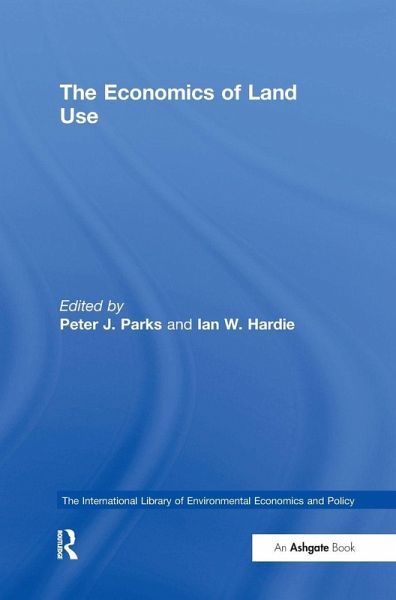
- Gebundenes Buch
- Merkliste
- Auf die Merkliste
- Bewerten Bewerten
- Teilen
- Produkt teilen
- Produkterinnerung
- Produkterinnerung
The Economics of Land Use brings together the most significant journal essays in key areas of contemporary agricultural, food and resource economics and land use policy. The editors provide a state-of-the-art overview of the topic and access to the economic literature that has shaped contemporary perspectives on land use analysis and policy.
Andere Kunden interessierten sich auch für
 Alan RabinowitzUrban Economics and Land Use in America213,99 €
 The Handbook of Pluralist Economics Education178,99 €
 Samuel HollanderJean-Baptiste Say and the Classical Canon in Economics168,99 €
 Conrad BlythThe Use of Economic Statistics167,99 €
 John Harriss (ed.)The New Institutional Economics and Third World Development251,99 €
 Paul DownwardThe Economics of Professional Team Sports222,99 €
 The Economics and Politics of International Trade181,99 €
-
-
-

The Economics of Land Use brings together the most significant journal essays in key areas of contemporary agricultural, food and resource economics and land use policy. The editors provide a state-of-the-art overview of the topic and access to the economic literature that has shaped contemporary perspectives on land use analysis and policy.
Produktdetails
- Produktdetails
- Verlag: Routledge
- Seitenzahl: 626
- Erscheinungstermin: 8. Juli 2003
- Englisch
- Abmessung: 250mm x 175mm x 38mm
- Gewicht: 1243g
- ISBN-13: 9780754622222
- ISBN-10: 0754622223
- Artikelnr.: 42358857
- Herstellerkennzeichnung
- Libri GmbH
- Europaallee 1
- 36244 Bad Hersfeld
- gpsr@libri.de
- Verlag: Routledge
- Seitenzahl: 626
- Erscheinungstermin: 8. Juli 2003
- Englisch
- Abmessung: 250mm x 175mm x 38mm
- Gewicht: 1243g
- ISBN-13: 9780754622222
- ISBN-10: 0754622223
- Artikelnr.: 42358857
- Herstellerkennzeichnung
- Libri GmbH
- Europaallee 1
- 36244 Bad Hersfeld
- gpsr@libri.de
Ian W. Hardie
Contents: Part I: Studies Based on Given Political-Government Institutions
and Full Private or Public Ownership: Ricardian Rent: Theory: Interactions
between agricultural and environmental policies: a conceptual framework,
Richard E. Just and John M. Antle; The Ricardian rent and the allocation of
land under uncertainty, Jean-Paul Chavas; Land quality, irrigation
development, and cropping patterns in the Northern High Plains, Erik
Lichtenberg. Applications: Representative Owner Applications: A dynamic
model of acreage allocation with general and crop-specific soil capital,
Peter F. Orazem and John A. Miranowski; Mining the soil: agricultural
production system on peatland, Renan U. Goetz and David Zilberman. Grouped
Land Use and Aggregated Data: The impact of policies and land
characteristics on potential groundwater pollution in Wisconsin, JunJie Wu
and Kathleen Segerson; Responsiveness of rural and urban land uses to land
rent determinants in the U.S. South, Ian Hardie, Peter Parks, Peter
Gottlieb and David Wear. Explicit Aggregation Methods: Unintended impacts
of public investments on private decisions: the depletion of forested
wetlands, Robert N. Stavins and Adam B. Jaffe; Econometric-process models
for integrated assessment of agricultural production systems, John M. Antle
and Susan M. Capalbo. Policy Maker Decision Models: Minimum cost strategies
for sequestering carbon in forests, Darius M. Adams, Ralph J. Alig, Bruce
A. McCarl, John M. Callaway and Steven M. Winnett; The economics of a
public fund for environmental amenities: a study of CRP contracts, Bruce A.
Babcock, P.G. Lakshminarayan, JunJie Wu and David Zilberman. Space - Von
Thÿnen Rent: Theory: The pattern and timing of land development in a long
run equilibrium urban land use model, Alex Anas; The fundamentals of land
prices and urban growth, Dennis R. Capozza and Robert W. Helsley; The
stochastic city, Dennis R. Capozza and Robert W. Helsley. Applications:
Urban Growth Model: Growth controls and land values in an open city, Jan K.
Brueckner; Urban spatial structure with open space, C.H. Yang and M.
Fujita; Agricultural land values and the value of rights to future land
development, Andrew J. Plantinga and Douglas J. Miller. Site Price Models:
Woodland deforestation by charcoal supply to Dar es Salaam, Ole Hofstad;
Human-environmental influences and interactions in shifting agriculture
when farmers form expectations rationally, D.W. Jones and R.V. O'Neill.
Landscape-Location Studies of Land Use: Roads, land use, and deforestation:
a spatial model applied to Belize, Kenneth M. Chomitz and David A. Gray; On
the price of land and the value of amenities, Paul Cheshire and Stephen
Sheppard; Modeling ecological constraints on tropical forest management:
spatial interdependence, irreversibility, and uncertainty, Heidi J. Albers;
Interacting agents, spatial externalities and the evolution of residential
land use patterns, Elena G. Irwin and Nancy E. Bockstael. Part II: Studies
with Given Political - Government Institutions That Do Not Have Complete
Property Rights: Open Access Public Property: Nepali fuelwood production
and consumption: regional and household distinctions, substitution and
successful intervention, Gregory S. Amacher, William F. Hyde and Keshav R.
Kanel; Tropical deforestation, tenure insecurity, and unsustainability,
Edward B. Barbier and Joanne C. Burgess; Indigenous land rights in
Sub-Saharan Africa: appropriation, security, and investment demand, Espen
Sjaastad and Daniel W. Bromley. Commons: Environmental externalities in
traditional agriculture and the impact of trade liberalization: the case of
Ghana, Ramón López; Land allocation under dual individual-collective use
in Mexico, Nancy McCarthy, Alain de Janvry and Elisabeth Sadoulet. Takings:
The economic consequences of regulatory taking risk on land value and
development activity, Timothy J. Riddiough. Part III: Studies With Mutable
Government Institutions-Political Economy of Land Use: Assessing the
relationship between government policy and deforestation, Robert T. Deacon;
Agricultural land relations in the developing world, Hans P. Binswanger,
Klaus Deininger and Gershon Feder; A study in resistance to institutional
change: the lost game of Latin American land reform, Alain de Janvry and
Elisabeth Sadoulet; Takings, compensation, and equal treatment for owners
of developed and undeveloped property, Robert Innes; Name index.
and Full Private or Public Ownership: Ricardian Rent: Theory: Interactions
between agricultural and environmental policies: a conceptual framework,
Richard E. Just and John M. Antle; The Ricardian rent and the allocation of
land under uncertainty, Jean-Paul Chavas; Land quality, irrigation
development, and cropping patterns in the Northern High Plains, Erik
Lichtenberg. Applications: Representative Owner Applications: A dynamic
model of acreage allocation with general and crop-specific soil capital,
Peter F. Orazem and John A. Miranowski; Mining the soil: agricultural
production system on peatland, Renan U. Goetz and David Zilberman. Grouped
Land Use and Aggregated Data: The impact of policies and land
characteristics on potential groundwater pollution in Wisconsin, JunJie Wu
and Kathleen Segerson; Responsiveness of rural and urban land uses to land
rent determinants in the U.S. South, Ian Hardie, Peter Parks, Peter
Gottlieb and David Wear. Explicit Aggregation Methods: Unintended impacts
of public investments on private decisions: the depletion of forested
wetlands, Robert N. Stavins and Adam B. Jaffe; Econometric-process models
for integrated assessment of agricultural production systems, John M. Antle
and Susan M. Capalbo. Policy Maker Decision Models: Minimum cost strategies
for sequestering carbon in forests, Darius M. Adams, Ralph J. Alig, Bruce
A. McCarl, John M. Callaway and Steven M. Winnett; The economics of a
public fund for environmental amenities: a study of CRP contracts, Bruce A.
Babcock, P.G. Lakshminarayan, JunJie Wu and David Zilberman. Space - Von
Thÿnen Rent: Theory: The pattern and timing of land development in a long
run equilibrium urban land use model, Alex Anas; The fundamentals of land
prices and urban growth, Dennis R. Capozza and Robert W. Helsley; The
stochastic city, Dennis R. Capozza and Robert W. Helsley. Applications:
Urban Growth Model: Growth controls and land values in an open city, Jan K.
Brueckner; Urban spatial structure with open space, C.H. Yang and M.
Fujita; Agricultural land values and the value of rights to future land
development, Andrew J. Plantinga and Douglas J. Miller. Site Price Models:
Woodland deforestation by charcoal supply to Dar es Salaam, Ole Hofstad;
Human-environmental influences and interactions in shifting agriculture
when farmers form expectations rationally, D.W. Jones and R.V. O'Neill.
Landscape-Location Studies of Land Use: Roads, land use, and deforestation:
a spatial model applied to Belize, Kenneth M. Chomitz and David A. Gray; On
the price of land and the value of amenities, Paul Cheshire and Stephen
Sheppard; Modeling ecological constraints on tropical forest management:
spatial interdependence, irreversibility, and uncertainty, Heidi J. Albers;
Interacting agents, spatial externalities and the evolution of residential
land use patterns, Elena G. Irwin and Nancy E. Bockstael. Part II: Studies
with Given Political - Government Institutions That Do Not Have Complete
Property Rights: Open Access Public Property: Nepali fuelwood production
and consumption: regional and household distinctions, substitution and
successful intervention, Gregory S. Amacher, William F. Hyde and Keshav R.
Kanel; Tropical deforestation, tenure insecurity, and unsustainability,
Edward B. Barbier and Joanne C. Burgess; Indigenous land rights in
Sub-Saharan Africa: appropriation, security, and investment demand, Espen
Sjaastad and Daniel W. Bromley. Commons: Environmental externalities in
traditional agriculture and the impact of trade liberalization: the case of
Ghana, Ramón López; Land allocation under dual individual-collective use
in Mexico, Nancy McCarthy, Alain de Janvry and Elisabeth Sadoulet. Takings:
The economic consequences of regulatory taking risk on land value and
development activity, Timothy J. Riddiough. Part III: Studies With Mutable
Government Institutions-Political Economy of Land Use: Assessing the
relationship between government policy and deforestation, Robert T. Deacon;
Agricultural land relations in the developing world, Hans P. Binswanger,
Klaus Deininger and Gershon Feder; A study in resistance to institutional
change: the lost game of Latin American land reform, Alain de Janvry and
Elisabeth Sadoulet; Takings, compensation, and equal treatment for owners
of developed and undeveloped property, Robert Innes; Name index.
Contents: Part I: Studies Based on Given Political-Government Institutions
and Full Private or Public Ownership: Ricardian Rent: Theory: Interactions
between agricultural and environmental policies: a conceptual framework,
Richard E. Just and John M. Antle; The Ricardian rent and the allocation of
land under uncertainty, Jean-Paul Chavas; Land quality, irrigation
development, and cropping patterns in the Northern High Plains, Erik
Lichtenberg. Applications: Representative Owner Applications: A dynamic
model of acreage allocation with general and crop-specific soil capital,
Peter F. Orazem and John A. Miranowski; Mining the soil: agricultural
production system on peatland, Renan U. Goetz and David Zilberman. Grouped
Land Use and Aggregated Data: The impact of policies and land
characteristics on potential groundwater pollution in Wisconsin, JunJie Wu
and Kathleen Segerson; Responsiveness of rural and urban land uses to land
rent determinants in the U.S. South, Ian Hardie, Peter Parks, Peter
Gottlieb and David Wear. Explicit Aggregation Methods: Unintended impacts
of public investments on private decisions: the depletion of forested
wetlands, Robert N. Stavins and Adam B. Jaffe; Econometric-process models
for integrated assessment of agricultural production systems, John M. Antle
and Susan M. Capalbo. Policy Maker Decision Models: Minimum cost strategies
for sequestering carbon in forests, Darius M. Adams, Ralph J. Alig, Bruce
A. McCarl, John M. Callaway and Steven M. Winnett; The economics of a
public fund for environmental amenities: a study of CRP contracts, Bruce A.
Babcock, P.G. Lakshminarayan, JunJie Wu and David Zilberman. Space - Von
Thÿnen Rent: Theory: The pattern and timing of land development in a long
run equilibrium urban land use model, Alex Anas; The fundamentals of land
prices and urban growth, Dennis R. Capozza and Robert W. Helsley; The
stochastic city, Dennis R. Capozza and Robert W. Helsley. Applications:
Urban Growth Model: Growth controls and land values in an open city, Jan K.
Brueckner; Urban spatial structure with open space, C.H. Yang and M.
Fujita; Agricultural land values and the value of rights to future land
development, Andrew J. Plantinga and Douglas J. Miller. Site Price Models:
Woodland deforestation by charcoal supply to Dar es Salaam, Ole Hofstad;
Human-environmental influences and interactions in shifting agriculture
when farmers form expectations rationally, D.W. Jones and R.V. O'Neill.
Landscape-Location Studies of Land Use: Roads, land use, and deforestation:
a spatial model applied to Belize, Kenneth M. Chomitz and David A. Gray; On
the price of land and the value of amenities, Paul Cheshire and Stephen
Sheppard; Modeling ecological constraints on tropical forest management:
spatial interdependence, irreversibility, and uncertainty, Heidi J. Albers;
Interacting agents, spatial externalities and the evolution of residential
land use patterns, Elena G. Irwin and Nancy E. Bockstael. Part II: Studies
with Given Political - Government Institutions That Do Not Have Complete
Property Rights: Open Access Public Property: Nepali fuelwood production
and consumption: regional and household distinctions, substitution and
successful intervention, Gregory S. Amacher, William F. Hyde and Keshav R.
Kanel; Tropical deforestation, tenure insecurity, and unsustainability,
Edward B. Barbier and Joanne C. Burgess; Indigenous land rights in
Sub-Saharan Africa: appropriation, security, and investment demand, Espen
Sjaastad and Daniel W. Bromley. Commons: Environmental externalities in
traditional agriculture and the impact of trade liberalization: the case of
Ghana, Ramón López; Land allocation under dual individual-collective use
in Mexico, Nancy McCarthy, Alain de Janvry and Elisabeth Sadoulet. Takings:
The economic consequences of regulatory taking risk on land value and
development activity, Timothy J. Riddiough. Part III: Studies With Mutable
Government Institutions-Political Economy of Land Use: Assessing the
relationship between government policy and deforestation, Robert T. Deacon;
Agricultural land relations in the developing world, Hans P. Binswanger,
Klaus Deininger and Gershon Feder; A study in resistance to institutional
change: the lost game of Latin American land reform, Alain de Janvry and
Elisabeth Sadoulet; Takings, compensation, and equal treatment for owners
of developed and undeveloped property, Robert Innes; Name index.
and Full Private or Public Ownership: Ricardian Rent: Theory: Interactions
between agricultural and environmental policies: a conceptual framework,
Richard E. Just and John M. Antle; The Ricardian rent and the allocation of
land under uncertainty, Jean-Paul Chavas; Land quality, irrigation
development, and cropping patterns in the Northern High Plains, Erik
Lichtenberg. Applications: Representative Owner Applications: A dynamic
model of acreage allocation with general and crop-specific soil capital,
Peter F. Orazem and John A. Miranowski; Mining the soil: agricultural
production system on peatland, Renan U. Goetz and David Zilberman. Grouped
Land Use and Aggregated Data: The impact of policies and land
characteristics on potential groundwater pollution in Wisconsin, JunJie Wu
and Kathleen Segerson; Responsiveness of rural and urban land uses to land
rent determinants in the U.S. South, Ian Hardie, Peter Parks, Peter
Gottlieb and David Wear. Explicit Aggregation Methods: Unintended impacts
of public investments on private decisions: the depletion of forested
wetlands, Robert N. Stavins and Adam B. Jaffe; Econometric-process models
for integrated assessment of agricultural production systems, John M. Antle
and Susan M. Capalbo. Policy Maker Decision Models: Minimum cost strategies
for sequestering carbon in forests, Darius M. Adams, Ralph J. Alig, Bruce
A. McCarl, John M. Callaway and Steven M. Winnett; The economics of a
public fund for environmental amenities: a study of CRP contracts, Bruce A.
Babcock, P.G. Lakshminarayan, JunJie Wu and David Zilberman. Space - Von
Thÿnen Rent: Theory: The pattern and timing of land development in a long
run equilibrium urban land use model, Alex Anas; The fundamentals of land
prices and urban growth, Dennis R. Capozza and Robert W. Helsley; The
stochastic city, Dennis R. Capozza and Robert W. Helsley. Applications:
Urban Growth Model: Growth controls and land values in an open city, Jan K.
Brueckner; Urban spatial structure with open space, C.H. Yang and M.
Fujita; Agricultural land values and the value of rights to future land
development, Andrew J. Plantinga and Douglas J. Miller. Site Price Models:
Woodland deforestation by charcoal supply to Dar es Salaam, Ole Hofstad;
Human-environmental influences and interactions in shifting agriculture
when farmers form expectations rationally, D.W. Jones and R.V. O'Neill.
Landscape-Location Studies of Land Use: Roads, land use, and deforestation:
a spatial model applied to Belize, Kenneth M. Chomitz and David A. Gray; On
the price of land and the value of amenities, Paul Cheshire and Stephen
Sheppard; Modeling ecological constraints on tropical forest management:
spatial interdependence, irreversibility, and uncertainty, Heidi J. Albers;
Interacting agents, spatial externalities and the evolution of residential
land use patterns, Elena G. Irwin and Nancy E. Bockstael. Part II: Studies
with Given Political - Government Institutions That Do Not Have Complete
Property Rights: Open Access Public Property: Nepali fuelwood production
and consumption: regional and household distinctions, substitution and
successful intervention, Gregory S. Amacher, William F. Hyde and Keshav R.
Kanel; Tropical deforestation, tenure insecurity, and unsustainability,
Edward B. Barbier and Joanne C. Burgess; Indigenous land rights in
Sub-Saharan Africa: appropriation, security, and investment demand, Espen
Sjaastad and Daniel W. Bromley. Commons: Environmental externalities in
traditional agriculture and the impact of trade liberalization: the case of
Ghana, Ramón López; Land allocation under dual individual-collective use
in Mexico, Nancy McCarthy, Alain de Janvry and Elisabeth Sadoulet. Takings:
The economic consequences of regulatory taking risk on land value and
development activity, Timothy J. Riddiough. Part III: Studies With Mutable
Government Institutions-Political Economy of Land Use: Assessing the
relationship between government policy and deforestation, Robert T. Deacon;
Agricultural land relations in the developing world, Hans P. Binswanger,
Klaus Deininger and Gershon Feder; A study in resistance to institutional
change: the lost game of Latin American land reform, Alain de Janvry and
Elisabeth Sadoulet; Takings, compensation, and equal treatment for owners
of developed and undeveloped property, Robert Innes; Name index.