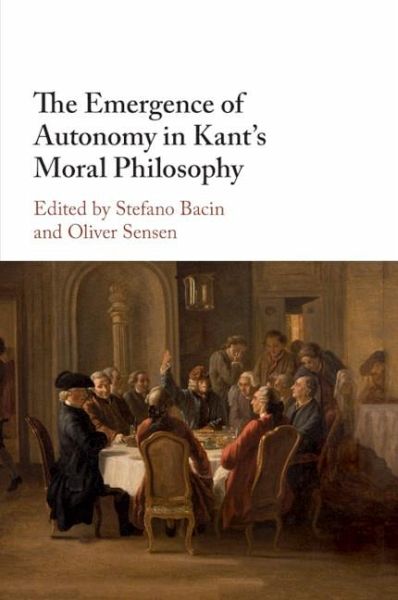
The Emergence of Autonomy in Kant's Moral Philosophy
Herausgeber: Bacin, Stefano; Sensen, Oliver
The Emergence of Autonomy in Kant's Moral Philosophy
Herausgeber: Bacin, Stefano; Sensen, Oliver
- Broschiertes Buch
- Merkliste
- Auf die Merkliste
- Bewerten Bewerten
- Teilen
- Produkt teilen
- Produkterinnerung
- Produkterinnerung
A thorough study of why Kant developed the concept of autonomy, one of his central legacies for contemporary moral thought.
Andere Kunden interessierten sich auch für
Autonomy and the Challenges to Liberalism70,99 €
Francis HutchesonAn Essay on the Nature and Conduct of the Passions and Affections, with Illustrations on the Moral Sense14,99 €
Immanuel KantThe Critique of Judgement20,99 €
Daniel Smyth (Connecticut Wesleyan University)Intuition in Kant31,99 €
Margaret WatkinsThe Philosophical Progress of Hume's Essays41,99 €
Platonic Love from Antiquity to the Renaissance46,99 €
Paul FormosaKantian Ethics, Dignity and Perfection41,99 €-
-
-
A thorough study of why Kant developed the concept of autonomy, one of his central legacies for contemporary moral thought.
Produktdetails
- Produktdetails
- Verlag: Cambridge University Press
- Seitenzahl: 240
- Erscheinungstermin: 6. August 2020
- Englisch
- Abmessung: 229mm x 152mm x 13mm
- Gewicht: 327g
- ISBN-13: 9781316633762
- ISBN-10: 1316633764
- Artikelnr.: 59966343
- Herstellerkennzeichnung
- Libri GmbH
- Europaallee 1
- 36244 Bad Hersfeld
- gpsr@libri.de
- Verlag: Cambridge University Press
- Seitenzahl: 240
- Erscheinungstermin: 6. August 2020
- Englisch
- Abmessung: 229mm x 152mm x 13mm
- Gewicht: 327g
- ISBN-13: 9781316633762
- ISBN-10: 1316633764
- Artikelnr.: 59966343
- Herstellerkennzeichnung
- Libri GmbH
- Europaallee 1
- 36244 Bad Hersfeld
- gpsr@libri.de
Introduction Stefano Bacin and Oliver Sensen; 1. How is moral obligation
possible? Kant's 'principle of autonomy' in historical context Heiner F.
Klemme; 2. Anticipations of autonomy: freedom, obligation, and the concept
of a world in Kant's writings of the Mid-1750s to Mid-1760s Susan Meld
Shell; 3. Autonomy and moral rationalism: Kant's criticisms of
'rationalist' moral principles (1762-85) Stefano Bacin; 4. Autonomy and
moral empiricism: Kant's criticism of sentimentalist moral principles
(1762-85) Georg Mohr; 5. Elements of autonomy in Kant's Lectures on Ethics
(1770-80) Oliver Sensen; 6. Emerging autonomy: dealing with the
inadequacies of the 'canon' of the Critique of Pure Reason (1781) Jens
Timmermann; 7. Autonomy and the legislation of laws in the Prolegomena
(1783) Eric Watkins; 8. How can freedom be a law to itself? The concept of
autonomy in the 'introduction' to the Naturrecht Feyerabend lecture notes
(1784) Marcus Willaschek; 9. Moral autonomy as political analogy:
self-legislation in Kant's Groundwork and the Feyerabend lectures on
natural law (1784) Pauline Kleingeld; 10. What emerged: autonomy and
heteronomy in the Groundwork and second Critique Andrews Reath; 11. Kant's
threefold autonomy after the Groundwork: reason's own law-giving as our own
cosmopolitan law-giving Pierre Keller.
possible? Kant's 'principle of autonomy' in historical context Heiner F.
Klemme; 2. Anticipations of autonomy: freedom, obligation, and the concept
of a world in Kant's writings of the Mid-1750s to Mid-1760s Susan Meld
Shell; 3. Autonomy and moral rationalism: Kant's criticisms of
'rationalist' moral principles (1762-85) Stefano Bacin; 4. Autonomy and
moral empiricism: Kant's criticism of sentimentalist moral principles
(1762-85) Georg Mohr; 5. Elements of autonomy in Kant's Lectures on Ethics
(1770-80) Oliver Sensen; 6. Emerging autonomy: dealing with the
inadequacies of the 'canon' of the Critique of Pure Reason (1781) Jens
Timmermann; 7. Autonomy and the legislation of laws in the Prolegomena
(1783) Eric Watkins; 8. How can freedom be a law to itself? The concept of
autonomy in the 'introduction' to the Naturrecht Feyerabend lecture notes
(1784) Marcus Willaschek; 9. Moral autonomy as political analogy:
self-legislation in Kant's Groundwork and the Feyerabend lectures on
natural law (1784) Pauline Kleingeld; 10. What emerged: autonomy and
heteronomy in the Groundwork and second Critique Andrews Reath; 11. Kant's
threefold autonomy after the Groundwork: reason's own law-giving as our own
cosmopolitan law-giving Pierre Keller.
Introduction Stefano Bacin and Oliver Sensen; 1. How is moral obligation
possible? Kant's 'principle of autonomy' in historical context Heiner F.
Klemme; 2. Anticipations of autonomy: freedom, obligation, and the concept
of a world in Kant's writings of the Mid-1750s to Mid-1760s Susan Meld
Shell; 3. Autonomy and moral rationalism: Kant's criticisms of
'rationalist' moral principles (1762-85) Stefano Bacin; 4. Autonomy and
moral empiricism: Kant's criticism of sentimentalist moral principles
(1762-85) Georg Mohr; 5. Elements of autonomy in Kant's Lectures on Ethics
(1770-80) Oliver Sensen; 6. Emerging autonomy: dealing with the
inadequacies of the 'canon' of the Critique of Pure Reason (1781) Jens
Timmermann; 7. Autonomy and the legislation of laws in the Prolegomena
(1783) Eric Watkins; 8. How can freedom be a law to itself? The concept of
autonomy in the 'introduction' to the Naturrecht Feyerabend lecture notes
(1784) Marcus Willaschek; 9. Moral autonomy as political analogy:
self-legislation in Kant's Groundwork and the Feyerabend lectures on
natural law (1784) Pauline Kleingeld; 10. What emerged: autonomy and
heteronomy in the Groundwork and second Critique Andrews Reath; 11. Kant's
threefold autonomy after the Groundwork: reason's own law-giving as our own
cosmopolitan law-giving Pierre Keller.
possible? Kant's 'principle of autonomy' in historical context Heiner F.
Klemme; 2. Anticipations of autonomy: freedom, obligation, and the concept
of a world in Kant's writings of the Mid-1750s to Mid-1760s Susan Meld
Shell; 3. Autonomy and moral rationalism: Kant's criticisms of
'rationalist' moral principles (1762-85) Stefano Bacin; 4. Autonomy and
moral empiricism: Kant's criticism of sentimentalist moral principles
(1762-85) Georg Mohr; 5. Elements of autonomy in Kant's Lectures on Ethics
(1770-80) Oliver Sensen; 6. Emerging autonomy: dealing with the
inadequacies of the 'canon' of the Critique of Pure Reason (1781) Jens
Timmermann; 7. Autonomy and the legislation of laws in the Prolegomena
(1783) Eric Watkins; 8. How can freedom be a law to itself? The concept of
autonomy in the 'introduction' to the Naturrecht Feyerabend lecture notes
(1784) Marcus Willaschek; 9. Moral autonomy as political analogy:
self-legislation in Kant's Groundwork and the Feyerabend lectures on
natural law (1784) Pauline Kleingeld; 10. What emerged: autonomy and
heteronomy in the Groundwork and second Critique Andrews Reath; 11. Kant's
threefold autonomy after the Groundwork: reason's own law-giving as our own
cosmopolitan law-giving Pierre Keller.