
Andere Kunden interessierten sich auch für
 Enabling people with intellectual disabilities to be active citizens40,99 €
 Enabling Livelihood for Persons with Intellectual Disabilities30,99 €
 Enabling Rural Women through Information and Communication Technology36,99 €
 Enabling Responsible Living76,99 €
 Disabling Barriers - Enabling Environments40,99 €
 Politics, Regulation and the Modern Welfare State76,99 €
 Transnational Student-Migrants and the State76,99 €






Over the last two decades new arrangements have emerged for the finance and delivery of social welfare in the United States and other industrial democracies. Moving beyond the conventional paradigm of the welfare state, these arrangements form an alternative model. This study details a fresh vision of social welfare transfers--how they are delivered, and whom they benefit. The authors explore the use of private enterprise and market-oriented approaches to the delivery of social provisions, and examine how welfare benefits are derived from the full range of modern social transfers including tax expenditures, credit subsidies, and those induced by regulatory activity. Reappraising the modern boundaries of social welfare, this book provides insights into the structure and dynamics of a novel social model that will open new avenues for scientific study and public debate.
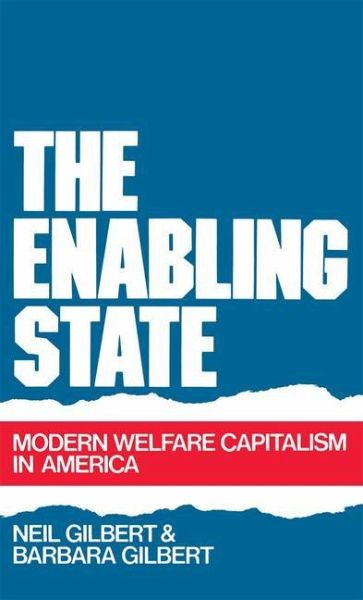
Studies of the welfare state have formed an important part of public policy research in America since the Second World War. The Enabling State reconsiders the scope of social welfare transfers, how they are delivered, and whom they benefit. In addition to presenting an analysis of direct public expenditures, the authors examine how welfare benefits are derived from the full range of modern social transfers, including tax expenditures, credit subsidies, and those induced by regulatory activity. The work also provides an account of the effect of the `commercialization of social welfare', that is, increased public reliance on private enterprise and market-orientated projects for its welfare provisions.
Studies of the welfare state have formed an important part of public policy research in America since the Second World War. The Enabling State reconsiders the scope of social welfare transfers, how they are delivered, and whom they benefit. In addition to presenting an analysis of direct public expenditures, the authors examine how welfare benefits are derived from the full range of modern social transfers, including tax expenditures, credit subsidies, and those induced by regulatory activity. The work also provides an account of the effect of the `commercialization of social welfare', that is, increased public reliance on private enterprise and market-orientated projects for its welfare provisions.