
Andere Kunden interessierten sich auch für
 The History of the Holy War32,99 €
 The English Church in the Middle Ages30,99 €
 The military leadership of Matilda of Canossa, 1046-111528,99 €
 Medieval and Modern Times: An Introduction to the History of Western Europe From the Dissolution of the Roman Empire to the Opening of the Great53,99 €
 Military Religious Orders of the Middle Ages32,99 €
") Michaud's History of the Crusades V2 (1852)38,99 €
Michaud's History of the Crusades V2 (1852)38,99 € Essays on the Crusades29,99 €



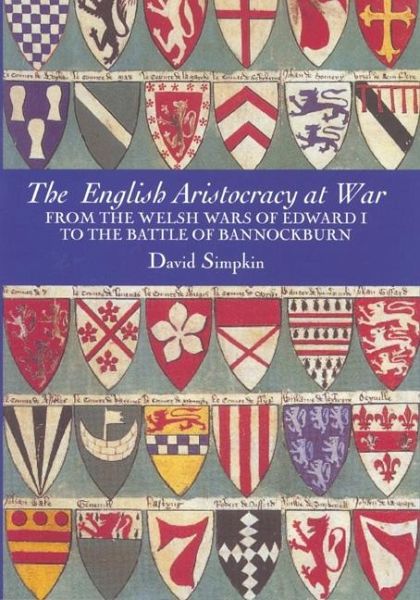
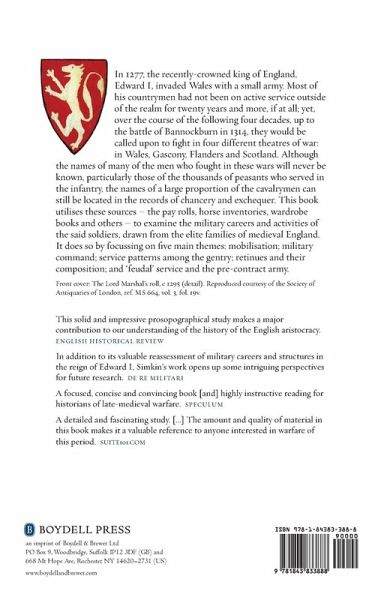
In 1277, the recently-crowned king of England, Edward I, invaded Wales with a small army. Most of his countrymen had not been on active service outside of the realm for twenty years and more, if at all; yet, over the course of the following four decades, up to the battle of Bannockburn in 1314, they would be called upon to fight in four different theatres of war: in Wales, Gascony, Flanders and Scotland. Although the names of many of the men who fought in these wars will never be known, particularly those of the thousands of peasants who served in the infantry, the names of a large proportion of the cavalrymen can still be located in the records of chancery and exchequer. This book utilises these sources - the pay rolls, horse inventories, wardrobe books and others - to examine the military careers and activities of the said soldiers, drawn from the elite families of medieval England. It does so by focussing on five main themes: mobilisation; military command; service patterns among the gentry; retinues and their composition; and 'feudal' service and the pre-contract army.