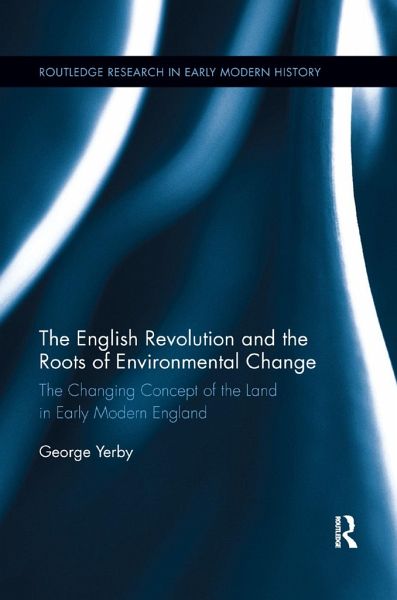
This study clarifies the agrarian and commercial motives behind the English Revolution, showing their connection to parliament's constitutional changes of early 1641, when it challenged the crown at the center of the state.
This study clarifies the agrarian and commercial motives behind the English Revolution, showing their connection to parliament's constitutional changes of early 1641, when it challenged the crown at the center of the state.
George Yerby took his degree at Birkbeck College, London University in 1986, and has since worked as an historical researcher. He specializes in the economic and political history of the sixteenth and seventeenth centuries. He is author of People and Parliament: Representative Rights and the English Revolution, published in 2008.
Inhaltsangabe
Introduction: The Changing of the Open, Communal Land into a National, Commercial Land, and the Neglect of Economic Effects: Is the Environment History? Part One: The Close of the Universal World of Medieval England 1. The Light Touch of Communalism on the Land, and the Openness of the Medieval World 2. The Dismissal of the Saints, and the Disappearance of the Universal Church 3. The Reordering of the Physical and Intellectual Spheres 4. "The Exceeding Lucre That They See Grow": Higher Profits, and a Heightened Sense of Property 5. Enclosure and Consolidated Holdings: The Break-up of the Communal System 6. The Basis of Improvement 7. The Changing Face of the Land, and the "Great Bravery of Building which Marvellously Beautified the Realm" Part Two: The Consolidation of a Political Nation 8. The Definition of the State, and the Developing Structures of National Administration 9. The National Expansion of the Middling Sort, and the Relevance of the Rise of the Gentry 10. "The Authority of the Whole Realm": Parliamentary Law as the First Principle of Representative Rights, and National Sovereignty 11. Freedom of Trade as a Developing Principle: The Assertion of Absolute Property Against Prerogative Impositions 12. Parliament as a Point of Contact Between the Constituencies: The Emergence of a Freestanding National Interest, and Roots of English Liberty 13. The Elizabethan Nation: "The Envy of Less Happier Lands" 14. The Foreign Foreign Policy of James I 15. "A Declaration of the State of the Kingdom": The National Imperatives that Necessitated Automatic Parliaments, and the Triumph of Freedom of Trade 16. The Commercial Landscape: "How Wide the Limits Stand Between a Splendid and a Happy Land." Conclusion: The Limits of the Commercial Land: Is the Environment History?
Introduction: The Changing of the Open, Communal Land into a National, Commercial Land, and the Neglect of Economic Effects: Is the Environment History? Part One: The Close of the Universal World of Medieval England 1. The Light Touch of Communalism on the Land, and the Openness of the Medieval World 2. The Dismissal of the Saints, and the Disappearance of the Universal Church 3. The Reordering of the Physical and Intellectual Spheres 4. "The Exceeding Lucre That They See Grow": Higher Profits, and a Heightened Sense of Property 5. Enclosure and Consolidated Holdings: The Break-up of the Communal System 6. The Basis of Improvement 7. The Changing Face of the Land, and the "Great Bravery of Building which Marvellously Beautified the Realm" Part Two: The Consolidation of a Political Nation 8. The Definition of the State, and the Developing Structures of National Administration 9. The National Expansion of the Middling Sort, and the Relevance of the Rise of the Gentry 10. "The Authority of the Whole Realm": Parliamentary Law as the First Principle of Representative Rights, and National Sovereignty 11. Freedom of Trade as a Developing Principle: The Assertion of Absolute Property Against Prerogative Impositions 12. Parliament as a Point of Contact Between the Constituencies: The Emergence of a Freestanding National Interest, and Roots of English Liberty 13. The Elizabethan Nation: "The Envy of Less Happier Lands" 14. The Foreign Foreign Policy of James I 15. "A Declaration of the State of the Kingdom": The National Imperatives that Necessitated Automatic Parliaments, and the Triumph of Freedom of Trade 16. The Commercial Landscape: "How Wide the Limits Stand Between a Splendid and a Happy Land." Conclusion: The Limits of the Commercial Land: Is the Environment History?
Es gelten unsere Allgemeinen Geschäftsbedingungen: www.buecher.de/agb
Impressum
www.buecher.de ist ein Internetauftritt der buecher.de internetstores GmbH
Geschäftsführung: Monica Sawhney | Roland Kölbl | Günter Hilger
Sitz der Gesellschaft: Batheyer Straße 115 - 117, 58099 Hagen
Postanschrift: Bürgermeister-Wegele-Str. 12, 86167 Augsburg
Amtsgericht Hagen HRB 13257
Steuernummer: 321/5800/1497
USt-IdNr: DE450055826