
Andere Kunden interessierten sich auch für
 Egalitarian Envy16,99 €
 THE TRANSITION TO THE INSTANCES OF ALBANIAN ART AND CULTURE27,99 €
 Finding a Cue Through "Q"26,00 €
 Indigenous Culture and the Path to Democracy56,99 €
 Flight and displacement in the last decades20,99 €
 Digitalized Education Patterns in the Republic of Indonesia40,99 €
 Finding the way back to childhood32,99 €


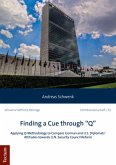




In a particularly noxious piece of writing, Arthur Seyss-Inquart, who fought for the Austro-Hungarian Empire in support of Germany in World War One (1914-18), and became Chancellor of Austria during the Anschluss of 1938 in which, annexed by invasion of the Wehrmacht (army), Austria became a German province, Ostmark, at the outset of World War Two (1939-45), while Seyss-Inquart afterwards became Reichsstatthalter (governor) of the German occupied Netherlands, and as he there oversaw the extermination of Dutch Jews and other minorities, in US' science fiction writer Philip K. Dick's alternative history in which the Nazis won WWII, The Man In The High Castle (1962), Seyss-Inquart oversees the extermination of the peoples of Africa, and their skulls are used as bowls for the devouring of their brains.