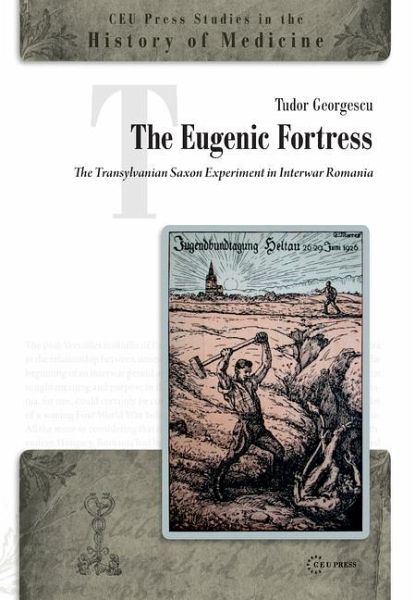
The Eugenic Fortress examines the eugenic movement that emerged in the early twentieth century, and focuses on its conceptual and methodological evolution during this turbulent period.
The Eugenic Fortress examines the eugenic movement that emerged in the early twentieth century, and focuses on its conceptual and methodological evolution during this turbulent period.
Tudor Georgescu is Associate Lecturer in the department of History, Philosophy and Religion at Oxford Brookes University and Co-investigator of the Centre for Hidden Histories at the University of Nottingham.
Inhaltsangabe
LIST OF ILLUSTRATIONS, ACKNOWLEDGMENTS, LIST OF ABBREVIATIONS, INTRODUCTION i. Imagining a "Eugenic Fortress": Fascist Who and Eugenic What? ii. Exclusions iii. Unpacking the Past CHAPTER I. Locating and Defining the Transylvanian Saxon Eugenic Discourse i. Heinrich Siegmund and the Origins of Saxon Eugenics ii. Saxon Racial Anthropology between Berlin and Vienna iii. The "Child Enthusiast" Alfred Csallner iv. Fritz Fabritius's Self-Help, from "Building Society" to Rebuilding Society v. Wilhelm Schunn's National Neighborhoods and Honorary Gifts CHAPTER II. Assessing the Dysgenic Crisis: Key Concepts and Theses in Alfred Csallner's Definition of Saxon Degeneration i. The Lost Children: Family Planning and the Demographic Collapse ii. The Quality Question: The Nation's Hereditarily "Best" under Threat of Extinction iii. Emigration: The Loss of Saxon Hereditary Substance iv. Mixed Marriages: The End of Racial Distinctiveness v. Lebensraum: Of "Foreign Invaders," Saxon Employers, and Society's Scourges, Alcohol and Tobacco CHAPTER III. Alfred Csallner in Search of Eugenic Solutions and Institutional Means i. Eugenic Missionaries: Visions of Priests Old and New ii. Csallner's Population Policy Proposals and the Church iii. Going It Alone: The Society of Child Enthusiasts, 1927-30 138 iv. The Self-Help Race Office, 1932-35 v. The Reinvention of the Race Office as National Department or Statistics, Population Policy, and Genealogy, 1935-38 vi. The National Office for Statistics and Genealogy and Its ix Departments, 1938-41 CHAPTER IV. Fascist Visions of a Eugenic Fortress: The Self-Help's Origins and Rise to Power, 1922-33 i. Fritz Fabritius and the Origins of Saxon Fascism ii. Early Development, 1922-29 iii. Expansion and Radicalization, 1929-32 iv. The NSDR Victorious, 1932-33 CHAPTER V. Saxon Fascism in Power, 1933-40 i. The Self-Help's Various Forms and Formats, 1933-34 ii. War and Peace: The National Community of Germans in Romania, 1935-40 iii. The Mighty Pen: The 1935 National Program of Germans in Romania iv. Building a Bristling Eugenic Fortress, One Neighborhood at a Time: Wilhelm's Schunn's National Neighborhoods, 1933-40 CHAPTER VI. 1940 and Everything After CONCLUSIONS, BIBLIOGRAPHY, INDEX OF NAMES, INDEX OF PLACES.
LIST OF ILLUSTRATIONS, ACKNOWLEDGMENTS, LIST OF ABBREVIATIONS, INTRODUCTION i. Imagining a "Eugenic Fortress": Fascist Who and Eugenic What? ii. Exclusions iii. Unpacking the Past CHAPTER I. Locating and Defining the Transylvanian Saxon Eugenic Discourse i. Heinrich Siegmund and the Origins of Saxon Eugenics ii. Saxon Racial Anthropology between Berlin and Vienna iii. The "Child Enthusiast" Alfred Csallner iv. Fritz Fabritius's Self-Help, from "Building Society" to Rebuilding Society v. Wilhelm Schunn's National Neighborhoods and Honorary Gifts CHAPTER II. Assessing the Dysgenic Crisis: Key Concepts and Theses in Alfred Csallner's Definition of Saxon Degeneration i. The Lost Children: Family Planning and the Demographic Collapse ii. The Quality Question: The Nation's Hereditarily "Best" under Threat of Extinction iii. Emigration: The Loss of Saxon Hereditary Substance iv. Mixed Marriages: The End of Racial Distinctiveness v. Lebensraum: Of "Foreign Invaders," Saxon Employers, and Society's Scourges, Alcohol and Tobacco CHAPTER III. Alfred Csallner in Search of Eugenic Solutions and Institutional Means i. Eugenic Missionaries: Visions of Priests Old and New ii. Csallner's Population Policy Proposals and the Church iii. Going It Alone: The Society of Child Enthusiasts, 1927-30 138 iv. The Self-Help Race Office, 1932-35 v. The Reinvention of the Race Office as National Department or Statistics, Population Policy, and Genealogy, 1935-38 vi. The National Office for Statistics and Genealogy and Its ix Departments, 1938-41 CHAPTER IV. Fascist Visions of a Eugenic Fortress: The Self-Help's Origins and Rise to Power, 1922-33 i. Fritz Fabritius and the Origins of Saxon Fascism ii. Early Development, 1922-29 iii. Expansion and Radicalization, 1929-32 iv. The NSDR Victorious, 1932-33 CHAPTER V. Saxon Fascism in Power, 1933-40 i. The Self-Help's Various Forms and Formats, 1933-34 ii. War and Peace: The National Community of Germans in Romania, 1935-40 iii. The Mighty Pen: The 1935 National Program of Germans in Romania iv. Building a Bristling Eugenic Fortress, One Neighborhood at a Time: Wilhelm's Schunn's National Neighborhoods, 1933-40 CHAPTER VI. 1940 and Everything After CONCLUSIONS, BIBLIOGRAPHY, INDEX OF NAMES, INDEX OF PLACES.
Es gelten unsere Allgemeinen Geschäftsbedingungen: www.buecher.de/agb
Impressum
www.buecher.de ist ein Internetauftritt der buecher.de internetstores GmbH
Geschäftsführung: Monica Sawhney | Roland Kölbl | Günter Hilger
Sitz der Gesellschaft: Batheyer Straße 115 - 117, 58099 Hagen
Postanschrift: Bürgermeister-Wegele-Str. 12, 86167 Augsburg
Amtsgericht Hagen HRB 13257
Steuernummer: 321/5800/1497
USt-IdNr: DE450055826