
Andere Kunden interessierten sich auch für
 The Eastern Enlargement of the European Union60,99 €
 Revival55,99 €
 'The Politics' and 'The Political' of the Eastern Partnership Initiative55,99 €
 The Populist Radical Right in Central and Eastern Europe65,99 €
 Women in the Politics of Postcommunist Eastern Europe54,99 €
 The People's Republics of Eastern Europe44,99 €
 Party Politics in Central and Eastern Europe59,99 €





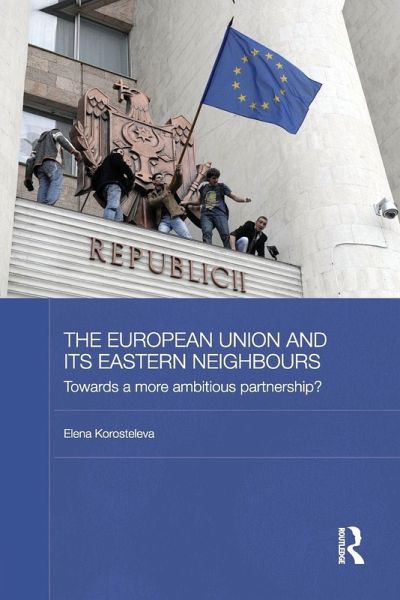
Based on extensive research including in-depth interviews with key people in Belarus, Ukraine, Moldova and Brussels, this book explores the EU's relations with its eastern neighbours and assesses why its initiatives have been so poorly received.
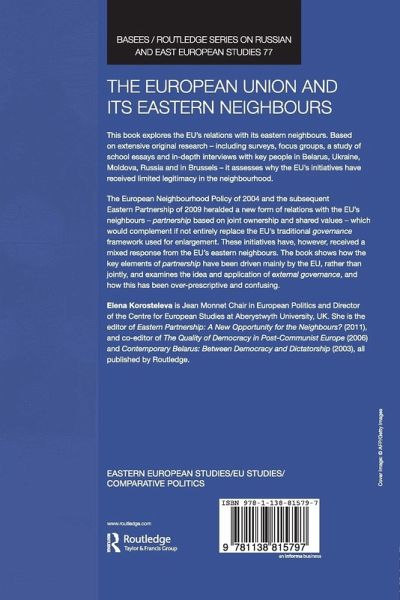
This book explores the EU's relations with its eastern neighbours. Based on extensive original research - including in-depth interviews with key people in Belarus, Ukraine, Moldova, Russia and Brussels - it assesses why the EU's initiatives have received limited legitimacy in the neighbourhood. The book shows how the key elements of partnership have been driven mainly by the EU, rather than jointly, and examines the idea and application of external governance, and how this has been over-prescriptive and confusing.
This book explores the EU's relations with its eastern neighbours. Based on extensive original research - including in-depth interviews with key people in Belarus, Ukraine, Moldova, Russia and Brussels - it assesses why the EU's initiatives have received limited legitimacy in the neighbourhood. The book shows how the key elements of partnership have been driven mainly by the EU, rather than jointly, and examines the idea and application of external governance, and how this has been over-prescriptive and confusing.