
Andere Kunden interessierten sich auch für
 Aspectos éticos en el Libro de la Orden de Caballería de Ramon Llull24,99 €
 Aspectos Éticos no Livro da Ordem de Cavalaria de Ramon Llull23,99 €
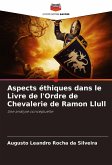
 Aspects éthiques dans le Livre de l'Ordre de Chevalerie de Ramon Llull23,99 €
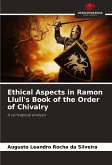
 Ethical Aspects in Ramon Llull's Book of the Order of Chivalry24,99 €
 Obres De Ramon Lull; Volume 236,99 €
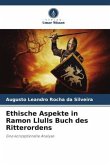
 Ethische Aspekte in Ramon Llulls Buch des Ritterordens35,90 €
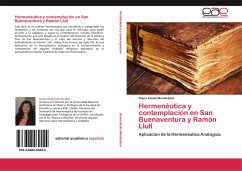
 Hermenéutica y contemplación en San Buenaventura y Ramón Llull51,99 €
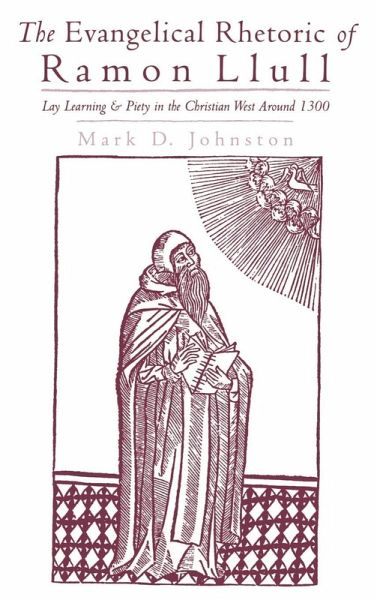
* The first full-length analysis of the rhetorical and preaching theories of Ramon Llull, the thirteenth century lay philosopher and theologian Johnston demonstrates how Llull adapted commonplace ideas of courtly speech and popular sermons in order to create a unitary art of secular and sacred eloquence, and shows that Llull exemplifies the development of intellectual and spiritual ideals among the growing class of educated lay people in the later Middle Ages.
Ramon Llull (1232-1316), born on Majorca, was one of the most remarkable lay intellectuals of the thirteenth century. He devoted much of his life to promoting missions among unbelievers, the reform of Western Christian society, and personal spiritual perfection. He wrote over 200 philosophical and theological works in Catalan, Latin, and Arabic. Many of these expound on his "Great Universal Art of Finding Truth", an idiosyncratic dialectical system which he thought capable of proving Catholic beliefs to non-believers. This study offers the first full-length analysis of his theories about rhetoric and preaching, which were central to his evangelizing activities. It explains how Llull attempted to synthesize common-place advice about courtly speech and techniques of popular sermons into a single program for secular and sacred eloquence that would necessarily promote love of God and neighbor. Llull's work is a remarkable testimony to the diffusion of clerical culture among educated lay-people of his era, and to their enthusiasm for applying that knowledge to ideals of learning and piety.
Ramon Llull (1232-1316), born on Majorca, was one of the most remarkable lay intellectuals of the thirteenth century. He devoted much of his life to promoting missions among unbelievers, the reform of Western Christian society, and personal spiritual perfection. He wrote over 200 philosophical and theological works in Catalan, Latin, and Arabic. Many of these expound on his "Great Universal Art of Finding Truth", an idiosyncratic dialectical system which he thought capable of proving Catholic beliefs to non-believers. This study offers the first full-length analysis of his theories about rhetoric and preaching, which were central to his evangelizing activities. It explains how Llull attempted to synthesize common-place advice about courtly speech and techniques of popular sermons into a single program for secular and sacred eloquence that would necessarily promote love of God and neighbor. Llull's work is a remarkable testimony to the diffusion of clerical culture among educated lay-people of his era, and to their enthusiasm for applying that knowledge to ideals of learning and piety.