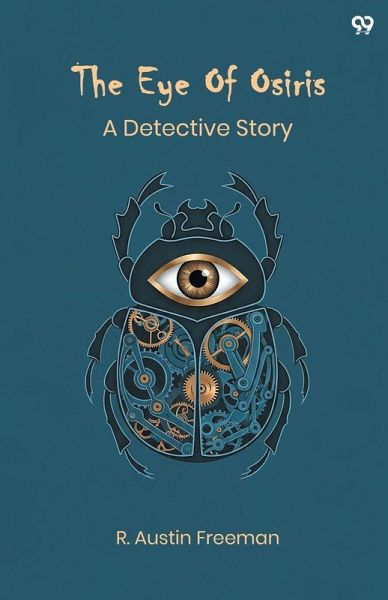
The eye of osiris: A detective story draws readers into a case involving disappearance, disputed inheritance, and the lingering influence of the past. The novel opens with a medical lecture where a skilled legal expert introduces an unsolved case involving a man who vanished without a trace. This missing figure had recently visited a relative s home but was never seen again. The circumstances surrounding his absence generate legal confusion, particularly in relation to a curious will that challenges expectations of inheritance. Alongside legal speculation, the appearance of an ancient artifact…mehr
The eye of osiris: A detective story draws readers into a case involving disappearance, disputed inheritance, and the lingering influence of the past. The novel opens with a medical lecture where a skilled legal expert introduces an unsolved case involving a man who vanished without a trace. This missing figure had recently visited a relative s home but was never seen again. The circumstances surrounding his absence generate legal confusion, particularly in relation to a curious will that challenges expectations of inheritance. Alongside legal speculation, the appearance of an ancient artifact suggests an eerie connection between archaeology and modern law. The story navigates these intertwining threads through scenes marked by cautious conversation and rising emotional stakes, where tensions escalate within families divided by conflicting claims and interpretations of legacy. As the investigation deepens, the presence of ancient symbols and the psychological strain on those left behind form a narrative driven as much by intellect as emotion. The opening portion situates the reader firmly within both the courtroom and the crypt, preparing for a mystery that relies on rational examination and reverence for what history leaves unsolved.
Richard Austin Freeman was a British author known for pioneering the forensic detective genre. Born to Richard Freeman and Ann Maria Dunn, he began his professional life in medicine before transitioning into writing. His background in science and law informed his fiction, particularly through his creation of the character Dr. John Thorndyke, a medico-legal expert. Freeman's major innovation was the inverted detective story, where the crime and perpetrator are revealed at the beginning, and the narrative follows the detective's reasoning to solve it. This structure emphasized methodical investigation over suspense, distinguishing his work from many contemporaries. Throughout his career, Freeman wrote prolifically, producing numerous novels and short stories that combined legal knowledge with criminal psychology. His works frequently explored the logic of detection, scientific accuracy, and ethical dilemmas, often reflecting his belief in rational inquiry. Despite changing literary trends, Freeman's detailed plotting and unique approach to crime storytelling garnered lasting respect within the mystery genre. His fiction remains notable for its clarity, structure, and the rigorous intellectual standards of his protagonist. Freeman died in 1943, having left a significant legacy in detective literature.
Es gelten unsere Allgemeinen Geschäftsbedingungen: www.buecher.de/agb
Impressum
www.buecher.de ist ein Internetauftritt der buecher.de internetstores GmbH
Geschäftsführung: Monica Sawhney | Roland Kölbl | Günter Hilger
Sitz der Gesellschaft: Batheyer Straße 115 - 117, 58099 Hagen
Postanschrift: Bürgermeister-Wegele-Str. 12, 86167 Augsburg
Amtsgericht Hagen HRB 13257
Steuernummer: 321/5800/1497
USt-IdNr: DE450055826