
Andere Kunden interessierten sich auch für
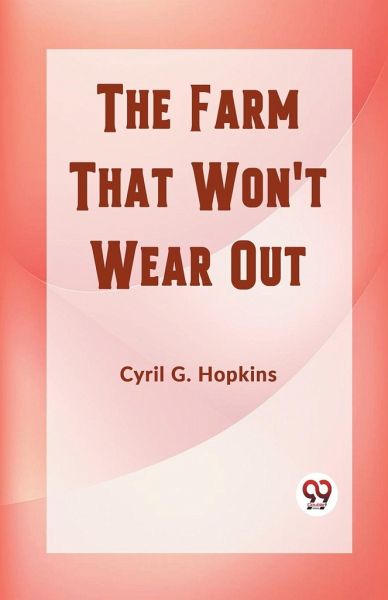
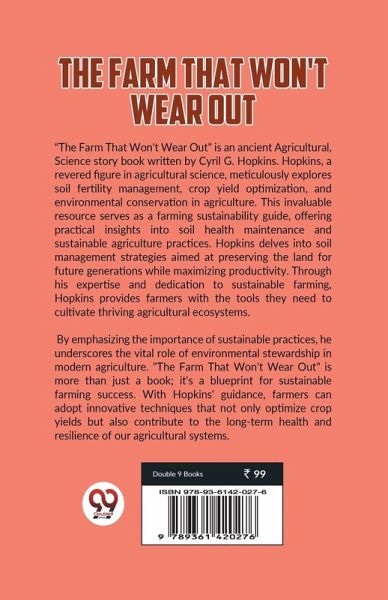
 The Farm That Won't Wear Out14,99 €
 The Factors That Affect The Adoption Levels of Organic Agriculture24,99 €
 Practical Forestry in the Pacific Northwest; Protecting Existing Forests and Growing New Ones, from the Standpoint of the Public and That of the Lumberman, with an Outline of Technical Methods15,99 €
 FODDER OATS: The feed that keeps cattle fit and healthy41,99 €
 Phytomedicine and nutrition that help fight cancer33,99 €
 The Teesdale Angler17,99 €
 Three-body abrasive wear behavior of Agricultural Plough Tool32,99 €

"The Farm That Won't Wear Out" is an ancient Agricultural, Science story book written by Cyril G. Hopkins. Hopkins, a revered figure in agricultural science, meticulously explores soil fertility management, crop yield optimization, and environmental conservation in agriculture. This invaluable resource serves as a farming sustainability guide, offering practical insights into soil health maintenance and sustainable agriculture practices. Hopkins delves into soil management strategies aimed at preserving the land for future generations while maximizing productivity. Through his expertise and dedication to sustainable farming, Hopkins provides farmers with the tools they need to cultivate thriving agricultural ecosystems. By emphasizing the importance of sustainable practices, he underscores the vital role of environmental stewardship in modern agriculture. "The Farm That Won't Wear Out" is more than just a book; it's a blueprint for sustainable farming success. With Hopkins' guidance, farmers can adopt innovative techniques that not only optimize crop yields but also contribute to the long-term health and resilience of our agricultural systems.