25,99 €
inkl. MwSt.
Versandkostenfrei*
Versandfertig in 1-2 Wochen
payback
13 °P sammeln
  • Broschiertes Buch

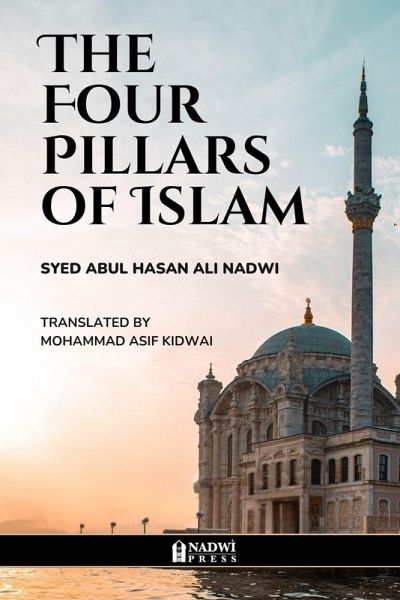
This comprehensive work explores the spiritual, social, and intellectual dimensions of the four foundational acts of worship in Islam-Salat (prayer), Zakat (almsgiving), Saum (fasting), and Hajj (pilgrimage). Going far beyond mere ritual, the author examines the deeper wisdom, moral vision, and civilizational relevance of these duties, drawing from Qur'anic texts, Prophetic traditions, and classical Islamic scholarship. Rather than treating these acts as isolated obligations, the book reveals how they form an integrated framework that shapes both individual character and community life. With…mehr

Produktbeschreibung
This comprehensive work explores the spiritual, social, and intellectual dimensions of the four foundational acts of worship in Islam-Salat (prayer), Zakat (almsgiving), Saum (fasting), and Hajj (pilgrimage). Going far beyond mere ritual, the author examines the deeper wisdom, moral vision, and civilizational relevance of these duties, drawing from Qur'anic texts, Prophetic traditions, and classical Islamic scholarship. Rather than treating these acts as isolated obligations, the book reveals how they form an integrated framework that shapes both individual character and community life. With clarity and precision, it highlights their inner meanings, transformative effects, and ethical implications, while also addressing how these duties have been misrepresented or diluted under modern pressures. The author's approach is not only rooted in classical sources, including Shah Waliullah's seminal insights, but is also mindful of contemporary challenges. This makes the book particularly useful for readers who seek to reconnect with Islamic practice without losing sight of spiritual purpose or social integrity. The final chapters provide a comparative reflection on worship in other faiths, offering a broader perspective on what distinguishes Islamic devotion in both form and spirit. Essential for educators, students of Islamic thought, and anyone seeking a richer understanding of faith-based practice, this book is both a resource and a renewal. A timeless guide that restores meaning to the pillars of Islam and offers a path back to purposeful devotion. Gist of Subjects Covered in the Book (Summarised TOC)Salat (Prayer) Explores its spiritual significance, structure, timing, moral influence, communal aspects (Azan, mosques, congregational prayers), and its parallels in other religions. Zakat (Almsgiving) Discusses its philosophy, economic and ethical goals, divine wisdom, historical implementation, societal reforms, and contrast with charity in other faiths. Saum (Fasting) Covers the purpose, benefits, spiritual dimensions, Qur'anic injunctions, Ramadhan, Itikaf, Laylat al-Qadr, and historical/cross-religious perspectives on fasting. Hajj (Pilgrimage) Delves into the symbolic and spiritual meanings, rituals, prophetic legacy (especially of Ibrahim), unity of Muslims, and its role in renewing divine connection. Universal Themes and Reformative Role of Islam Includes concepts like divine attributes, man's purpose, moral development, and how Islam revived and structured worship in contrast to distortions in earlier traditions.
Autorenporträt
Sayyid Abul Hasan Ali Hasani Nadwi (19141999), known as Ali Miyan, stands among the twentieth century's most influential Islamic scholars and thinkers. Born in Raebareli, India, into a distinguished family of Islamic scholarship, Nadwi embodied the synthesis of traditional Islamic learning and modern intellectual engagement. His grandfather, Sayyid Ahmad Hasan, was a renowned scholar, and his family lineage traced back to ?asan ibn ʿAli, establishing deep roots in Islamic scholarly tradition.


Nadwi received comprehensive traditional Islamic education at Nadwat al-ʿUlamaʾ in Lucknow, studying Arabic, Qurʾanic exegesis, ?adith, jurisprudence, and Islamic history under eminent scholars. His intellectual formation included mastery of classical Arabic literature and deep engagement with the works of Shah Waliullah Dehlawi, whose influence permeates his scholarly output. This traditional foundation was complemented by exposure to modern educational methods and engagement with contemporary intellectual challenges.


In 1961, Nadwi became rector of Nadwat al-ʿUlamaʾ, a position he held until his death, transforming the institution into a center of Islamic learning that bridged traditional and modern education. Under his leadership, Nadwat produced graduates equipped with both classical Islamic sciences and contemporary knowledge, capable of addressing modern challenges while remaining rooted in Islamic tradition.


Nadwi's literary corpus exceeds fifty volumes in Arabic and Urdu, with translations in numerous languages including English, Turkish, Indonesian, and French. His works address Islamic history, spirituality, biography, contemporary issues, and interfaith relations. Notable works include Saviors of Islamic Spirit, Islam and the World, What Islam Has Lost Through the Decline of Muslims, and Muhammad: The Last Prophet. His Arabic writings, characterized by classical eloquence and contemporary relevance, earned him recognition across the Arab world and established him as a bridge between South Asian and Arab Islamic scholarship.


As a global Islamic figure, Nadwi traveled extensively, delivering lectures at universities, Islamic centers, and conferences worldwide. He served on numerous international Islamic organizations, including the Oxford Centre for Islamic Studies, and maintained scholarly correspondence with intellectuals across religious and cultural boundaries. His engagement with comparative religion and dialogue with other faith traditions demonstrated Islam's intellectual richness while maintaining scholarly integrity.


Nadwi's scholarship emphasized returning to the Qurʾan and Sunnah while engaging constructively with modernity. He critiqued both blind imitation of Western models and rigid traditionalism, advocating for ijtihad (independent reasoning) grounded in authentic Islamic sources. His works on Islamic worship, including The Four Pillars of Islam, exemplify this approach, drawing from classical scholarship while addressing contemporary understanding.


His death in 1999 marked the loss of a scholar whose influence transcended geographical and linguistic boundaries, leaving a legacy of works that continue to guide Muslims seeking authentic Islamic knowledge in the modern world.