
Russ Shafer-Landau
The Fundamentals of Ethics

Russ Shafer-Landau
The Fundamentals of Ethics
- Gebundenes Buch
- Merkliste
- Auf die Merkliste
- Bewerten Bewerten
- Teilen
- Produkt teilen
- Produkterinnerung
- Produkterinnerung
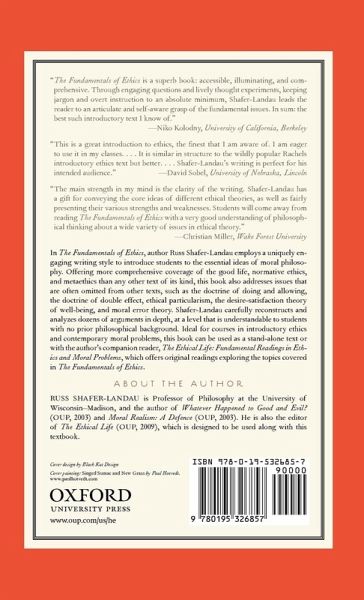
In The Fundamentals of Ethics, author Russ Shafer-Landau employs a uniquely engaging writing style to introduce students to the essential ideas of moral philosophy. Offering more comprehensive coverage of the good life, normative ethics, and metaethics than any other text of its kind, this book also addresses issues that are often omitted from other texts, such as the doctrine of doing and allowing, the doctrine of double effect, ethical particularism, the desire-satisfaction theory of well-being, and moral error theory. Shafer-Landau carefully reconstructs and analyzes dozens of arguments in…mehr
Andere Kunden interessierten sich auch für
 Mark SchroederThe Fundamentals of Reasons102,99 €
 Fundamentals of Ethics127,99 €
 Michael G TitelbaumFundamentals of Bayesian Epistemology 2122,99 €
 Gottfried de PuruckerFundamentals of the Esoteric Philosophy35,99 €
 Ramón García MenesesFundamentals Of Stoicism15,99 €
 Adam McneilMetaphysics: The Fundamentals154,99 €
 Talbot BrewerThe Retrieval of Ethics61,99 €
-
-
-







In The Fundamentals of Ethics, author Russ Shafer-Landau employs a uniquely engaging writing style to introduce students to the essential ideas of moral philosophy. Offering more comprehensive coverage of the good life, normative ethics, and metaethics than any other text of its kind, this book also addresses issues that are often omitted from other texts, such as the doctrine of doing and allowing, the doctrine of double effect, ethical particularism, the desire-satisfaction theory of well-being, and moral error theory. Shafer-Landau carefully reconstructs and analyzes dozens of arguments in depth, at a level that is understandable to students with no prior philosophical background. Ideal for courses in introductory ethics and contemporary moral problems, this book can be used as a stand-alone text or with the author's companion reader, The Ethical Life: Fundamental Readings in Ethics and Moral Problems, which offers original readings exploring the topics covered in The Fundamentals of Ethics.
Produktdetails
- Produktdetails
- Verlag: Oxford University Press
- Seitenzahl: 370
- Erscheinungstermin: 1. August 2009
- Englisch
- Abmessung: 222mm x 145mm x 25mm
- Gewicht: 652g
- ISBN-13: 9780195326857
- ISBN-10: 0195326857
- Artikelnr.: 27348259
- Herstellerkennzeichnung
- Libri GmbH
- Europaallee 1
- 36244 Bad Hersfeld
- gpsr@libri.de
- Verlag: Oxford University Press
- Seitenzahl: 370
- Erscheinungstermin: 1. August 2009
- Englisch
- Abmessung: 222mm x 145mm x 25mm
- Gewicht: 652g
- ISBN-13: 9780195326857
- ISBN-10: 0195326857
- Artikelnr.: 27348259
- Herstellerkennzeichnung
- Libri GmbH
- Europaallee 1
- 36244 Bad Hersfeld
- gpsr@libri.de
Russ Shafer-Landau is Professor of Philosophy, University of Wisconsin, Madison. He is the editor of Oxford Studies in Metaethics.
Acknowledgments
A Note on the Companion Volume
A Note to Readers
INTRODUCTION
The Lay of the Land
Ethical Starting Points
Moral Reasoning
The Role of Moral Theory
Looking Ahead
PART I: THE GOOD LIFE
1. Hedonism: Its Powerful Appeal
Happiness and Intrinsic Value
The Attractions of Hedonism
There Are Many Models of a Good Life
Personal Authority and Well-Being
Misery Clearly Hampers A Good Life; Happiness Clearly Improves It
The Limits of Explanation
Rules of the Good Life-And Their Exceptions
Happiness is What We Want For Our Loved Ones
2. Is Happiness All That Matters?
The Paradox of Hedonism
Evil Pleasures
The Two Worlds
False Happiness
The Importance of Autonomy
Life's Trajectory
Unhappiness as a Symptom of Harm
Conclusion
3. Getting What You Want
A Variety of Good Lives
Personal Authority
Avoiding Objective Values
Motivation
Justifying the Pursuit of Self-Interest
Knowledge of the Good
4. Problems for the Desire Theory
Getting What You Want May Not be Necessary for Promoting Your Good
Getting What You Want May Not be Sufficient for Promoting Your Good
Desires Based on False Beliefs
Ignorance of Desire Satisfaction
Disinterested and Other-Regarding Desires
Passing Fancies
Disappointment
Impoverished Desires
The Paradox of Self-Harm
The Fallibility of Our Deepest Desires
Conclusion
PART II: DOING THE RIGHT THING
5. Morality and Religion
Three Assumptions about Religion and Morality
God and Moral Motivation
God as the Creator of Morality
Religion as a Source of Moral Guidance
Conclusion
6. Natural Law Theory
The Theory and Its Attractions
Two Conceptions of Human Nature
Human Nature is What is Innately Human
Human Nature is What All Humans Have in Common
Natural Purposes
The Argument from Humanity
Conclusion
7. Psychological Egoism
Egoism and Altruism
The Argument from Our Strongest Desires
The Argument from Expected Benefit
The Argument from the Avoidance of Misery
Two Egoistic Strategies
Letting the Evidence Decide
Conclusion
8. Ethical Egoism
Why Be Moral?
Two Popular Arguments for Ethical Egoism
The Best Argument for Ethical Egoism
Three Problems for Ethical Egoism
Conclusion
9. Consequentialism: Its Nature and Attractions
The Nature of Consequentialism
Its Structure
Maximizing Goodness
Moral Knowledge
Actual vs. Expected Results
Assessing Actions and Intentions
The Attractions of Utilitarianism
Impartiality
The Ability to Justify Conventional Moral Wisdom
Conflict Resolution
Moral Flexibility
The Scope of the Moral Community
10. Consequentialism: Its Difficulties
Measuring Well-Being
Utilitarianism is Very Demanding With Respect To
Deliberation
Motivation
Action
Impartiality
No Intrinsic Wrongness (or Rightness)
The Problem of Justice
Potential Solutions to the Problem of Justice
Rule Consequentialism
Conclusion
11. The Kantian Perspective: Fairness and Justice
Consistency and Fairness
The Principle of Universalizability
Morality and Rationality
Assessing the Principle of Universalizability
Integrity
Kant on Absolute Moral Duties
12. The Kantian Perspective: Autonomy and Respect
The Principle of Humanity
The Importance of Rationality and Autonomy
The Good Will and Moral Worth
Vagueness
Determining Just Deserts
Are We Autonomous?
Moral Luck
The Scope of the Moral Community
Conclusion
13. The Social Contract Tradition: Theory and Attractions
The Lure of Proceduralism
The Background of the Social Contract Theory
The Prisoner's Dilemma
Cooperation and the State of Nature
The Advantages of Contractarianism
More Advantages: Morality and the Law
14. The Social Contract Tradition: Problems and Prospects
Why Be Moral?
The Role of Consent
Disagreement among the Contractors
The Scope of the Moral Community
Conclusion
15. Ethical Pluralism and Absolute Moral Rules
The Structure of Moral Theories
Are There Any Absolute Moral Rules?
Preventing Catastrophes
The Doctrine of Double Effect
Is Moral Absolutism Irrational?
Moral Conflict and Contradiction
The Doctrine of Doing and Allowing
Conclusion
16. Ethical Pluralism: Prima Facie Duties and Ethical Particularism
Ross's Ethic of Prima Facie Duties
The Attractions of Ross's View
Knowing the Fundamental Moral Rules
Knowing the Right Thing To Do
Ethical Particularism
Conclusion
17. Virtue Ethics
The Standard of Right Action
Moral Complexity
Moral Understanding
Moral Education
The Nature of Virtue
Virtue and the Good Life
Objections
Tragic Dilemmas
Does Virtue Ethics Offer Adequate Moral Guidance?
Is Virtue Ethics Too Demanding?
Who Are The Moral Exemplars?
Conflict and Contradiction
The Priority Problem
Conclusion
18. The Ethics of Feminism
The Elements of Feminist Ethics
Moral Development
Women's Experience
The Ethics of Care
The Importance of Emotions
Against Unification
Against Impartiality and Abstraction
Against Competition
Downplaying Rights
Challenges for Feminist Ethics
PART III: THE STATUS OF MORALITY
19. Ethical Relativism
Moral Skepticism
Two Kinds of Ethical Relativism
Some Implications of Ethical Subjectivism and Cultural Relativism
Moral Infallibility
Moral Equivalence
No Intrinsic Value
Questioning Our Own Commitments
Moral Progress
Contradiction and Disagreement
Ideal Observers
Conclusion
20. Moral Nihilism
Moral Skepticism
Expressivism
Error Theory
Conclusion
21. Ten Arguments against Moral Objectivity
(1) Objectivity Requires Absolutism
(2) All Truth is Subjective
(3) Equal Rights Entail Equal Plausibility
(4) Moral Objectivity Supports Dogmatism
(5) Moral Objectivity Supports Intolerance
(6) Moral Disagreement Undermines Moral Objectivity
(7) Atheism Undermines Moral Objectivity
(8) The Absence of Categorical Reasons Undermines Moral Objectivity
(9) Moral Motivation Undermines Moral Objectivity
(10) Values Have No Place In A Scientific World
Conclusion
References
Suggestions for Further Reading
Glossary
Index
A Note on the Companion Volume
A Note to Readers
INTRODUCTION
The Lay of the Land
Ethical Starting Points
Moral Reasoning
The Role of Moral Theory
Looking Ahead
PART I: THE GOOD LIFE
1. Hedonism: Its Powerful Appeal
Happiness and Intrinsic Value
The Attractions of Hedonism
There Are Many Models of a Good Life
Personal Authority and Well-Being
Misery Clearly Hampers A Good Life; Happiness Clearly Improves It
The Limits of Explanation
Rules of the Good Life-And Their Exceptions
Happiness is What We Want For Our Loved Ones
2. Is Happiness All That Matters?
The Paradox of Hedonism
Evil Pleasures
The Two Worlds
False Happiness
The Importance of Autonomy
Life's Trajectory
Unhappiness as a Symptom of Harm
Conclusion
3. Getting What You Want
A Variety of Good Lives
Personal Authority
Avoiding Objective Values
Motivation
Justifying the Pursuit of Self-Interest
Knowledge of the Good
4. Problems for the Desire Theory
Getting What You Want May Not be Necessary for Promoting Your Good
Getting What You Want May Not be Sufficient for Promoting Your Good
Desires Based on False Beliefs
Ignorance of Desire Satisfaction
Disinterested and Other-Regarding Desires
Passing Fancies
Disappointment
Impoverished Desires
The Paradox of Self-Harm
The Fallibility of Our Deepest Desires
Conclusion
PART II: DOING THE RIGHT THING
5. Morality and Religion
Three Assumptions about Religion and Morality
God and Moral Motivation
God as the Creator of Morality
Religion as a Source of Moral Guidance
Conclusion
6. Natural Law Theory
The Theory and Its Attractions
Two Conceptions of Human Nature
Human Nature is What is Innately Human
Human Nature is What All Humans Have in Common
Natural Purposes
The Argument from Humanity
Conclusion
7. Psychological Egoism
Egoism and Altruism
The Argument from Our Strongest Desires
The Argument from Expected Benefit
The Argument from the Avoidance of Misery
Two Egoistic Strategies
Letting the Evidence Decide
Conclusion
8. Ethical Egoism
Why Be Moral?
Two Popular Arguments for Ethical Egoism
The Best Argument for Ethical Egoism
Three Problems for Ethical Egoism
Conclusion
9. Consequentialism: Its Nature and Attractions
The Nature of Consequentialism
Its Structure
Maximizing Goodness
Moral Knowledge
Actual vs. Expected Results
Assessing Actions and Intentions
The Attractions of Utilitarianism
Impartiality
The Ability to Justify Conventional Moral Wisdom
Conflict Resolution
Moral Flexibility
The Scope of the Moral Community
10. Consequentialism: Its Difficulties
Measuring Well-Being
Utilitarianism is Very Demanding With Respect To
Deliberation
Motivation
Action
Impartiality
No Intrinsic Wrongness (or Rightness)
The Problem of Justice
Potential Solutions to the Problem of Justice
Rule Consequentialism
Conclusion
11. The Kantian Perspective: Fairness and Justice
Consistency and Fairness
The Principle of Universalizability
Morality and Rationality
Assessing the Principle of Universalizability
Integrity
Kant on Absolute Moral Duties
12. The Kantian Perspective: Autonomy and Respect
The Principle of Humanity
The Importance of Rationality and Autonomy
The Good Will and Moral Worth
Vagueness
Determining Just Deserts
Are We Autonomous?
Moral Luck
The Scope of the Moral Community
Conclusion
13. The Social Contract Tradition: Theory and Attractions
The Lure of Proceduralism
The Background of the Social Contract Theory
The Prisoner's Dilemma
Cooperation and the State of Nature
The Advantages of Contractarianism
More Advantages: Morality and the Law
14. The Social Contract Tradition: Problems and Prospects
Why Be Moral?
The Role of Consent
Disagreement among the Contractors
The Scope of the Moral Community
Conclusion
15. Ethical Pluralism and Absolute Moral Rules
The Structure of Moral Theories
Are There Any Absolute Moral Rules?
Preventing Catastrophes
The Doctrine of Double Effect
Is Moral Absolutism Irrational?
Moral Conflict and Contradiction
The Doctrine of Doing and Allowing
Conclusion
16. Ethical Pluralism: Prima Facie Duties and Ethical Particularism
Ross's Ethic of Prima Facie Duties
The Attractions of Ross's View
Knowing the Fundamental Moral Rules
Knowing the Right Thing To Do
Ethical Particularism
Conclusion
17. Virtue Ethics
The Standard of Right Action
Moral Complexity
Moral Understanding
Moral Education
The Nature of Virtue
Virtue and the Good Life
Objections
Tragic Dilemmas
Does Virtue Ethics Offer Adequate Moral Guidance?
Is Virtue Ethics Too Demanding?
Who Are The Moral Exemplars?
Conflict and Contradiction
The Priority Problem
Conclusion
18. The Ethics of Feminism
The Elements of Feminist Ethics
Moral Development
Women's Experience
The Ethics of Care
The Importance of Emotions
Against Unification
Against Impartiality and Abstraction
Against Competition
Downplaying Rights
Challenges for Feminist Ethics
PART III: THE STATUS OF MORALITY
19. Ethical Relativism
Moral Skepticism
Two Kinds of Ethical Relativism
Some Implications of Ethical Subjectivism and Cultural Relativism
Moral Infallibility
Moral Equivalence
No Intrinsic Value
Questioning Our Own Commitments
Moral Progress
Contradiction and Disagreement
Ideal Observers
Conclusion
20. Moral Nihilism
Moral Skepticism
Expressivism
Error Theory
Conclusion
21. Ten Arguments against Moral Objectivity
(1) Objectivity Requires Absolutism
(2) All Truth is Subjective
(3) Equal Rights Entail Equal Plausibility
(4) Moral Objectivity Supports Dogmatism
(5) Moral Objectivity Supports Intolerance
(6) Moral Disagreement Undermines Moral Objectivity
(7) Atheism Undermines Moral Objectivity
(8) The Absence of Categorical Reasons Undermines Moral Objectivity
(9) Moral Motivation Undermines Moral Objectivity
(10) Values Have No Place In A Scientific World
Conclusion
References
Suggestions for Further Reading
Glossary
Index
Acknowledgments
A Note on the Companion Volume
A Note to Readers
INTRODUCTION
The Lay of the Land
Ethical Starting Points
Moral Reasoning
The Role of Moral Theory
Looking Ahead
PART I: THE GOOD LIFE
1. Hedonism: Its Powerful Appeal
Happiness and Intrinsic Value
The Attractions of Hedonism
There Are Many Models of a Good Life
Personal Authority and Well-Being
Misery Clearly Hampers A Good Life; Happiness Clearly Improves It
The Limits of Explanation
Rules of the Good Life-And Their Exceptions
Happiness is What We Want For Our Loved Ones
2. Is Happiness All That Matters?
The Paradox of Hedonism
Evil Pleasures
The Two Worlds
False Happiness
The Importance of Autonomy
Life's Trajectory
Unhappiness as a Symptom of Harm
Conclusion
3. Getting What You Want
A Variety of Good Lives
Personal Authority
Avoiding Objective Values
Motivation
Justifying the Pursuit of Self-Interest
Knowledge of the Good
4. Problems for the Desire Theory
Getting What You Want May Not be Necessary for Promoting Your Good
Getting What You Want May Not be Sufficient for Promoting Your Good
Desires Based on False Beliefs
Ignorance of Desire Satisfaction
Disinterested and Other-Regarding Desires
Passing Fancies
Disappointment
Impoverished Desires
The Paradox of Self-Harm
The Fallibility of Our Deepest Desires
Conclusion
PART II: DOING THE RIGHT THING
5. Morality and Religion
Three Assumptions about Religion and Morality
God and Moral Motivation
God as the Creator of Morality
Religion as a Source of Moral Guidance
Conclusion
6. Natural Law Theory
The Theory and Its Attractions
Two Conceptions of Human Nature
Human Nature is What is Innately Human
Human Nature is What All Humans Have in Common
Natural Purposes
The Argument from Humanity
Conclusion
7. Psychological Egoism
Egoism and Altruism
The Argument from Our Strongest Desires
The Argument from Expected Benefit
The Argument from the Avoidance of Misery
Two Egoistic Strategies
Letting the Evidence Decide
Conclusion
8. Ethical Egoism
Why Be Moral?
Two Popular Arguments for Ethical Egoism
The Best Argument for Ethical Egoism
Three Problems for Ethical Egoism
Conclusion
9. Consequentialism: Its Nature and Attractions
The Nature of Consequentialism
Its Structure
Maximizing Goodness
Moral Knowledge
Actual vs. Expected Results
Assessing Actions and Intentions
The Attractions of Utilitarianism
Impartiality
The Ability to Justify Conventional Moral Wisdom
Conflict Resolution
Moral Flexibility
The Scope of the Moral Community
10. Consequentialism: Its Difficulties
Measuring Well-Being
Utilitarianism is Very Demanding With Respect To
Deliberation
Motivation
Action
Impartiality
No Intrinsic Wrongness (or Rightness)
The Problem of Justice
Potential Solutions to the Problem of Justice
Rule Consequentialism
Conclusion
11. The Kantian Perspective: Fairness and Justice
Consistency and Fairness
The Principle of Universalizability
Morality and Rationality
Assessing the Principle of Universalizability
Integrity
Kant on Absolute Moral Duties
12. The Kantian Perspective: Autonomy and Respect
The Principle of Humanity
The Importance of Rationality and Autonomy
The Good Will and Moral Worth
Vagueness
Determining Just Deserts
Are We Autonomous?
Moral Luck
The Scope of the Moral Community
Conclusion
13. The Social Contract Tradition: Theory and Attractions
The Lure of Proceduralism
The Background of the Social Contract Theory
The Prisoner's Dilemma
Cooperation and the State of Nature
The Advantages of Contractarianism
More Advantages: Morality and the Law
14. The Social Contract Tradition: Problems and Prospects
Why Be Moral?
The Role of Consent
Disagreement among the Contractors
The Scope of the Moral Community
Conclusion
15. Ethical Pluralism and Absolute Moral Rules
The Structure of Moral Theories
Are There Any Absolute Moral Rules?
Preventing Catastrophes
The Doctrine of Double Effect
Is Moral Absolutism Irrational?
Moral Conflict and Contradiction
The Doctrine of Doing and Allowing
Conclusion
16. Ethical Pluralism: Prima Facie Duties and Ethical Particularism
Ross's Ethic of Prima Facie Duties
The Attractions of Ross's View
Knowing the Fundamental Moral Rules
Knowing the Right Thing To Do
Ethical Particularism
Conclusion
17. Virtue Ethics
The Standard of Right Action
Moral Complexity
Moral Understanding
Moral Education
The Nature of Virtue
Virtue and the Good Life
Objections
Tragic Dilemmas
Does Virtue Ethics Offer Adequate Moral Guidance?
Is Virtue Ethics Too Demanding?
Who Are The Moral Exemplars?
Conflict and Contradiction
The Priority Problem
Conclusion
18. The Ethics of Feminism
The Elements of Feminist Ethics
Moral Development
Women's Experience
The Ethics of Care
The Importance of Emotions
Against Unification
Against Impartiality and Abstraction
Against Competition
Downplaying Rights
Challenges for Feminist Ethics
PART III: THE STATUS OF MORALITY
19. Ethical Relativism
Moral Skepticism
Two Kinds of Ethical Relativism
Some Implications of Ethical Subjectivism and Cultural Relativism
Moral Infallibility
Moral Equivalence
No Intrinsic Value
Questioning Our Own Commitments
Moral Progress
Contradiction and Disagreement
Ideal Observers
Conclusion
20. Moral Nihilism
Moral Skepticism
Expressivism
Error Theory
Conclusion
21. Ten Arguments against Moral Objectivity
(1) Objectivity Requires Absolutism
(2) All Truth is Subjective
(3) Equal Rights Entail Equal Plausibility
(4) Moral Objectivity Supports Dogmatism
(5) Moral Objectivity Supports Intolerance
(6) Moral Disagreement Undermines Moral Objectivity
(7) Atheism Undermines Moral Objectivity
(8) The Absence of Categorical Reasons Undermines Moral Objectivity
(9) Moral Motivation Undermines Moral Objectivity
(10) Values Have No Place In A Scientific World
Conclusion
References
Suggestions for Further Reading
Glossary
Index
A Note on the Companion Volume
A Note to Readers
INTRODUCTION
The Lay of the Land
Ethical Starting Points
Moral Reasoning
The Role of Moral Theory
Looking Ahead
PART I: THE GOOD LIFE
1. Hedonism: Its Powerful Appeal
Happiness and Intrinsic Value
The Attractions of Hedonism
There Are Many Models of a Good Life
Personal Authority and Well-Being
Misery Clearly Hampers A Good Life; Happiness Clearly Improves It
The Limits of Explanation
Rules of the Good Life-And Their Exceptions
Happiness is What We Want For Our Loved Ones
2. Is Happiness All That Matters?
The Paradox of Hedonism
Evil Pleasures
The Two Worlds
False Happiness
The Importance of Autonomy
Life's Trajectory
Unhappiness as a Symptom of Harm
Conclusion
3. Getting What You Want
A Variety of Good Lives
Personal Authority
Avoiding Objective Values
Motivation
Justifying the Pursuit of Self-Interest
Knowledge of the Good
4. Problems for the Desire Theory
Getting What You Want May Not be Necessary for Promoting Your Good
Getting What You Want May Not be Sufficient for Promoting Your Good
Desires Based on False Beliefs
Ignorance of Desire Satisfaction
Disinterested and Other-Regarding Desires
Passing Fancies
Disappointment
Impoverished Desires
The Paradox of Self-Harm
The Fallibility of Our Deepest Desires
Conclusion
PART II: DOING THE RIGHT THING
5. Morality and Religion
Three Assumptions about Religion and Morality
God and Moral Motivation
God as the Creator of Morality
Religion as a Source of Moral Guidance
Conclusion
6. Natural Law Theory
The Theory and Its Attractions
Two Conceptions of Human Nature
Human Nature is What is Innately Human
Human Nature is What All Humans Have in Common
Natural Purposes
The Argument from Humanity
Conclusion
7. Psychological Egoism
Egoism and Altruism
The Argument from Our Strongest Desires
The Argument from Expected Benefit
The Argument from the Avoidance of Misery
Two Egoistic Strategies
Letting the Evidence Decide
Conclusion
8. Ethical Egoism
Why Be Moral?
Two Popular Arguments for Ethical Egoism
The Best Argument for Ethical Egoism
Three Problems for Ethical Egoism
Conclusion
9. Consequentialism: Its Nature and Attractions
The Nature of Consequentialism
Its Structure
Maximizing Goodness
Moral Knowledge
Actual vs. Expected Results
Assessing Actions and Intentions
The Attractions of Utilitarianism
Impartiality
The Ability to Justify Conventional Moral Wisdom
Conflict Resolution
Moral Flexibility
The Scope of the Moral Community
10. Consequentialism: Its Difficulties
Measuring Well-Being
Utilitarianism is Very Demanding With Respect To
Deliberation
Motivation
Action
Impartiality
No Intrinsic Wrongness (or Rightness)
The Problem of Justice
Potential Solutions to the Problem of Justice
Rule Consequentialism
Conclusion
11. The Kantian Perspective: Fairness and Justice
Consistency and Fairness
The Principle of Universalizability
Morality and Rationality
Assessing the Principle of Universalizability
Integrity
Kant on Absolute Moral Duties
12. The Kantian Perspective: Autonomy and Respect
The Principle of Humanity
The Importance of Rationality and Autonomy
The Good Will and Moral Worth
Vagueness
Determining Just Deserts
Are We Autonomous?
Moral Luck
The Scope of the Moral Community
Conclusion
13. The Social Contract Tradition: Theory and Attractions
The Lure of Proceduralism
The Background of the Social Contract Theory
The Prisoner's Dilemma
Cooperation and the State of Nature
The Advantages of Contractarianism
More Advantages: Morality and the Law
14. The Social Contract Tradition: Problems and Prospects
Why Be Moral?
The Role of Consent
Disagreement among the Contractors
The Scope of the Moral Community
Conclusion
15. Ethical Pluralism and Absolute Moral Rules
The Structure of Moral Theories
Are There Any Absolute Moral Rules?
Preventing Catastrophes
The Doctrine of Double Effect
Is Moral Absolutism Irrational?
Moral Conflict and Contradiction
The Doctrine of Doing and Allowing
Conclusion
16. Ethical Pluralism: Prima Facie Duties and Ethical Particularism
Ross's Ethic of Prima Facie Duties
The Attractions of Ross's View
Knowing the Fundamental Moral Rules
Knowing the Right Thing To Do
Ethical Particularism
Conclusion
17. Virtue Ethics
The Standard of Right Action
Moral Complexity
Moral Understanding
Moral Education
The Nature of Virtue
Virtue and the Good Life
Objections
Tragic Dilemmas
Does Virtue Ethics Offer Adequate Moral Guidance?
Is Virtue Ethics Too Demanding?
Who Are The Moral Exemplars?
Conflict and Contradiction
The Priority Problem
Conclusion
18. The Ethics of Feminism
The Elements of Feminist Ethics
Moral Development
Women's Experience
The Ethics of Care
The Importance of Emotions
Against Unification
Against Impartiality and Abstraction
Against Competition
Downplaying Rights
Challenges for Feminist Ethics
PART III: THE STATUS OF MORALITY
19. Ethical Relativism
Moral Skepticism
Two Kinds of Ethical Relativism
Some Implications of Ethical Subjectivism and Cultural Relativism
Moral Infallibility
Moral Equivalence
No Intrinsic Value
Questioning Our Own Commitments
Moral Progress
Contradiction and Disagreement
Ideal Observers
Conclusion
20. Moral Nihilism
Moral Skepticism
Expressivism
Error Theory
Conclusion
21. Ten Arguments against Moral Objectivity
(1) Objectivity Requires Absolutism
(2) All Truth is Subjective
(3) Equal Rights Entail Equal Plausibility
(4) Moral Objectivity Supports Dogmatism
(5) Moral Objectivity Supports Intolerance
(6) Moral Disagreement Undermines Moral Objectivity
(7) Atheism Undermines Moral Objectivity
(8) The Absence of Categorical Reasons Undermines Moral Objectivity
(9) Moral Motivation Undermines Moral Objectivity
(10) Values Have No Place In A Scientific World
Conclusion
References
Suggestions for Further Reading
Glossary
Index